



Integrating Time-Frequency and Performance Analysis to Explore Neurocognitive Differences in Solving Redox Reaction Problems Across Academic Levels
Abstract
Redox reactions represent a core yet challenging topic in high school chemistry, imposing significant cognitive demands on students. However, traditional behavioral measures are limited in their ability to uncover the cognitive processes underlying these learning difficulties. This study employed electroencephalography (EEG) alongside subjective cognitive load assessments to investigate the neurocognitive mechanisms differentiating high- and low-achieving students as they solved redox problems of varying difficulty. Thirty tenth-grade students participated in a mixed-design experiment. EEG signals and NASA-TLX subjective load ratings were recorded as participants solved simple and difficult redox problems. Time-frequency analysis was used to extract neural oscillatory features within the theta (4–8 Hz) and alpha (8–13 Hz) bands. Neurophysiological data revealed that low achievers exhibited stronger theta-band event-related synchronization (ERS), suggesting higher cognitive load during early working memory and control processes. In contrast, high achievers demonstrated stronger alpha-band event-related desynchronization (ERD), suggesting more efficient attentional allocation and information processing. These neural activation patterns differed significantly both between groups and across difficulty levels, a finding consistent with subjective load ratings from the NASA-TLX scale. This study provides neurocognitive evidence elucidating the sources of learning difficulties in chemistry. The findings offer implications for the design of targeted cognitive supports and differentiated instruction.
1. Introduction
Redox reactions are a core concept in chemistry. Understanding them is crucial for students’ subsequent learning of electrochemistry, inorganic chemistry, and other related topics[1]. However, because this concept involves non-observable, submicroscopic processes such as electron transfer and changes in oxidation states, it has long been considered a learning challenge for students[2]. Successfully solving redox problems requires students to integrate conceptual knowledge, logical reasoning, and mathematical calculations. This process depends heavily on the coordination of cognitive resources, including working memory and attentional allocation[3]. Therefore, investigating students’ problem-solving processes in redox reactions from a cognitive perspective is both theoretically and practically significant.
Students often exhibit significant individual differences in understanding and solving complex chemistry problems. These differences typically lead to the formation of two groups: high-achieving and low-achieving students[4]. Research indicates that high-achieving students typically build well-structured knowledge and employ metacognitive strategies effectively. In contrast, low-achieving students often show limitations in information processing efficiency, cognitive strategy use, and working memory capacity[5]. At the behavioral level, these cognitive differences manifest as longer reaction times and lower accuracy rates when low-achieving students solve chemistry problems [6]. However, traditional behavioral measures, while capable of revealing outcome differences, struggle to analyze the underlying millisecond-level cognitive processes that cause these differences[7].
Advances in cognitive neuroscience offer new ways to directly observe brain activity during learning[8]. Time-frequency analysis of EEG signals analyzes energy changes across frequency bands. This technique can non-invasively and continuously reflect brain oscillatory activity during cognitive tasks, making it an effective tool for investigating cognitive load and processing mechanisms[9]. Theta band (4-8 Hz) activity is typically associated with working memory encoding, cognitive control, and conflict monitoring (Xie et al., 2021). In contrast, alpha band (8-13 Hz) desynchronization reflects attentional resource allocation and information processing efficiency[10]. Previous studies confirm that increased task difficulty induces significant changes in these frequency bands, notably enhanced theta power and reduced alpha desynchronization. These changes provide physiological indicators for objectively assessing cognitive load[11].
Although time-frequency analysis has been applied in science education research—for example, to reveal how chemistry problem difficulty affects students’ brain oscillations [12], most existing studies treat students as a homogeneous group. However, research that systematically compares the cognitive processing of high- versus low-achieving students during redox problem-solving—from a neurocognitive perspective integrating behavioral and time-frequency analyses—is still lacking. Specifically, it remains unclear whether fundamental differences exist between these groups during key cognitive stages. These stages include early working memory and cognitive control (theta band) and mid-term attentional allocation and information processing (alpha band).
This study aims to explore the neurocognitive mechanisms that differentiate high-achieving from low-achieving first-year high school students during redox reaction problem-solving. We will employ time-frequency analysis of EEG data alongside subjective cognitive load measures. Using a multi-method approach integrating EEG and questionnaires, we will examine students’ cognitive processes and subjective experiences. This will reveal between-group differences in key cognitive domains: cognitive control, attentional allocation, information integration, and working memory. This study expects to deepen the understanding of the cognitive processing mechanisms behind academic performance differences, explore the potential neural basis affecting chemistry problem-solving ability, and provide a scientific basis for developing targeted teaching strategies and brain science-based personalized teaching methods.
Specifically, by comparing the two groups of students’ time-frequency indicators... and subjective cognitive load assessments (NASA-TLX scale) when solving redox reaction problems of different difficulty levels, we will conduct an in-depth analysis of their cognitive processing differences.
Based on the above literature review, this study hypothesizes:
Compared with low-achieving students, high achievers demonstrate more efficient cognitive control and working memory engagement, as reflected by theta band (4–8 Hz) activity. They also show more optimal allocation of attentional resources and information processing, indicated by alpha band (8–13 Hz) activity, when solving chemistry problems.
2. Theoretical Framework
2.1. Concepts of Redox Reactions and alternative framework
A deep understanding of redox reactions—a core chemistry concept—requires abstract thinking, bridging macroscopic phenomena and microscopic electron transfer[13]. Scientific concept formation is a systematic process that results in a hierarchical knowledge system characterized by abstraction, standardization, and explanatory power[14]. Students must progress from an intuitive, experiential level (e.g., equating oxidation with combustion) to a symbolic, operational level (e.g., analyzing electron gain and loss). The ultimate goal is principle transfer, which enables the construction of a structured cognitive network[15].
However, this conceptual advancement is frequently obstructed by students' pre-existing alternative frameworks[16]. Unlike isolated errors, alternative frameworks are systematic, internally coherent, and experientially grounded understandings that students actively construct to interpret the natural world, yet which differ from accepted scientific models[17, 18]. In learning redox reactions, these frameworks often manifest as robust, intuitive theories. For instance, students may operate under a framework where chemical identity is tied to macroscopic properties (e.g., "oxidizing agents must contain oxygen"), or where electron transfer is conflated with observable changes like color or heat release[13]. Crucially, research by Fensham (1984) and others indicates that these alternative frameworks are not easily displaced by traditional instruction. Learners may accommodate formal scientific knowledge for examination purposes while retaining their original frameworks for making sense of real-world phenomena, or they may outright reject the taught concepts, leading to learning stagnation. This persistence is explained by the frameworks' internal logic and their roots in limited but concrete personal experience. For example, a student might formally accept the rule of electron conservation, yet when faced with a complex reaction involving nitric acid, they might default to the more accessible (but incorrect) rule that "oxygen-containing substances are oxidizers," leading to judgment errors[19]. The clash between these well-entrenched, intuitive frameworks and the formal, abstract knowledge of chemistry constitutes a fundamental source of cognitive conflict and a significant barrier to conceptual change during problem-solving[20].
2.2. Manifestations of Academic Level Differences in Conceptual Understanding and Cognitive Strategies
A key factor underlying differences in academic achievement is cognitive load[21]. For instance, high-achieving students employ deep learning strategies to construct networked, hierarchical knowledge structures. These structures dynamically associate abstract principles (e.g., electron conservation) with specific reaction cases, thereby forming transferable conceptual systems[22]. This enables them, for example, to predict the products of nitric acid oxidation reactions based on varying conditions[23].In contrast, low-achieving students often possess fragmented knowledge structures and rely on surface strategies, such as rote memorization. This makes it difficult for them to mobilize relevant knowledge in complex problems and can lead to logical contradictions when alternative framework [24].
These behavioral differences stem from a fundamental difference in cognitive load management ability. High-achieving students employ strategies like “chunking” to achieve cognitive automation. This automation frees up valuable working memory resources for higher-level reasoning. In contrast, low-achieving students often experience cognitive overload as they struggle to simultaneously process multiple subtasks (e.g., calculating oxidation states and judging electron transfer). This overload leads to prolonged reaction times and increased error rates. Therefore, the higher accuracy and shorter reaction times of high-achieving students reflect not only greater knowledge but also, more importantly, their efficient cognitive strategies and optimized load management capabilities [25].
2.3. Cognitive Mechanisms from an Educational Neuroscience
Time-frequency analysis is a key method in cognitive neuroscience for revealing the relationship between brain oscillatory activity and mental processes[26]. This method decomposes EEG signals across time and frequency domains to extract features of neural oscillations in specific frequency bands (e.g., theta, alpha). These features reflect the task-related mobilization and coordination of cognitive resources. These oscillatory activities are typically quantified by their power spectral density (μV²/Hz). Analysis of event-related synchronization (ERS) and desynchronization (ERD) patterns further reveals the brain’s dynamic regulatory mechanisms across different stages of information processing[27]. Due to the favorable signal-to-noise ratio and high task relevance of neural oscillatory signals, time-frequency analysis has become an effective tool for investigating cognitive load and processing efficiency during learning and problem-solving.
Theta band oscillations (4–8 Hz) are primarily linked to the functions of prefrontal-hippocampal circuits. They are closely associated with cognitive processes, including working memory encoding, cognitive control, and conflict monitoring [28]. Research indicates that increased task difficulty typically enhances theta band event-related synchronization (ERS). This enhancement reflects the need to mobilize additional neural resources to maintain executive functions and information retention under cognitively demanding conditions[28]. Alpha band oscillations (8–13 Hz) are involved in cortical inhibitory mechanisms and attentional resource allocation. The event-related desynchronization (ERD) of alpha oscillations is considered a marker of cognitive engagement and processing efficiency. Stronger alpha ERD typically indicates greater attentional focus on task-relevant information, accompanied by effective suppression of irrelevant inputs[29]. Under high cognitive load, alpha ERD may be attenuated, indicating either a depletion of attentional resources or decreased efficiency in information integration[30].
Together, these time-frequency indicators characterize the neural dynamics underlying cognitive processing, including resource allocation, control regulation, and information integration. Notably, oscillatory activity patterns across frequency bands can be modulated by multiple factors, including task type, individual differences, and prior learning experiences. By comparing the theta and alpha oscillation patterns of high- and low-achieving students as they solve redox problems of varying difficulty, we can more clearly reveal differences in their neural mechanisms. These differences pertain to key processing stages: early cognitive control, mid-term attentional allocation, and late-stage information integration. This approach provides a scientific basis for understanding the neurocognitive foundations of achievement gaps, optimizing instructional design, and developing targeted cognitive support.
3. Methodology
3.1. Participants
The participants in this experiment were 30 first-year high school students, including 17 males and 13 females. Their ages ranged from 15 to 16 years, with a mean age of 15 ± 0.72 years. All selected participants met the following criteria: right-handed, normal or corrected-to-normal vision, no history of psychiatric or neurological disorders, and no consumption of substances such as caffeine that might affect cognitive performance on the day of the experiment or in daily life, nor use of any cognition-impairing drugs. From the perspective of chemistry learning, these students had completed junior high school chemistry courses and were currently studying high school chemistry, particularly the redox reactions section. To ensure participants had a good grasp of the experimental materials, only students who had acquired basic knowledge of redox reactions were selected.
The division into high-achieving and low-achieving students was based on the following two criteria: (1) Pre-experiment test: All participants completed a 100-point test containing 5 redox reaction-related questions. (2) Most recent chemistry exam score: Considering participants’ performance in formal exams.
Division method: (1) Convert pre-experiment test scores and recent chemistry exam scores to percentage scales separately. (2) Calculate the weighted average of the two scores (pre-experiment test weight 0.4, exam score weight 0.6). (3) Based on the weighted average scores, the top 15 students were assigned to the high-achieving group, and the bottom 15 to the low-achieving group.
Before the experiment, all participants and their guardians read and voluntarily signed informed consent forms. After the experiment, the researcher conducted brief semi-structured interviews with each participant to collect subjective feedback on their experimental experience. This study was approved by the school’s ethics committee.
3.2. Experimental Materials
This study, based on redox reaction problems in high school chemistry, initially compiled 75 sets of redox reaction judgment problems at different difficulty levels. These problems were divided into simple, medium, and difficult levels, with 25 problems at each level initially. All items were selected from standard high school chemistry textbook exercises and official chemistry exam papers from recent years related to redox reactions, aiming to assess students' understanding of electron transfer processes and basic principles of redox reactions. To ensure the validity and reliability of the experimental materials, an expert committee consisting of three experienced chemistry teachers and two university chemistry professors evaluated the problem difficulty. The evaluation process included independent assessment, discussion to reach consensus, and calculation of inter-rater reliability using Cohen's kappa coefficient, showing high consistency (K=0.92). After screening and optimization, 25 problems were selected from the initial 75 for the formal experiment, retaining only simple and difficult levels, with 15 items each, totaling 30 items. These were all redox reaction judgment problems requiring students to identify the oxidizing and reducing agents in given reaction equations. All items had been validated through expert evaluation and pilot testing in a preliminary study, ensuring their validity and reliability. Experimental stimuli were programmed using E-prime 2.0 software and presented on a 24-inch LCD monitor with a resolution of 1920×1080 pixels. In the formal experiment, the 30 problems were presented in random order to eliminate possible sequence effects. Using these validated materials allows for direct comparison of cognitive process differences between high-performing and low-performing students when solving redox reaction problems of different difficulty levels.
3.3. Experimental Procedure
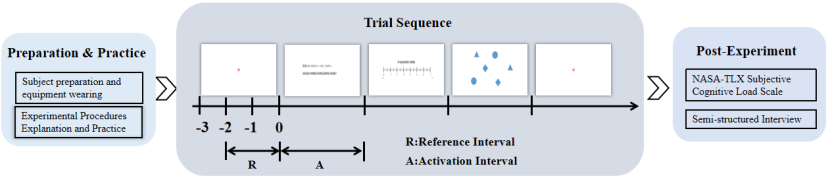
Figure1. Experimental Procedure
Before the experiment began, participants first read and filled out the "EEG Experiment Informed Consent Form" and the "Redox Reaction Knowledge Learning Status Questionnaire," followed by scalp cleaning and drying in preparation for EEG recording. Before the formal experiment started, the researcher presented detailed experimental instructions to participants, including specific steps, required keypress operations, and other relevant requirements. The researcher particularly emphasized that participants should make judgments according to their genuine responses and ensured that all participants fully understood the experimental tasks and requirements before starting.
The experiment was conducted in a quiet, shielded EEG laboratory. Participants sat comfortably approximately 75 cm from the computer screen. The experiment used an event-related design, consisting of 30 redox reaction problems and 30 control tasks, generated and presented by E-prime 2.0 software. The trial procedure was as follows: First, a fixation point appeared at the center of the screen for 3000 ms to help participants focus attention. Next, the system randomly presented a redox reaction problem; participants needed to carefully read and determine the oxidizing and reducing agents in the reaction. The problem remained displayed until participants pressed the "g" key to indicate they had reached an answer. Then, answer options were displayed on the screen, and participants selected the correct answer. Immediately after was the subjective rating session: a 7-point scale (1 indicating "very easy," 7 indicating "very effortful") was presented, and participants rated their perceived mental load during problem-solving by selecting the corresponding number. The researcher explained the scale’s meaning beforehand to ensure accurate self-assessment. Participants selected the number via keypress to complete the subjective rating for the current trial. After rating, the system presented a simple control task to reset participants’ mental activity to baseline. Finally, there was a 3000 ms rest interval before the next trial. To ensure the purity of EEG data, participants were not allowed to write on scratch paper during the entire problem-solving process.
Before the formal experiment, all participants underwent a practice session to familiarize themselves with the procedure. In the formal experiment, 30 redox reaction problems (15 simple and 15 difficult) were presented to each participant in random order. EEG signals were recorded synchronously throughout the experiment. After the experiment, participants were immediately asked to fill out a cognitive load scale (NASA-TLX) to comprehensively assess cognitive load during the entire experiment. Subsequently, the researcher conducted approximately 5–10-minute semi-structured interviews with each participant to collect comprehensive subjective feedback on their experimental experience, including evaluations of task difficulty, psychological experience, emotional fluctuations, attentional state, and views on the experimental environment and equipment. All interview content was recorded and transcribed for subsequent qualitative data analysis.
3.4. Time-Frequency Data Analysis
3.4.1. Theta Band Analysis
Theta band (4–8 Hz) neural oscillatory activity is mainly associated with processes such as working memory encoding, cognitive control, and conflict monitoring[31]. In this study, we examined students’ early cognitive resource mobilization and executive control states during problem-solving by analyzing task-induced theta band power spectral density changes, particularly the event-related synchronization (ERS) phenomenon. Typically, stronger theta-ERS is considered to reflect higher cognitive load and more proactive cognitive control engagement[32]. In solving redox reaction problems, theta band activity may be related to students’ early processing of multiple oxidation state information in reaction equations, coordinating working memory content, and monitoring potential conceptual conflicts. Helfrich R F et al. (2016) found that prefrontal theta activity significantly increased in tasks requiring high cognitive control, consistent with increased cognitive load[33]. Wang et al. (2024) also noted that theta band energy is an effective physiological indicator for measuring cognitive load, especially in learning tasks involving complex information integration[34]. By analyzing theta band energy, this experiment aimed to reveal differences between high- and low-achieving students in early working memory and cognitive control mechanisms when facing redox problem challenges.
3.4.2. Alpha Band Analysis
Alpha band (8–13 Hz) oscillatory activity, particularly its event-related desynchronization (ERD), is closely related to attentional resource allocation, information processing efficiency, and cortical inhibitory mechanisms[35]. Stronger alpha-ERD is typically viewed as a sign of deepened cognitive engagement and effective recruitment of task-relevant neural resources, reflecting suppression of irrelevant information and focused processing of core information[36]. In the context of chemistry problem-solving, alpha band activity may map to students’ allocation of attention to identify key chemical concepts, integrate reaction rules, and engage in deep semantic understanding[37]. Zhozhikashvili (2022) showed that the strength of alpha wave ERD is positively correlated with performance in cognitive tasks, and efficient attentional management is often accompanied by significant alpha suppression[30]. Zabielska (2018) further found that experts exhibited stronger alpha-ERD when performing skilled tasks, suggesting higher automation of information processing[38]. By examining the patterns and strength of alpha band ERD, this study aimed to explore the neural dynamic differences between high- and low-achieving students in attentional regulation and information integration efficiency when solving redox reaction problems of different difficulty levels.
4. Research Results
4.1. Time-Frequency Results
4.1.1. Theta Band Time-Frequency Analysis Results
A 2 (Student Type: high-achieving/low-achieving) × 2 (Problem Difficulty: simple/difficult) mixed-design ANOVA was conducted on theta wave (4–8 Hz) power spectral density (unit: μV²/Hz) within the 150–250 ms time window. Within this window, a clear event-related synchronization (ERS) phenomenon was observed, manifested as a significant increase in theta wave power. Results are shown in Table 1. Energy differences in the theta band at the F3 electrode under different conditions and their topographic maps are shown in Figure 2.
Table 1. Analysis of variance (ANOVA) for θ frequency band
| F | p | η²p | |
| Student Type | 9.91 | 0.002** | 0.062 |
| Difficulty level | 251.08 | <0.001*** | 0.626 |
| Difficulty level×Student Type | 0.50 | 0.483 | 0.003 |
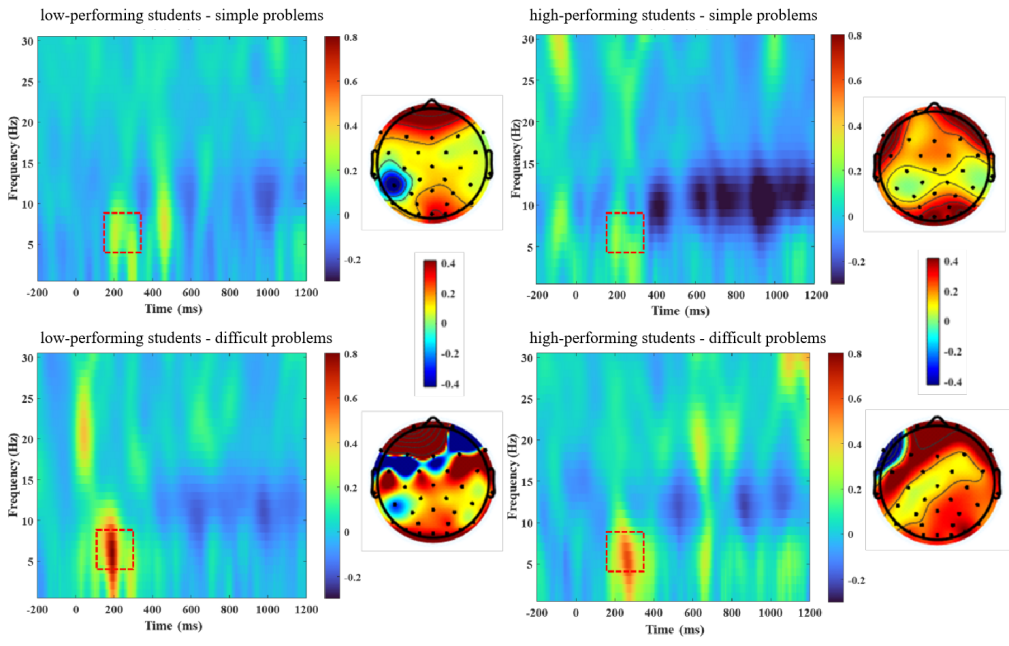
Figure 2. Energy differences in the θ band at the F3 electrode under different conditions and its topographic map
The results showed a significant main effect of Student Type (F(1, 150)=9.91, p=0.002, η²p=0.062). Low-achieving students’ theta wave ERS (M=0.30 μV²/Hz, SE=0.01) was significantly stronger than that of high-achieving students (M=0.25 μV²/Hz, SE=0.01).
The main effect of Problem Difficulty was significant (F(1, 150)=251.08, p<0.001, η²p=0.626). Difficult problems induced significantly stronger theta wave ERS (M=0.39 μV²/Hz, SE=0.01) than simple problems (M=0.16 μV²/Hz, SE=0.01).
The interaction between Student Type and Problem Difficulty was not significant (F(1, 150)=0.50, p=0.483, η²p=0.003). Simple effects analysis showed: For low-achieving students, difficult problems (M=0.42 μV²/Hz, SE=0.02) induced significantly stronger theta ERS than simple problems (M=0.18 μV²/Hz, SE=0.01, p<0.001); for high-achieving students, difficult problems (M=0.35 μV²/Hz, SE=0.02) also induced significantly stronger theta ERS than simple problems (M=0.14 μV²/Hz, SE=0.01, p<0.001); under simple problem conditions, low-achieving students (M=0.18 μV²/Hz, SE=0.01) had significantly stronger theta ERS than high-achieving students (M=0.14 μV²/Hz, SE=0.01, p<0.001); under difficult problem conditions, low-achieving students (M=0.42 μV²/Hz, SE=0.02) also had significantly stronger theta ERS than high-achieving students (M=0.35 μV²/Hz, SE=0.02, p<0.01).
These results indicate that there are significant differences in the early cognitive processing between high- and low-achieving students when facing redox reaction problems of different difficulty levels. In particular, low-achieving students exhibited stronger theta wave ERS. Simultaneously, both high- and low-achieving students showed stronger theta wave ERS when facing difficult problems.
4.1.2. Alpha Band Time-Frequency Analysis Results
A 2 (Student Type: high-achieving/low-achieving) × 2 (Problem Difficulty: simple/difficult) mixed-design ANOVA was conducted on alpha wave (8–13 Hz) power spectral density (unit: μV²/Hz) within the 600–1000 ms time window. Within this window, a clear event-related desynchronization (ERD) phenomenon was observed, manifested as a significant decrease in alpha wave power. Results are shown in Table 2. Energy differences in the alpha band at the F3 electrode under different conditions and their topographic maps are shown in Figure 3.
Table 2 Analysis of variance (ANOVA) for α frequency band
| F | p | η²p | |
| Student Type | 159.18 | <0.001*** | 0.285 |
| Difficulty level | 894.64 | <0.001*** | 0.691 |
| Difficulty level×Student Type | 1671.06 | <0.001*** | 0.807 |
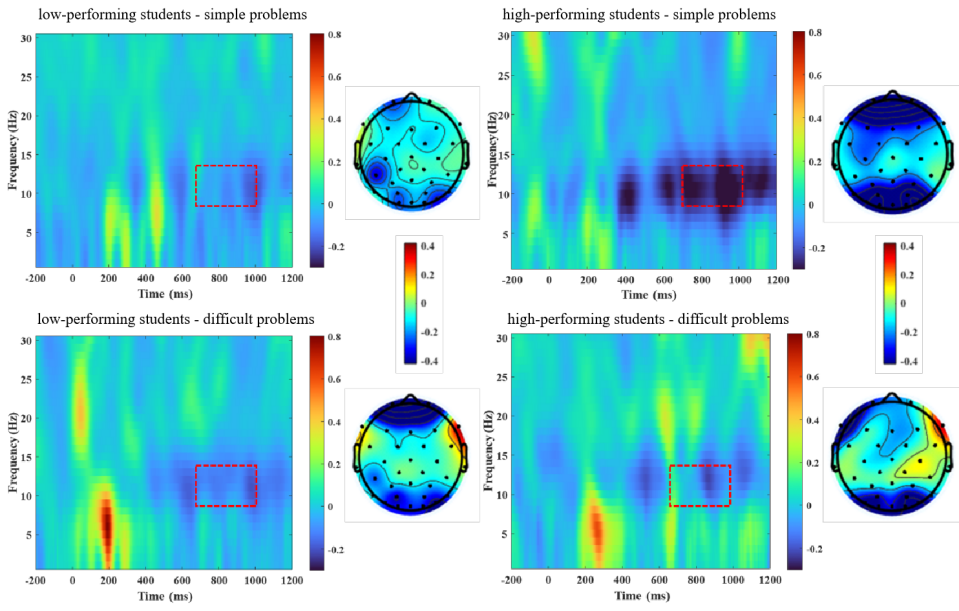
Figure 3. Energy differences in the α band at the F3 electrode under different conditions and its topographic map
The results showed a significant main effect of Student Type (F(1, 400)=159.18, p<0.001, η²p=0.285). High-achieving students’ alpha wave ERD (M=-0.15 μV²/Hz, SE=0.003) was significantly stronger than that of low-achieving students (M=-0.09 μV²/Hz, SE=0.003).
The main effect of Problem Difficulty was significant (F(1, 400)=894.64, p<0.001, η²p=0.691). Simple problems induced significantly stronger alpha wave ERD (M=-0.17 μV²/Hz, SE=0.002) than difficult problems (M=-0.07 μV²/Hz, SE=0.003).
The interaction between Student Type and Problem Difficulty was significant (F(1, 400)=1671.06, p<0.001, η²p=0.807). Simple effects analysis showed: For low-achieving students, difficult problems (M=-0.11 μV²/Hz, SE=0.005) induced significantly stronger alpha ERD than simple problems (M=-0.07 μV²/Hz, SE=0.003, p<0.001); for high-achieving students, simple problems (M=-0.27 μV²/Hz, SE=0.003) induced significantly stronger alpha ERD than difficult problems (M=-0.03 μV²/Hz, SE=0.005, p<0.001); under simple problem conditions, high-achieving students (M=-0.27 μV²/Hz, SE=0.003) had significantly stronger alpha ERD than low-achieving students (M=-0.07 μV²/Hz, SE=0.003, p<0.001); under difficult problem conditions, low-achieving students (M=-0.11 μV²/Hz, SE=0.005) had significantly stronger alpha ERD than high-achieving students (M=-0.03 μV²/Hz, SE=0.005, p<0.001).
These results indicate that there are significant differences in the alpha wave ERD patterns between high- and low-achieving students when facing redox reaction problems of different difficulty levels. High-achieving students overall exhibited stronger alpha wave ERD. In terms of difficulty level, simple problems generally induced stronger alpha wave ERD. However, the significant interaction between Student Type and Problem Difficulty revealed a more complex pattern: high-achieving students showed the strongest alpha ERD on simple problems, while ERD significantly weakened on difficult problems; conversely, low-achieving students had stronger alpha ERD on difficult problems than on simple ones. These findings reflect different patterns of change in alpha wave activity between the two groups under tasks of varying difficulty.
4.1.3. NASA-TLX Scale Analysis Results
Table 3. Comparison and statistical analysis of NASA-TLX subscale scores between high-performing and low-performing students
| Dimension | low-performing students | high-performing students | t/F(1,26) | p | Cohen's d/η²p |
| Overall Task Load Score | 60.57±7.34 | 45.93±14.40 | 3.79 | 0.002** | 1.32 |
| Mental demand | 68.57±11.51 | 50.71±19.79 | 9.01 | 0.006** | 0.257 |
| Physical demand | 41.07±18.59 | 28.93±19.64 | 2.87 | 0.102 | 0.099 |
| Time demand | 51.43±15.47 | 38.93±21.02 | 3.41 | 0.076 | 0.116 |
| Effort level | 70.36±12.84 | 47.86±23.92 | 10.25 | 0.004** | 0.283 |
| Performance level | 36.79±14.73 | 60.36±15.72 | 17.29 | <0.001*** | 0.399 |
| Frustration level | 51.43±20.63 | 30.71±19.14 | 8.01 | 0.009** | 0.235 |
To gain deeper insight into the subjective cognitive load differences between high- and low-achieving students when solving redox reaction problems, this study assessed both groups using the NASA-TLX scale. The NASA-TLX scale includes six dimensions: mental demand, physical demand, temporal demand, effort, performance, and frustration, as well as an overall score. Results found that low-achieving students’ overall cognitive load was significantly higher than that of high-achieving students (60.57±7.34 vs 45.93±14.40, p=0.002). Their mental demand, effort, and frustration levels were 34.9%, 47.1%, and 67.4% higher than those of high-achieving students, respectively (all p<0.01), while high-achieving students’ self-rated performance advantage reached 64.3% (p<0.001). This multi-dimensional load difference reveals the potential mechanism by which high-achieving students reduce subjective load through efficient cognitive management strategies.
5. Discussion
The advantage shown by high-achieving students in complex problems may stem from their more effective cognitive resource management and more flexible application of problem-solving strategies. In contrast, the decline in performance among low-achieving students on difficult problems may reflect their deficiencies in knowledge integration and cognitive load management. Specifically, it may be due to students’ reliance on rote memorization; low-achieving students over-rely on surface features such as "high oxidation state equals oxidizing agent," neglecting that the essence of redox is to look at the direction of electron transfer, leading to erroneous strategy selection[13]. For example, when judging the "Fe³⁺/Fe²⁺" system, low-achieving students rigidly adhere to the "high valence = oxidizing property" rule, ignoring the influence of medium pH[13]. Secondly, there may be interference from alternative framework. Due to differences in the definition of oxidation reactions learned in junior high school versus high school, there is a belief that "oxidation means gaining oxygen," causing erroneous activation of prior knowledge in complex problems like disproportionation reactions[39], interfering with problem representation—for example, misjudging ClO⁻ disproportionation as requiring acidic conditions[13]. Finally, there may be metacognitive monitoring failures. NASA-TLX indicates that the "confidence" dimension score surpassed that of high-achieving students[40]; low-achieving students lacked willingness to adjust strategies due to misplaced confidence. Low-achieving students had significantly lower accuracy than high-achieving students on difficult problems, but there was no significant difference in reaction time between the two groups. The experimental data showed that regardless of academic level, difficult problems significantly increased all students’ cognitive processing demands. This finding is consistent with Sweller’s cognitive load theory: when task complexity exceeds working memory capacity[41], all learners need extra time for information integration[42]. For example, when judging the reaction "3Cu+8HNO3→3Cu(NO3)2+4H2O+2NO↑," students need to simultaneously process changes in copper’s oxidation state, nitrogen’s disproportionation reaction, and the influence of acidic conditions on the reaction pathway; such multidimensional information processing inevitably prolongs reaction time[12]. Experimental data show that both high- and low-achieving students’ subjective effort ratings significantly increased with problem difficulty, highly consistent with the "mental demand" and "effort" dimension scores in the NASA-TLX scale (low-achieving total 60.57 vs high-achieving 45.93). This phenomenon is Sweller’s core view of cognitive load theory: task complexity is positively correlated with psychological resource investment[41]. For example, when judging "nitric acid reduction products," students need to simultaneously process nitrogen oxidation state changes, electron conservation rules, and the influence of acidic conditions on the reaction pathway; such multi-dimensional cognitive operations lead to enhanced subjective effort perception.
In time-frequency analysis of the theta band, under both simple and difficult problem conditions, high-achieving students’ theta power spectral density was significantly lower than that of low-achieving students. This result may reflect more efficient cognitive processing and more flexible cognitive resource allocation strategies in high-achieving students. Because high-achieving students can process simple redox reaction problems more quickly and automatically, they require fewer cognitive resources. For simple problems, high-achieving students’ lower theta power spectral density (i.e., weaker theta-ERS) may reflect their more efficient cognitive processing. This aligns with the findings of Antonenko et al. (2010), who found that experts often exhibit lower theta activity in relatively simple tasks, possibly due to their knowledge being more automated and structured. Under difficult problem conditions, although both groups showed theta-ERS (compared to simple problems), high-achieving students’ theta power spectral density remained significantly lower than that of low-achieving students. This result is similar to the findings of Jaušovec (2004), who observed that high-intelligence individuals exhibited lower theta power in complex cognitive tasks. This may reflect high-achieving students’ more efficient cognitive processing ability and more optimized neural networks when facing complex problems. Despite increased task difficulty, high-achieving students may be able to more effectively mobilize and integrate various cognitive resources, including working memory, attention, and problem-solving strategies, thereby achieving more effective problem-solving with less neural activity. In contrast, low-achieving students exhibited higher theta power spectral density (stronger theta-ERS) in both simple and difficult problems, possibly reflecting their need to invest more cognitive resources when processing redox reaction problems, regardless of problem difficulty. This may suggest that low-achieving students face greater cognitive challenges when processing chemistry concepts and solving related problems, requiring more neural activity to support their cognitive processing.
Alpha band time-frequency analysis results revealed significant differences in cognitive processing between high- and low-achieving students when solving redox reaction problems of different difficulty levels. First, the main effect of Student Type was significant; high-achieving students’ alpha wave ERD was significantly stronger than that of low-achieving students. This finding aligns with the results of Doppelmayr et al. (2005), who found that individuals with better performance in cognitive tasks often exhibit stronger alpha wave ERD. In our study, the stronger alpha wave ERD in high-achieving students may reflect more effective attentional allocation and information processing when dealing with redox reaction problems. Second, there was a significant interaction between Student Type and Problem Difficulty. For low-achieving students, difficult problems induced significantly stronger alpha wave ERD than simple problems; for high-achieving students, the opposite was true—simple problems induced significantly stronger alpha wave ERD than difficult ones. This interaction pattern reveals that the two groups adopted different cognitive strategies when facing problems of different difficulty levels. For high-achieving students, stronger alpha wave ERD on simple problems may reflect their ability to more effectively suppress irrelevant information and concentrate attention on task-relevant information processing. This is consistent with the findings of Bazanova and Vernon (2014), who found that experts often exhibit stronger alpha wave ERD in well-mastered tasks. However, on difficult problems, high-achieving students’ alpha wave ERD significantly weakened, which may reflect their need for more cognitive control and attentional resources when facing complex problems, leading to a relative increase in alpha wave activity. In contrast, low-achieving students exhibited weaker alpha wave ERD on simple problems, possibly reflecting their need to invest more cognitive resources even when processing basic concepts. On difficult problems, low-achieving students’ alpha wave ERD is enhanced, which may indicate that they concentrate attention and suppress when facing complex problems.
6. Conclusion
This study systematically explored the differences in cognitive neural mechanisms... by combining subjective cognitive load measures and time-frequency analysis. Time-frequency analysis further revealed essential differences between the two groups at the neural activity level: low-achievers showed stronger theta-band synchronization (theta-ERS) in the early stage of the task (150-250 ms), reflecting their need to invest more neural resources in working memory encoding and cognitive control processes, indicating a higher cognitive load. In contrast, high-achievers exhibited stronger alpha-band desynchronization (alpha-ERD) in the middle to late stages of the task (600-1000 ms), indicating more efficient attentional allocation, a higher degree of automated information processing, and a greater ability to effectively suppress irrelevant interference and focus on key aspects of the problem. These findings suggest that differences in academic performance are not only due to the degree of knowledge mastery but are also rooted in the efficiency differences of core cognitive processes such as conflict monitoring, resource allocation, and information integration.
This study provides empirical evidence from a cognitive neuroscience perspective for understanding difficulties in chemistry learning. The results indicate that low-achieving students bear a higher cognitive load and neural resource consumption when dealing with high-difficulty conceptual problems. Their inefficient cognitive strategies and neural regulation patterns are important reasons for their poor learning performance. This suggests that chemistry teaching should move beyond traditional knowledge transmission and shift focus to the development and optimization of students' cognitive processes. In future teaching practice, targeted cognitive strategy training and neurofeedback interventions can be designed based on the cognitive characteristics of low-achieving students to help them reduce cognitive load and improve information processing efficiency, thereby promoting the substantive development of their chemistry problem-solving abilities.
7. Implications
The results of this study suggest that chemistry teaching should transcend the traditional "knowledge-instillation" model and focus on the development and optimization of students' cognitive processes. For low-achieving students, teachers should emphasize the explicit teaching of conflicting concepts, systematic training in cognitive strategies, and the cultivation of metacognitive abilities in instruction. For example, tools like concept maps, problem decomposition, and worked-example learning can help students build structured knowledge systems, reduce cognitive load, and improve information processing efficiency. Simultaneously, teachers should pay attention to distinguishing task difficulty, implementing differentiated instruction, and providing personalized support to meet the learning needs of students at different cognitive levels.
This study has several limitations. First, the sample source is relatively homogeneous, consisting only of high school freshmen. Future research could expand to different educational stages or different chemistry topics to enhance the generalizability of the findings. Second, although the experimental tasks covered different difficulty levels, they did not further differentiate the specific impact of misconception types or erroneous strategies. Follow-up research could combine methods like think-aloud protocols or eye-tracking to deeply reveal the micro-cognitive processes during problem-solving. Furthermore, while EEG/ERP technology has high temporal resolution, its spatial localization ability is limited. Future studies could combine techniques like fMRI to comprehensively characterize the neural basis of learning and cognition from a multimodal perspective. Finally, the results of this study have not yet been directly translated into teaching intervention programs. The next step could involve designing and validating teaching feedback systems based on EEG/ERP indicators to promote the practical application of "educational neuroscience" in chemistry teaching.
Acknowledgements
Wenzhou University 2025 Master's Degree Candidate Innovation Fund - University-funded Project: The Cognitive Neural Mechanism of GAI-Empowered Chemistry Experiment Teaching (Project No.: 3162025003055)
Wenzhou University 2025 Innovation and Entrepreneurship Training Program for College Students: Educational Neural Mechanisms of Generative AI-Empowered Virtual Chemistry Experiment Teaching (Project No.: JWDC2025123)
Wenzhou University Su Buqing College 2026 Student Innovation Fund Project: Cognitive Characteristics and Neural Mechanisms of Generative AI-Empowered Conceptual Change in Science Misconceptions (Project No.: SBQ20263005)
Conflicts of Interest
The authors declare that the research was conducted in the absence of any commercial or financial relationships that could be construed as a potential conflict of interest.
Author Contributions
Nian Wang: Conceptualization, methodology, formal analysis, investigation, data curation, writing—original draft preparation, visualization, project administration.
Junhan Zhang: Software, validation, formal analysis, investigation, resources, data curation, writing—review and editing, visualization.
Zaimiao Li: Methodology, software, investigation, resources, writing—review and editing.
Chi Cheng: Formal analysis, data curation, writing—review and editing, visualization.
Jianqiang Ye: Conceptualization, methodology, validation, resources, writing—review and editing, supervision, funding acquisition. All authors have read and agreed to the published version of the manuscript.
References
-
Q. Zhou, T. Wang, Q. Zheng. “Probing high school students’ cognitive structures and key areas of learning difficulties on ethanoic acid using the flow map method.” Chem. Educ. Res. Pract. 2015, 16, 3, 589–602.
-
G. Marumure, J. Kriek. “Teachers’ teaching strategies, opportunities, and challenges when developing conceptual understanding of redox reactions.” Sci. Educ. Int. 2025, 36, 3, 289–98.
-
J. Sweller, J. J. G. van Merrienboer, F. G. W. C. Paas. “Cognitive architecture and instructional design.” Educ. Psychol. Rev. 1998, 10, 3, 251–96.
-
N. Jacimovic, S. V. Pulukuri, B. Abrams. “The hidden timeline for marginalized student groups: drop and withdrawal outcomes in general chemistry.” J. Chem. Educ. 2025, 102, 11, 4944–49.
-
P. Nayyar, B. Demirdöğen, S. E. Lewis. “Factors that influence general chemistry students’ decision making in study strategies.” Chem. Educ. Res. Pract. 2024, 25, 3, 877–94.
-
D. M. Webber, A. B. Flynn. “How are students solving familiar and unfamiliar organic chemistry mechanism questions in a new curriculum?” J. Chem. Educ. 2018, 95, 9, 1451–67.
-
L. Zhang, L. Wang, D. F. Treagust. “Discipline-specific cognitive factors that influence grade 9 students’ performance in chemistry.” Chem. Educ. Res. Pract. 2021, 22, 4, 813–41.
-
A. Bongers, A. B. Flynn, G. Northoff. “Is learning scale-free? Chemistry learning increases EEG fractal power and changes the power law exponent.” Neurosci. Res. 2020, 156, 165–77.
-
J. Yedukondalu, D. Sharma, L. D. Sharma. “Subject-wise cognitive load detection using time–frequency EEG and Bi-LSTM.” Arabian J. Sci. Eng. 2024, 49, 3, 4445–57.
-
O. Jensen. “Distractor inhibition by alpha oscillations is controlled by an indirect mechanism governed by goal-relevant information.” Commun. Psychol. 2024, 2, 1, 36.
-
L. R. Fournier, G. F. Wilson, C. R. Swain. “Electrophysiological, behavioral, and subjective indexes of workload when performing multiple tasks: manipulations of task difficulty and training.” Int. J. Psychophysiol. 1999, 31, 2, 129–45.
-
J. Ye, J. Gao, T. Lin, K. He, D. Chen. “Cognitive load change in chemical concept learning: insights from event-related potentials.” J. Balt. Sci. Educ. 2025, 24, 92–104.
-
L.-L. Österlund, M. Ekborg. “Students’ understanding of redox reactions in three situations.” Nord. Stud. Sci. Educ. 2012, 5, 115–27.
-
C. Parsons. “Informal axiomatization, formalization and the concept of truth.” Synthese. 1974, 27, 1, 27–47.
-
H.-J. Schmidt, D. Volke. “Shift of meaning and students’ alternative concepts.” Int. J. Sci. Educ. 2003, 25, 11, 1409–24.
-
P. J. Fensham. “Nyholm lecture. Conceptions, misconceptions, and alternative frameworks in chemical education.” Chem. Soc. Rev. 1984, 13, 2, 199–217.
-
R. Driver. “Children's ideas in science.” McGraw-Hill Education (UK). 1985.
-
J. Nussbaum, S. Novick. “Alternative frameworks, conceptual conflict and accommodation: toward a principled teaching strategy.” Instr. Sci. 1982, 11, 3, 183–200.
-
K. Adu-Gyamfi, J. Ampiah. “Chemistry students’ difficulties in learning oxidation-reduction reactions.” 2019, 28, 180–200.
-
V. Talanquer. “Threshold concepts in chemistry: the critical role of implicit schemas.” J. Chem. Educ. 2015, 92, 1, 3–9.
-
Z. Chunjun, C. Yinghe. “The relationship of academic achievement, creativity and abilities of constructing interdisciplinary concept maps.” Stud. Psychol. Behav. 2010, 8, 1, 35.
-
P. Chen, Q. K. Teo, D. X. Y. Foo, Y. Jiang, L. Sun, X. L. Ong, D. Neo, D. J. H. Pereira, B. Tan, K. Q. Chua, J. X. F. Gan, D. C. Ong. “A strategic mindset predicts and promotes effective learning and academic performance.” npj Sci. Learn. 2025, 10, 1, 74.
-
E. Erman. “Factors contributing to students’ misconceptions in learning covalent bonds.” J. Res. Sci. Teach. 2017, 54, 4, 520–37.
-
S. A. Kiray, S. Simsek. “Determination and evaluation of the science teacher candidates’ misconceptions about density by using four-tier diagnostic test.” Int. J. Sci. Math. Educ. 2021, 19, 5, 935–55.
-
T. Wang, S. Li, C. Tan, J. Zhang, S. P. Lajoie. “Cognitive load patterns affect temporal dynamics of self-regulated learning behaviors, metacognitive judgments, and learning achievements.” Comput. Educ. 2023, 207, 104924.
-
S. Morales, M. E. Bowers. “Time-frequency analysis methods and their application in developmental EEG data.” Dev. Cognit. Neurosci. 2022, 54, 101067.
-
M. R. S. Bipul, M. A. Rahman, M. F. Hossain. “Study on different brain activation rearrangement during cognitive workload from ERD/ERS and coherence analysis.” Cognit. Neurodyn. 2024, 18, 4, 1709–32.
-
M. Su, K. Hu, W. Liu, Y. Wu, T. Wang, C. Cao, B. Sun, S. Zhan, Z. Ye. “Theta oscillations support prefrontal-hippocampal interactions in sequential working memory.” Neurosci. Bull. 2024, 40, 2, 147–56.
-
J. J. Foxe, A. C. Snyder. “The role of alpha-band brain oscillations as a sensory suppression mechanism during selective attention.” Front. Psychol. 2011, 2.
-
N. Zhozhikashvili, I. Zakharov, V. Ismatullina, I. Feklicheva, S. Malykh, M. Arsalidou. “Parietal alpha oscillations: cognitive load and mental toughness.” Brain Sci. 2022, 12, 9, 1135.
-
J. Mendl, S. Banerjee, R. Fischer, G. Dreisbach, M. Köster. “Control in context: the theta rhythm provides evidence for reactive control but no evidence for proactive control.” Psychophysiology. 2024, 61, 10, e14625.
-
M. F. Pagnotta, J. Riddle, M. D’Esposito. “Multiplexed levels of cognitive control through delta and theta neural oscillations.” J. Cognit. Neurosci. 2024, 36, 5, 916–35.
-
R. F. Helfrich, R. T. Knight. “Oscillatory dynamics of prefrontal cognitive control.” Trends Cognit. Sci. 2016, 20, 12, 916–30.
-
G. Wang, L. Tian, J. Liu, S. Nie, S. Yu. “Neural mechanisms of cognitive load in multimedia learning: a meta-analysis of EEG frequency band modulation.” Curr. Psychol. 2024, 43, 37, 29316–32.
-
J. Hanna, C. Kim, S. Rampp, M. Buchfelder, N. Müller-Voggel. “Decreasing alpha flow releases task-specific processing paths.” Imaging Neurosci. 2024, 2, imag–2–00117.
-
C. Liu, Y. Lin, C. Ye, J. Yang, W. He. “Alpha ERS-ERD pattern during divergent and convergent thinking depends on individual differences on metacontrol.” J. Intell. 2023, 11, 4, 74.
-
M. Benedek, S. Bergner, T. Könen, A. Fink, A. C. Neubauer. “EEG alpha synchronization is related to top-down processing in convergent and divergent thinking.” Neuropsychologia. 2011, 49, 12, 3505–11.
-
E. Zabielska-Mendyk, P. Francuz, M. Jaśkiewicz, P. Augustynowicz. “The effects of motor expertise on sensorimotor rhythm desynchronization during execution and imagery of sequential movements.” Neuroscience. 2018, 384, 101–10.
-
A. R. Brandriet, S. L. Bretz. “Measuring meta-ignorance through the lens of confidence: examining students’ redox misconceptions about oxidation numbers, charge, and electron transfer.” Chem. Educ. Res. Pract. 2014, 15, 4, 729–46.
-
J. H. Grabman, C. S. Dodson. “Unskilled, underperforming, or unaware? Testing three accounts of individual differences in metacognitive monitoring.” Cognition. 2024, 242, 105659.
-
J. Sweller. “Cognitive load theory. Psychology of learning and motivation.” Elsevier. 2011. p. 37.
-
N. Langerock, K. Oberauer, E. Throm, E. Vergauwe. “The cognitive load effect in working memory: refreshing the empirical landscape, removing outdated explanations.” J. Mem. Lang. 2025, 140, 104558.