



Challenges and Emerging Solutions in Coal Analysis Technology Based on Laser-Induced Breakdown Spectroscopy
Abstract
Laser-Induced Breakdown Spectroscopy (LIBS) is a novel type of atomic emission spectroscopy. It has the advantages of rapid detection and no sample pretreatment, and can simultaneously detect the characteristics of multiple components. Therefore, it has great application potential in the analysis of the coal industry. However, due to the intricate compositional characteristics of coal, significant spectral discrepancies exist among different measurement results, while notable spectral similarities are observed across distinct coal types. These phenomena pose challenges to the accuracy and reliability of coal analysis outcomes. The paper summarizes the key factors that influence the performance of LIBS in coal analysis, such as the redundancy of spectral features, matrix effects, self-absorption effects, or environmental factors in online detection. To address these issues, this paper introduces methods for improving classification accuracy and quantitative analysis precision, such as feature selection algorithms, machine learning models for classification, multifactor quantitative methods, spectral preprocessing techniques, and transfer learning approaches. It also presents novel techniques for reducing spectral fluctuations during online detection and enhancing the generalization capability of online models. Overall, the advancement of LIBS-based coal analysis technology relies on the innovative integration of spectroscopy, chemometrics, system integration, and other relevant aspects to meet the demands of high-precision and high-reliability industrial online analysis.
1. Introduction
Coal is one of the most significant industrial minerals. As the world's second-largest energy resource, coal plays a pivotal role in the global energy supply. Different types of coal possess distinct properties and optimal applications. For instance, anthracite, owing to its high calorific value and smoke-free combustion characteristics, is suitable for household fuel and chemical production. Bituminous coal can be utilized as coking feedstock or thermal coal, while lignite is typically used locally or processed before utilization. A scientific classification of coal facilitates the optimization of resource allocation, enhances utilization efficiency, and minimizes waste [1-5].
Traditional coal analysis methods include physical classification techniques based on density differences. Although these methods can achieve an accuracy rate of over 90%, they require large-scale equipment, entail high maintenance costs, and necessitate stringent safety measures. In contrast to other techniques, Laser-Induced Breakdown Spectroscopy (LIBS) offers several advantages, such as simple or even no sample preparation, non-destructive or micro-destructive analysis, capability for in-situ or remote operation, rapid response, and simultaneous multi-element detection [6-8]. However, the complex composition and variable characteristics of coal lead to instability in the laser-induced plasma, resulting in significant fluctuations in LIBS spectra. This poses considerable challenges for the training of classification models [9-10]. Therefore, enhancing the performance of LIBS-based coal analysis has become a research priority.
This paper analyzes the key issues limiting the performance of LIBS-based coal analysis and explores corresponding solutions from the perspectives of spectral preprocessing, feature selection, machine learning models, quantitative analysis methods, and online application strategies [11-16]. The aim is to provide a comprehensive reference for the development of high-performance LIBS-based coal analysis technology.
2. Key Challenges in LIBS-Based Coal Analysis
With the in-depth application of LIBS in coal analysis, significant challenges remain in achieving high-precision classification and accurate quantitative analysis [17-18]. These problems are similar to those caused by the complex sample components of current coal samples, all of which can lead to issues such as spectral redundancy, matrix effects, self-absorption effects, and interference in online sample detection in LIBS analysis [19-21]. Analyzing the bottleneck of this problem and seeking relevant solutions to such a bottleneck issue are both problems that need to be faced.
2.1. Spectral Feature Redundancy and High-dimensional Data Processing
The LIBS spectrum of coal contains rich information, but much of it has no practical significance for different types of coal [22]. The LIBS spectrum obtained from coal is usually composed of many strong lines. Extracting interesting information from the original multi-dimensional spectral data of the LIBS spectrum and performing dimensionality reduction is a challenging task for the original data [23]. For instance, the literature studied the LIBS spectra of seven coal samples and obtained 2,520 spectral data with 12,248 dimensions. Such a high spectral dimension increases the computational burden and may also cause overfitting of the model [24]. Research shows that after dimensionality reduction processing of the visible light range LIBS spectra of coal through linear discriminant analysis (LDA), qualitative differentiation of different coal types can be achieved with an accuracy rate of 95.33%, verifying the great potential of spectral feature selection and classification methods in coal quality control [25]. Aiming at the problem of high noise in fringe camera images in LIBS experiments, research shows that using principal component analysis (PCA) to reduce dimension and reconstruct image data can effectively filter out noise and improve the signal-to-noise ratio, providing a new data preprocessing idea for processing high-dimensional LIBS spectral data [26]. Feature selection is aimed at filtering out impurities and redundant information, reducing the complexity of LIBS spectral data analysis, and achieving a higher spectral classification accuracy [27]. Research results show that the chi-square test (CST) can select a substantial subset of high-quality features from the original high-dimensional spectral data when a stringent significance threshold is applied. Moreover, principal component analysis (PCA) can further compress this feature set into a small number of principal components that retain most of the original spectral information, as evidenced by a high cumulative contribution rate [24]. This indicates that a reasonable reduction in dimension can retain the main information without reducing the dimension.
2.2. Matrix Effect
Matrix effect is one of the main challenges faced in LIBS quantitative analysis. It refers to the influence of differences in the physical and chemical properties of samples on laser ablation behavior and plasma characteristics, resulting in different plasma properties and spectral features for different samples [28-29]. The matrix effect of coal is particularly significant because coal contains almost all the elements in the periodic table, and the physical and chemical properties of different types of coal vary greatly. The physical matrix effect can be basically eliminated through simple pretreatment (such as pressing coal powder into coal cakes). The chemical matrix effect is even more complex and is the main challenge in the quantitative analysis of LIBS coal quality. The different chemical forms of elements have a certain influence on the intensity of their characteristic spectral lines. The more complex the structure and the greater the chemical bond energy of the element form, the greater the laser energy required for excitation [30-32]. Studies have shown that coal with a high ash content (such as anthracite) has a high content of Si and Al elements and the greatest spectral line intensity. In coal with high volatile matter, since the ionization energy of C, H, O and N elements is higher than that of Si, Al and other ash-forming elements, they are more likely to be ionized and broken down under the same laser energy, resulting in greater ablation, higher plasma temperature and electron density [33].
To alleviate the chemical matrix effect, methods such as internal standard method, matrix matching standard samples, and adaptive subset matching (ASM) can be adopted [34-35]. Research shows that the ASM method can effectively alleviate the matrix effect in coal analysis, reducing the root mean square error of multiple linear regression (MLR) and partial least squares regression (PLSR) predictions, respectively [36-37]. For lithium-containing mineral processing products, handheld LIBS outperform XRF, which requires indirect detection, in the analysis of low-grade lithium samples due to its direct detection capability. However, in the analysis of high-grade samples, XRF has more advantages thanks to its faster analysis speed and simpler sample processing [38]. For the problem of predicting the slagging tendency during the coal combustion process, the research found that combining the elemental information obtained by LIBS with the thermal behavior information obtained by thermal mechanical analysis (TMA) can more accurately evaluate the slagging characteristics of mixed coal, effectively overcoming the limitations of single-component analysis when facing complex matrix effects [39]. By series-linking LIBS with LA-ICP-MS and combining with the PLSR algorithm, efficient quantitative analysis of multiple elements in coal was achieved, and the detection accuracy of trace elements was significantly improved [40].
2.3. Self-absorption effect
The self-absorption effect refers to the phenomenon where the light radiated from the high-temperature area inside the plasma is reabsorbed by the same type of atoms when passing through the cooler outer area, resulting in a decrease in spectral line intensity and a broadening of peak shapes. In severe cases, self-erosion may occur. For atomic wires with low upper energy levels and high transition probabilities, the self-absorption effect is particularly obvious [41-43]. Research shows that environmental pressure, types of environmental gases and dual-pulse configuration have significant influences on the self-absorption effect. Under a low-pressure environment (1 kPa), the self-absorption of Cu and Mn spectral lines is significantly reduced. Compared with air and N₂, Ar atmosphere enhances the self-absorption of Al alloy spectral lines, but has different effects on the self-absorption of Cu and Si spectral lines. Microwave assisted excitation can effectively reduce the self-absorption of Na and K spectral lines [44-46].
2.4. Environmental Interference detected Online
In industrial online inspection scenarios, the characteristics of pulverized coal particle flow pose additional challenges to LIBS measurement. The particle flow of pulverized coal has characteristics such as uneven particle size distribution, fluctuating particle flow, and columnar flow, which leads to invalid spectral signals in the LIBS spectrum, poor repeatability, and reduces the accuracy and precision of quantitative analysis [47-50]. To address the challenges of LIBS online application in underground explosive environments, researchers proposed to analyze the dust-water suspension generated by coal mining and design explosion-proof enclosures, successfully reducing the detection limit of LIBS for waste rock to 1%, providing a new idea for the real-time separation of coal and waste rock underground [51]. Through a review of LIBS signal enhancement techniques in liquid samples (such as matrix conversion, dual pulse, and the combination of LIBS-LIF), this study provides multiple referenced signal enhancement and optimization ideas for solving the problem of unstable signals caused by environmental interferences (such as dust and moisture) in online coal detection [52]. By taking advantage of the deep profile analysis capability of LIBS, the distribution differences of graphene oxide on the wood surface under different impregnation methods were successfully identified, demonstrating the unique advantages of LIBS technology in analyzing the surface layer structure and composition gradient of modified materials. This is of reference significance for understanding the surface behavior of pulverized coal in complex environments [53].
Studies show that when the characteristic emission line of carbon at 247.869 nm is used as the invalid data elimination index, a considerable proportion of spectral data can be identified as invalid and removed. After eliminating these invalid data, the relative standard deviations (RSD) of the intensities for key elements such as carbon, hydrogen, iron, and sodium are substantially reduced. Furthermore, after applying additional normalization processing, the RSD values decrease even more significantly, indicating a marked improvement in signal stability and measurement precision [54-55]. This indicates that a reasonable preprocessing strategy can effectively improve the signal stability of online detection
3. Strategies for Improving the performance of coal classification and quantitative analysis
The accuracy of coal classification and the precision of quantitative analysis are the main issues in the development of LIBS coal analysis technology. The classification accuracy mainly depends on the degree of distinction of spectral features and the classification performance of the model, while the quantitative analysis accuracy increases the factors of matrix, spectral interference and variable selection [56]. The high dimensionality of the inherent characteristics of LIBS spectra and the complexity of coal samples make the accuracy of coal analysis far worse than that of analysis under ideal conditions [57-58]. LIBS research involves advancements in feature selection algorithm research, the development of machine learning classification models, the improvement of spectral preprocessing techniques, multivariate quantitative analysis methods, and transfer learning. The development of new methods such as deep learning, ensemble learning, and multispectral coupling has brought hope for breaking through the current performance bottlenecks [59-62].
3.1. Optimization of Classification Methods Based on Feature Selection
Feature selection methods play a key role in the LIBS spectral classification of coal. The ReliefF algorithm is an effective feature selection method with the following advantages: (1) It can distinguish similar samples (maintaining intra-class consistency); (2) Be capable of distinguishing different samples (enhancing the separability between classes); (3) Sensitive to noise samples. Based on the calculated weight coefficients, all spectral features are rearranged in descending order to form a data sequence sorted by feature importance from high to low [63-67]. Combining the ReliefF feature selection algorithm with the LIBS spectral classification method of Support Vector Machine (SVM) can be used to improve the classification accuracy of coal. Compared with other typical full-spectrum classification methods, the LIBS spectral classification method can increase the accuracy rate of coal and coal gangue classification from 99.33% to 100%, and the accuracy rate of different types of coal classification from 98.66% to 100% [68]. More importantly, the selection of features significantly reduces the model training time and enhances the model's generalization ability on the test set.
For the classification of different coal types (lignite, bituminous coal and anthracite), the AREA, MAX and TI normalization methods can all achieve a 100% model accuracy rate. However, when using the MAX normalization method, only the first 30 high-weight features need to be input to achieve 100% accuracy, and the number of required features is significantly less than that of other methods. In contrast, the AREA and TI normalization methods require the first 288 features to achieve the same accuracy. To illustrate the complexity of coal’s elemental composition, which underlies the need for effective classification and quantitative strategies, Figure 1 presents a representative LIBS spectrum of a coal sample.
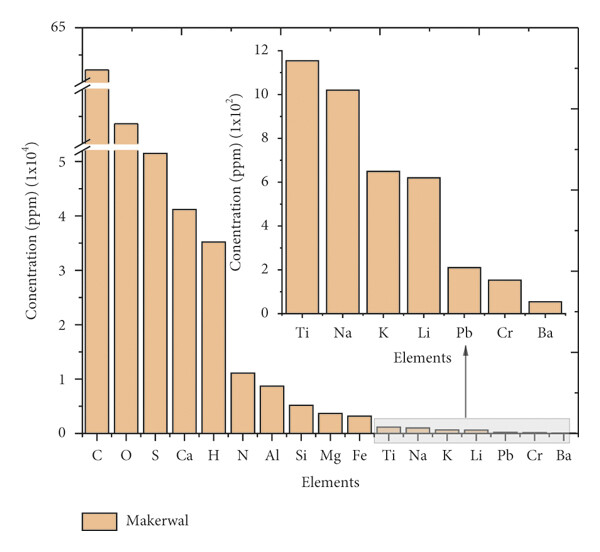
Figure 1. Elemental concentration of Makerwal coal sample (major and minor elements). The inset shows the concentration of trace metals detected in coal [8]. (Reproduced with permission from Ref. [8]. Copyright 2022, John Wiley & Sons.)
A representative LIBS spectrum of a coal sample is shown in Figure 1. The analysis reveals a complex elemental composition, with carbon (C) being the dominant element, followed by oxygen (O), sulfur (S), and calcium (Ca). The detection of trace metals such as chromium (Cr) and lead (Pb), as shown in the inset, highlights the capability of LIBS for simultaneous multi-element analysis. This broad elemental detection provides the foundational data necessary for subsequent coal classification and quantitative analysis.
Building upon this rich spectral information, the following sections discuss strategies to improve classification accuracy and quantitative precision by addressing challenges such as spectral redundancy and matrix effects.
3.2. Feature Selection and Optimization for Coal Classification
To address the high-dimensional nature of LIBS spectra, researchers have developed various feature selection and model optimization strategies. Feature selection is central to extracting information highly relevant to coal classification while eliminating redundancy and noise from massive spectral data [63-67]. The ReliefF algorithm has demonstrated excellent performance in LIBS spectral feature selection due to its ability to distinguish similar samples, enhance inter-class separability, and maintain sensitivity to noisy samples. Studies have shown that combining ReliefF with Support Vector Machines (SVM) significantly reduces model training time while improving generalization capability, achieving high classification accuracy for both different coal types and coal-gangue discrimination [68-69].
To further address the computational burden and overfitting risks posed by high-dimensional data, two-step dimensionality reduction strategies combining chi-square test (CST) and principal component analysis (PCA) have proven effective. This approach first uses CST to screen features highly correlated with the classification target, followed by PCA for further compression. Research indicates that this two-step method preserves more complete original spectral information with fewer dimensions, with the cumulative contribution rate of principal components exceeding the information retention threshold when extracting only four components, whereas PCA alone requires more components to achieve the same contribution rate [24]. This provides an efficient technical pathway for processing high-dimensional LIBS spectral data.
In terms of classifier optimization, improved intelligent optimization algorithms have shown great potential. For instance, the sparrow search algorithm enhanced with strategies such as chaotic mapping, adaptive inertia weights, and Gaussian mutation can effectively avoid local optima and achieve faster convergence toward optimal model parameters. When combined with kernel extreme learning machine (KELM), this approach has achieved excellent accuracy in coal classification tasks, significantly outperforming unoptimized models [70-73]. These studies collectively demonstrate that the integration of feature screening and model parameter optimization is key to improving LIBS-based coal classification accuracy.
3.3. Deep Learning Methods for Coal and coal gangue Classification
In LIBS-based coal and gangue classification, the high-dimensional and complex nature of spectral data poses significant challenges for traditional machine learning methods, which rely heavily on manual feature engineering [60-62]. Deep learning, particularly convolutional neural networks (CNNs), has emerged as a powerful alternative by enabling automatic feature extraction directly from raw LIBS spectra. However, a critical examination of existing literature reveals two fundamental methodological divergences in how LIBS spectral data are processed for classification tasks.
The first approach converts one-dimensional LIBS spectra into two-dimensional image-like representations using techniques such as the Gramian Angular Summation Field (GASF). This transformation is motivated by the desire to leverage the spatial pattern recognition strengths of 2D-CNNs, which have been extensively optimized in computer vision. Studies employing this strategy on LIBS data, combined with attention mechanisms and residual connections, report high classification accuracy [74-75]. However, a critical limitation of this approach from a LIBS perspective is its computational inefficiency: converting spectra to images discards the natural sequential structure of LIBS signals while introducing significant overhead. Moreover, the spectral peaks that carry essential compositional information are physically meaningful along the wavelength axis—a structure that 1D convolutions preserve but 2D transformations disrupt.
The second and more physically grounded approach processes LIBS spectra in their native one-dimensional form using 1D-CNNs. As illustrated in Figure 2, two distinct 1D-CNN architectures have emerged for LIBS-based coal analysis. The 1D-CNN-A structure incorporates batch normalization within each convolutional unit, which theoretically stabilizes gradient propagation when processing LIBS signals with varying intensity ranges across different elements. The 1D-CNN-B structure places batch normalization before the convolution unit, reducing computational overhead while maintaining regularization benefits. Comparative studies on LIBS spectral data reveal that neither architecture universally outperforms the other; rather, their relative effectiveness depends on specific experimental conditions, including the number of spectral channels, the signal-to-noise ratio of the LIBS system, and the complexity of the coal samples being analyzed [76].
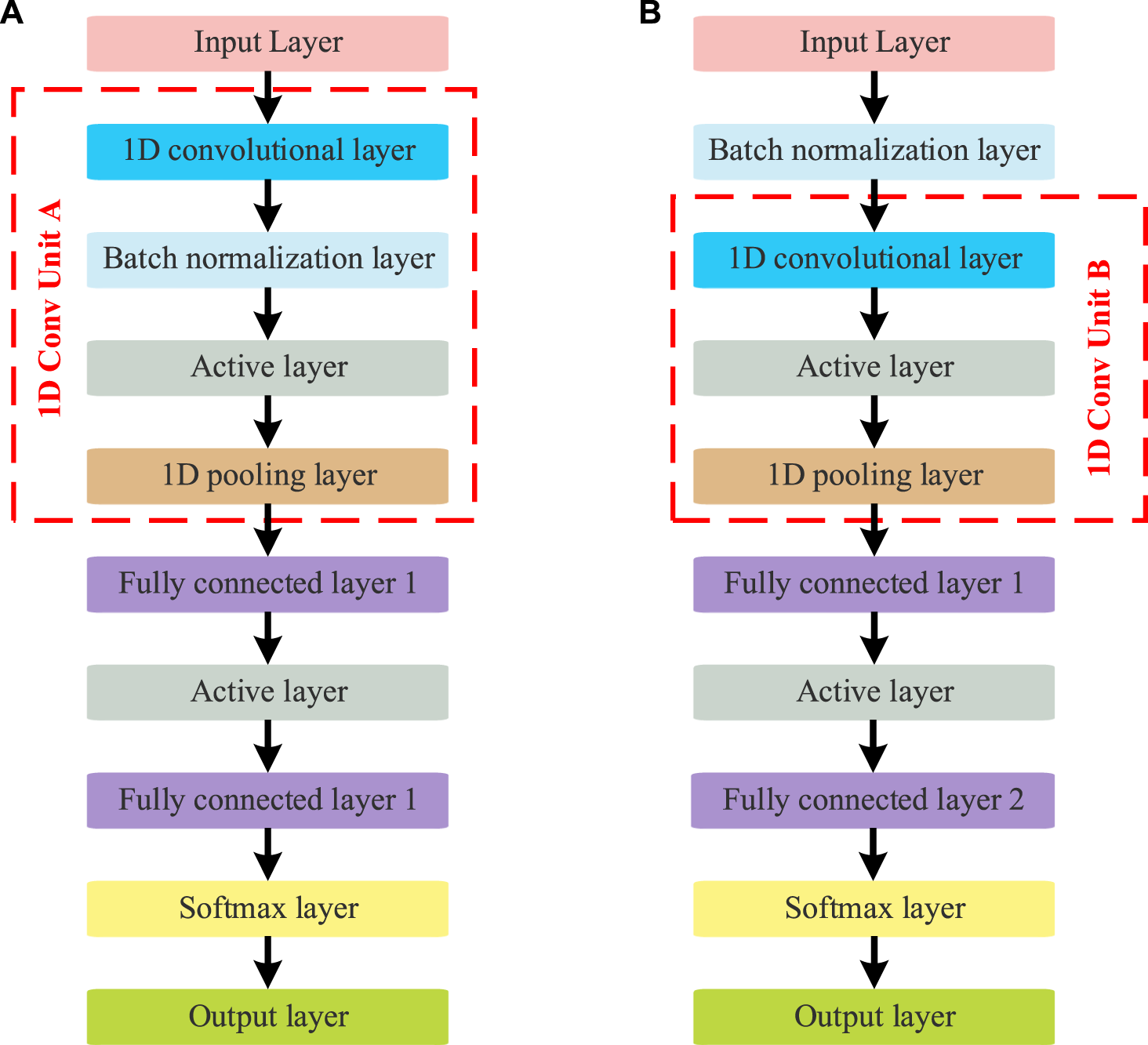
Figure 2. Structure of the commonly used one-dimensional convolutional neural network (1D-CNN) for coal and gangue recognition: (A) 1D-CNN-A and (B) 1D-CNN-B [76]. (Reproduced with permission from Ref. [76]. Copyright 2022, Frontiers in Energy Science)
Figure 3 depicts the training process of the deep learning model, showing the accuracy and loss curves over iterations. During the first iteration, the classification accuracy was low and the error rate was relatively large. However, starting from the subsequent iterations, the classification accuracy improved significantly, exceeding 90% and reaching a short-term stable stage. Beginning from the 14th iteration, the accuracy rate experienced a small fluctuation for a while, then gradually increased, and finally stabilized at a relatively high accuracy level, with the error rate also remaining stable at a relatively low level. This trend indicates that the model converges well after sufficient training and achieves stable classification performance.
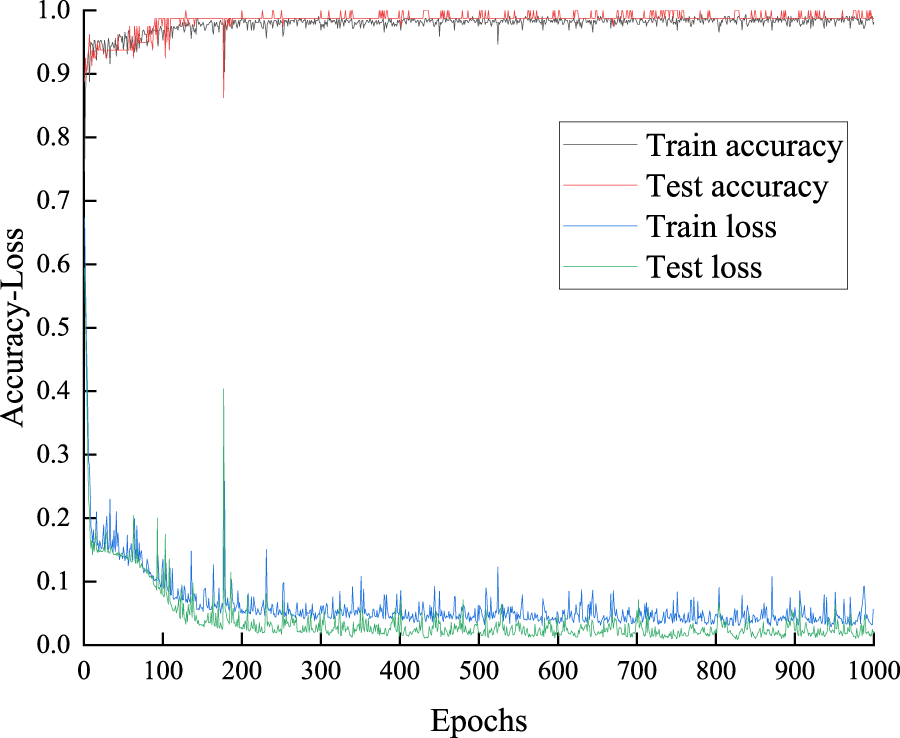
Figure 3. Accuracy and loss curves of the proposed 1D-CNN recognition model for coal and gangue classification [76]. (Reproduced with permission from Ref. [76]. Copyright 2022, Frontiers in Energy Science)
3.4. Spectral Preprocessing and variable selection methods
Spectral pretreatment is crucial for improving the accuracy of LIBS coal quality analysis. Baseline correction is one of the most important preprocessing steps, as raw LIBS spectra often contain significant background noise and baseline drift caused by matrix effects and environmental interference [77-78].
Figure 4 demonstrates the effect of baseline correction on LIBS spectra of pulverized coal using the P-airPLS method. As shown in the figure, the raw spectrum (upper curve) contains considerable baseline fluctuations and background interference, which can adversely affect the accuracy of quantitative analysis. After applying the P-airPLS baseline correction algorithm, the corrected spectrum (lower curve) exhibits a much cleaner baseline with effectively removed background interference, while the characteristic spectral peaks are well preserved. This preprocessing strategy significantly improves spectral quality and enhances the reliability of subsequent quantitative analysis.
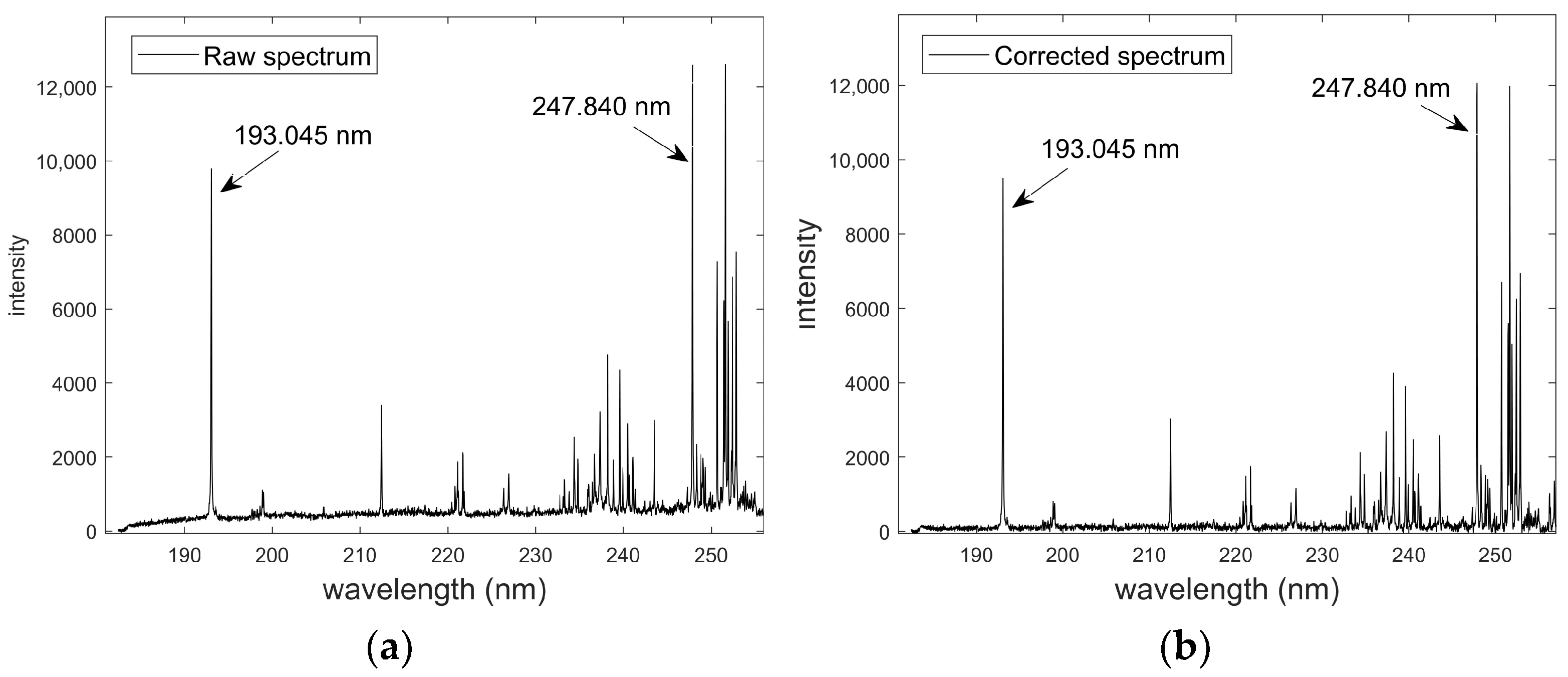
Figure 4. Effect of baseline correction on LIBS spectra of pulverized coal: (a) original data; (b) data following baseline correction using the P-airPLS method [77]. (Reproduced with permission from Ref. [77]. Copyright 2022, MDPI)
The method of variable selection has a significant impact on the performance of quantitative models. The study compared the effects of two variable selection methods, namely genetic Algorithm (GA) and Collaborative Interval Partial Least Squares (siPLS). Figure 5 presents the prediction results of the random forest (RF) model for ash content in coal using the SPXY (sample partitioning based on joint X-Y distances) dataset partitioning method. The figure shows the correlation between the actual ash content and the predicted values for both the training set and the test set. The data points are clustered closely along the diagonal line, indicating a strong linear relationship between the measured and predicted values. The evaluation metrics, including root mean square error (RMSE), mean absolute error (MAE), and mean relative error (MRE), demonstrate the excellent predictive performance of the SPXY-RF model. This approach effectively captures the complex nonlinear relationships between the LIBS spectral features and the coal properties, leading to accurate and reliable quantitative analysis.
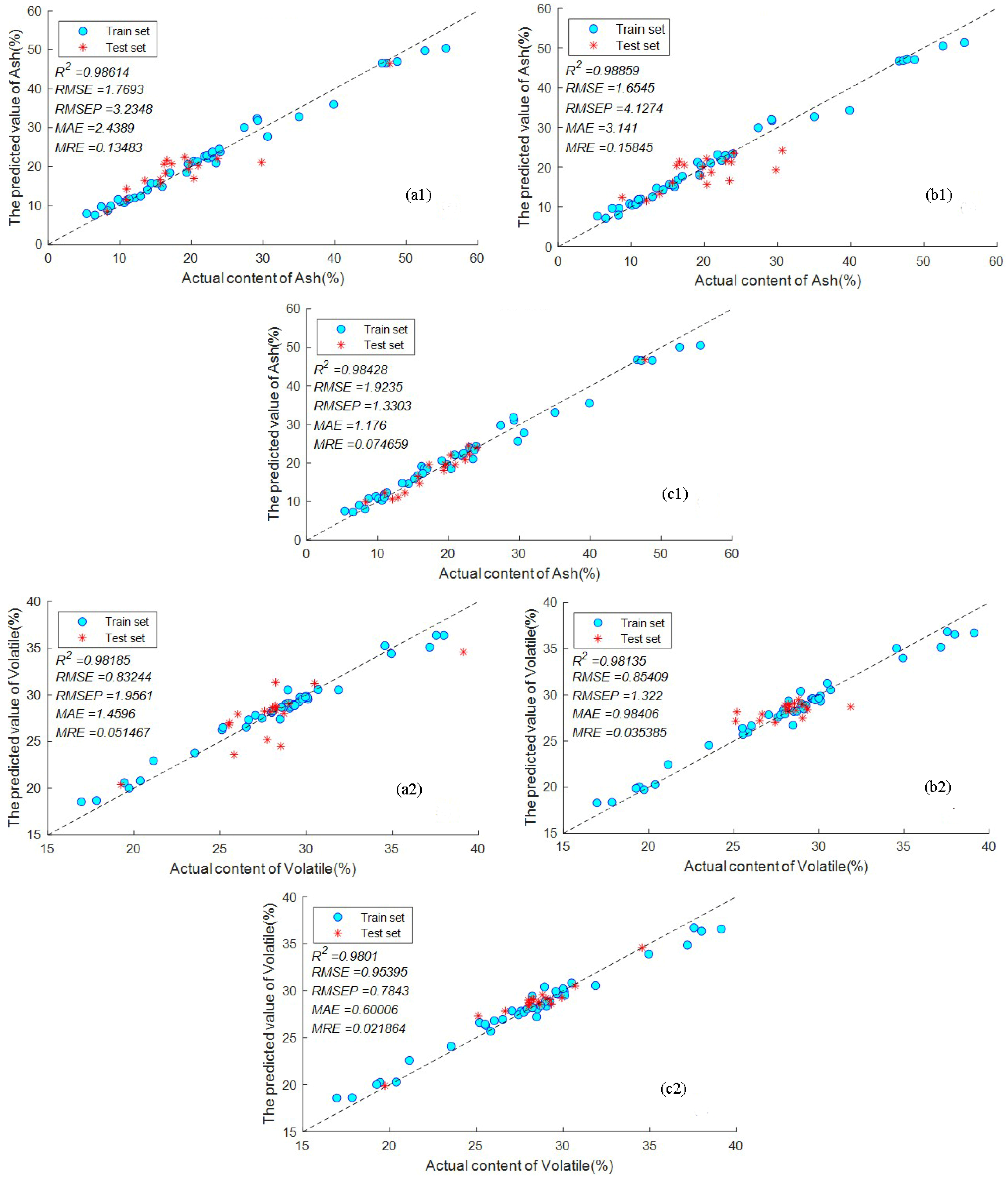
Figure 5. Prediction results of the random forest (RF) model for ash content in coal using the SPXY dataset partitioning method [82]. (Reproduced with permission from Ref. [82]. Copyright 2023, MDPI (Applied Sciences))
3.5. Multivariate quantitative analysis methods
Multivariate analysis methods play a significant role in the quantitative analysis of coal quality. The study compared the predictive performance of three models, namely principal component regression (PCR), artificial neural network (ANN), and principal component analysis combined with artificial neural network (PCA-ANN), for the industrial analysis indicators of coal [79,80]. Figure 6 shows the comparison between the predicted values and the actual values of moisture, ash, fixed carbon, volatile matter and calorific value by the three models.
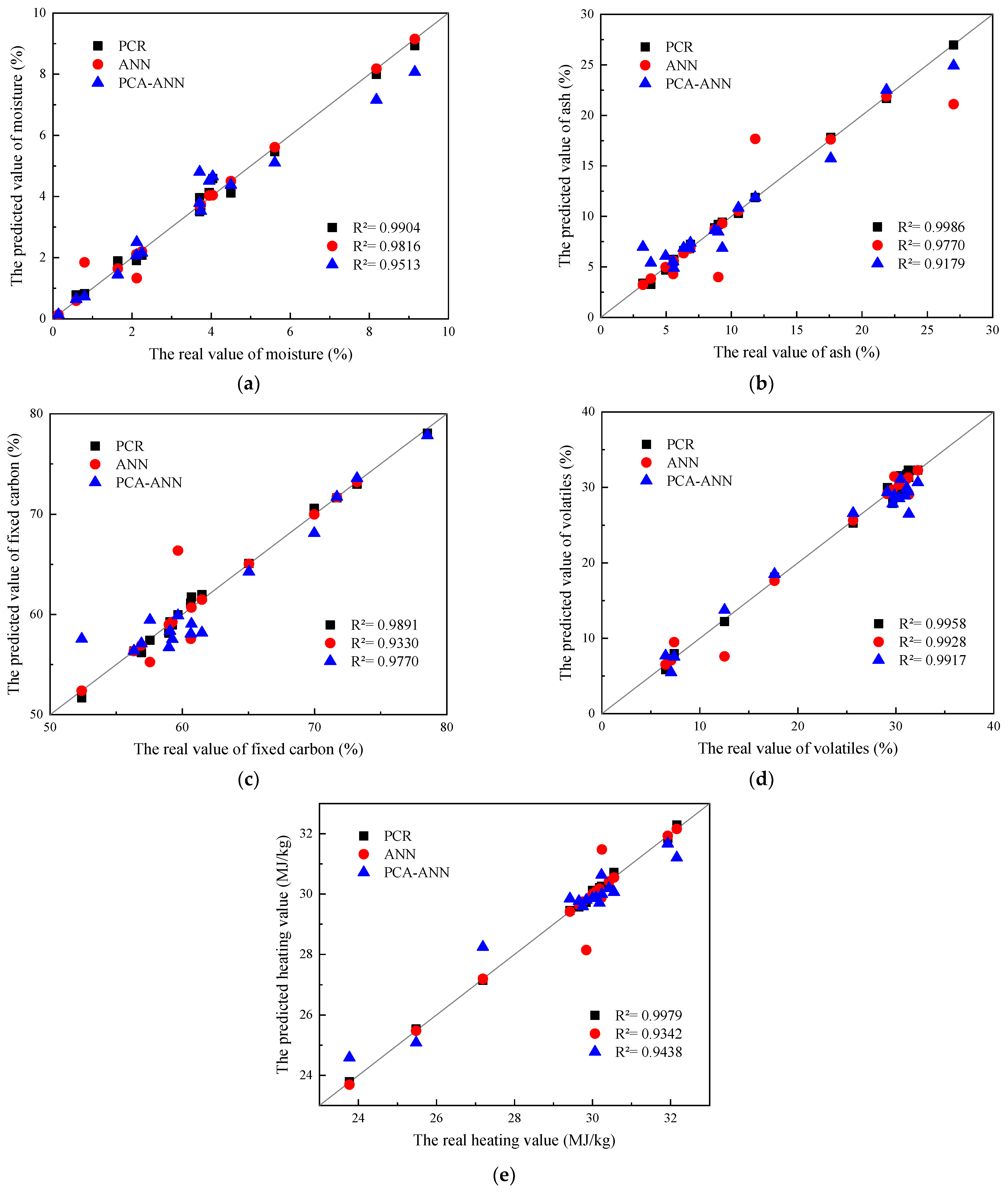
Figure 6. compares the predicted values and true values of moisture (a), ash (b), fixed carbon (c), volatile matter (d), and calorific value (e) of air-dried basis by three different stoichiometric methods [79]. (Reproduced with permission from Ref. [79]. Copyright 2022, MDPI (Energies))
The research results show that the PCR model has the best predictive performance, with its average R², RMSECV and MSE values being 0.9944, 0.39% and 0.21, respectively. Although the R² values of both ANN and PCA-ANN are greater than 0.9, the higher RMSECV and MSE values indicate that these two models are inferior to PCR. Compared with the other two models, PCR can not only achieve accurate prediction but also shorten the modeling time.
The method of dataset partitioning also has an impact on the performance of quantitative models. The study compared the effects of three methods, namely random selection (RS), Kennard-Stone (KS), and sample partitioning based on joint X-Y distance (SPXY), combined with PLS, SVR, and RF models. The results demonstrate that the combination of SPXY dataset partitioning with the RF model achieves superior predictive performance across all coal quality indicators. Specifically, the model yields high coefficients of determination, low root mean square errors of prediction, and low average relative errors for ash content, volatile matter, and calorific value, indicating excellent agreement between predicted and measured values [81,82]. The Kernel Extreme Learning Machine (KELM) was combined with the feature selection algorithm to establish a quantitative analysis model for the volatile matter, ash content and calorific value of coal, which proved that KELM is an efficient and powerful machine learning algorithm with good application value for the rapid analysis of coal quality [83]. By using the chemical structure model of coal, researchers obtained the spectral information of elements such as C, H, O, N, Si, Al, Ca, and Fe, which are closely related to volatile matter, through partial correlation analysis. Then, they used the principal component regression model (PCR) to obtain a quantitative model, and the prediction results of the model were also highly consistent with TGA (R=0.991). It has been proved that it is feasible to directly provide the information of each index of coal quality from the LIBS spectrum [84]. The sample was petroleum coke, but this paper used the method of cyclic elimination of characteristic wavelengths and combined with support vector regression (SVR) modeling to complete feature screening, which significantly reduced the root mean square error (RMSEP) of V, Fe, and Ni element predictions. This fine variable screening strategy has direct reference for the LIBS quantitative analysis of trace elements in coal [85].
3.6. Transfer Learning Applications
In practical LIBS-based coal analysis, acquiring large quantities of labeled spectral data is often expensive, time-consuming, and sometimes infeasible, particularly in industrial online monitoring scenarios where coal compositions vary dynamically [86]. To address this data scarcity challenge, transfer learning and semi-supervised learning have emerged as promising strategies that leverage related data or unlabeled samples to enhance model performance.
Transfer learning offers an effective solution for cross-device and cross-condition LIBS applications. When multiple LIBS online analysis systems are deployed in industrial sites, traditional calibration methods require extensive standard samples for each device, a process that is complex and labor-intensive. By leveraging transfer learning, models trained on a source device can be adapted to target devices with minimal recalibration. One practical strategy involves identifying key spectral features through variable importance projection scores from the source model, then performing residual regression using a small set of transfer samples. This approach significantly reduces the calibration burden while maintaining prediction accuracy for key coal quality indicators such as moisture, ash, sulfur content, and calorific value [94]. The success of this method relies on ensuring spectral consistency across devices and carefully selecting transfer samples that represent the target domain.
Semi-supervised learning provides another powerful paradigm for LIBS analysis by exploiting abundant unlabeled spectral data alongside limited labeled samples. Among various approaches, semi-supervised generative adversarial networks (SGANs) have gained particular attention for coal classification tasks. As illustrated in Figure 7, the SGAN architecture comprises a generator that synthesizes realistic pseudo-spectra and a discriminator that processes three data streams: real labeled LIBS spectra, real unlabeled spectra, and generated pseudo-spectra. Through adversarial training, the generator learns to produce increasingly realistic spectral data that mimic the distribution of real coal samples, while the discriminator learns to extract meaningful features for classification. The final Softmax output layer provides classification results for different coal types. This approach effectively utilizes unlabeled data to enhance model performance when labeled samples are scarce [87].
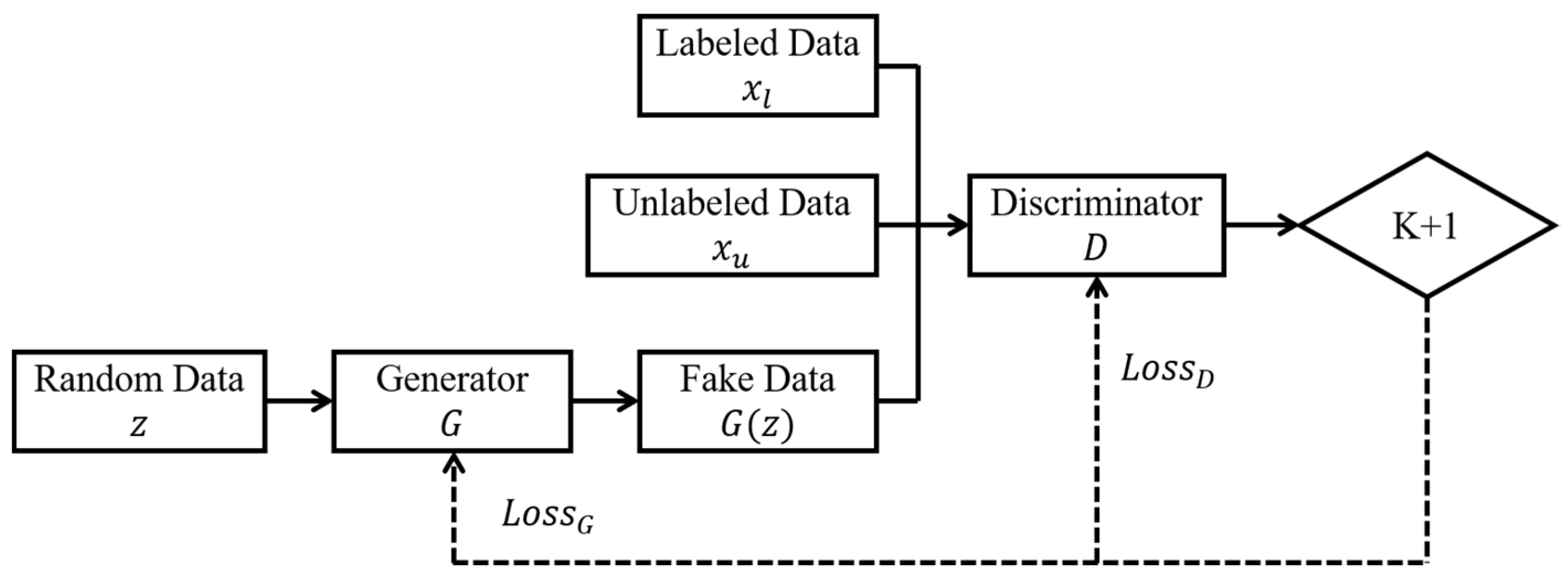
Figure 7. Network structure of the semi-supervised generative adversarial network (SGAN) for coal sample classification [87]. (Reproduced with permission from Ref. [87]. Copyright 2024, MDPI (Applied Sciences))
Experimental studies have demonstrated that the number of labeled and unlabeled samples significantly influences the classification accuracy of SGAN models. As the quantity of unlabeled data increases, the model's classification performance improves substantially. When sufficient unlabeled samples are available, SGAN achieves higher accuracy compared to traditional supervised models such as convolutional neural networks and random forests under the same labeled sample conditions. This advantage is particularly pronounced in LIBS applications where obtaining labeled data is difficult, such as in online industrial environments with rapidly changing coal compositions [87].
The integration of transfer learning and semi-supervised learning strategies offers a pathway toward more practical and deployable LIBS systems for coal analysis. By reducing dependence on large labeled datasets, these methods enable faster model development, lower calibration costs, and improved adaptability to new instruments and coal types. Future developments in this area are expected to further enhance the robustness and generalization capability of LIBS-based online monitoring systems [86-87, 94].
To provide a holistic overview of the various machine learning, deep learning, and transfer learning approaches discussed in this paper, Table 1 summarizes the key characteristics, application tasks, reported performance metrics, and respective advantages and limitations of each method. As shown in the table, the choice of an appropriate model depends on the specific analytical goal. For classification tasks, feature selection-based methods such as ReliefF-SVM offer high computational efficiency and good interpretability for real-time online detection; deep learning approaches, including both 2D-CNN and 1D-CNN architectures, enable automatic feature extraction from raw LIBS spectra, with 1D-CNN better preserving the natural sequential structure of spectral data. For scenarios with limited labeled samples, transfer learning strategies (HTr-LIBS and VIP-based model transfer) and semi-supervised learning (SGAN) provide effective solutions for small-sample and cross-device calibration. In quantitative analysis, PCR remains a simple and stable choice with fast training speed, while RF and KELM-based models achieve higher accuracy by effectively capturing non-linear relationships between spectral features and coal properties. Additionally, the fusion of LIBS with complementary spectroscopic techniques (FTIR, NIRS) offers improved accuracy for volatile matter and calorific value prediction by combining elemental and molecular information. This comparison highlights that no single method is universally superior, and future developments should focus on hybrid approaches that combine the strengths of different techniques, as well as the integration of LIBS with multimodal spectroscopy for more comprehensive coal characterization.
Table 1. Comparison of performance, advantages, and limitations of different machine learning and deep learning models for LIBS-based coal analysis
| Model/Method | Application Task | Accuracy/Precision Metric | Advantages | Limitations | Representative literature | |
| CST-PCA-ISSA-KELM | Seven coal types classification | 99.77% | Two-step dimensionality reduction effectively removes redundancy; ISSA avoids local optima; high accuracy | High computational cost for optimization; complex parameter tuning | [24] | |
| ReliefF-SVM | Coal/coal gangue classification |
100% (coal type) 100% (coal/gangue) |
High computational efficiency, good interpretability, suitable for real-time online detection | Feature engineering dependent, limited ability to model non-linear patterns | [68] | |
| GASF-CNN | Coal vs. coal gangue classification |
Accuracy: 98.33% Precision: 100% Recall: 97.06% F1: 98.51% |
Automatic feature extraction, no manual feature engineering required | High demand for computational resources; requires large training dataset; poor interpretability | [74] | |
| 1D-CNN-A / 1D-CNN-B | Coal & gangue recognition | High accuracy (>90% after convergence) | Preserves natural sequential structure of LIBS spectra; batch normalization options for stability | Performance depends on experimental conditions (spectral channels, SNR, sample complexity) | [76] | |
| SPXY-RF | Quantitative analysis (ash, volatile matter, calorific value) |
R² = 0.9843 (ash) R² = 0.9801 (volatile) R² = 0.9844 (calorific value) |
Strong capability for modeling non-linear relationships; good robustness | Large model size; potential overfitting with high-dimensional features | [82] | |
| SGAN (Semi-supervised GAN) | Coal sample classification | Accuracy improves with more unlabeled data; outperforms CNN/RF under limited labeled samples | Effectively utilizes unlabeled data; addresses label scarcity in industrial online monitoring | Complex training; generator-discriminator adversarial tuning required | [87] | |
| HTr-LIBS | Quantitative analysis under small sample size (ash, volatile matter) |
R² = 0.9029 (ash, n=19) R² = 0.9627 (volatile, n=19) |
Effectively addresses small sample size problem; prevents negative transfer | Requires correlation between source and target domain data | [86] | |
| VIP-based Model Transfer | Online calorific value prediction across multiple devices | MAE < 1.0 MJ/kg | Significantly reduces calibration samples needed for cross-device transfer; high practicality | Requires identical opto-mechanical structures between source and target devices | [94] | |
| PCR | Quantitative analysis of proximate indicators | Average R² = 0.9944 | Simple model structure; fast training; good stability | Cannot handle complex non-linear relationships | [79] | |
| LIBS + FTIR / LIBS + NIRS (Multispectral fusion) | Volatile matter, calorific value, moisture, ash | Improved accuracy over single-method approaches | Combines elemental (LIBS) and molecular (FTIR/NIRS) information; more complete coal characterization | System complexity; data fusion challenges; higher implementation cost | [98-100] |
4. Application Progress of Online Detection Technology
With the continuous deepening of LIBS technology in the field of industrial online monitoring, LIBS analysis systems in high power density and long-term continuous operation scenarios are facing many challenges. Due to the relatively low accuracy of coal LIBS analysis, a large portion of the input power will be converted into spectral fluctuations and measurement errors. Effectively reducing interference in online detection and enhancing model stability not only helps improve the accuracy of analysis but also extends the service life of the system. Therefore, establishing effective signal processing and model optimization strategies is a key challenge in the design and application of LIBS online detection systems [88-90]. This section systematically discusses the main strategies and the latest progress for reducing online detection interference and improving analysis performance from four perspectives: signal preprocessing, feature optimization, model calibration, and system integration.
4.1. Online measurement of Pulverized coal particle flow
The actual combustion in coal-fired power plants is pulverized coal processed by coal mills, so it is of great practical significance to directly detect and study the particle flow of pulverized coal. Researchers designed a LIBS detection system for pulverized coal particle flow, which mainly consists of a sample delivery section, a plasma generation section and a spectral detection section [91]. A piezoelectric vibrating feeder was used to generate a flow of pulverized coal particles with a diameter of 5.5 mm, and the mass flow rate was controlled at 0.941 g/min [54].
In this system, the incident laser passes through a diaphragm in a perforated mirror and is focused onto the coal flow by a quartz lens, generating plasma at the focal point. The plasma emission light is then reflected by the perforated mirror, focused into an optical fiber, and transmitted to a spectrometer for spectral detection and analysis.
The detection of pulverized coal particle flow faces several inherent challenges. These include non-uniform particle size distribution, fluctuations in particle flow density, and the columnar nature of the flow stream. Such characteristics often lead to ineffective spectral signal acquisition and poor measurement repeatability, which in turn compromise both the accuracy and precision of quantitative analysis [92]. During the laser-induced breakdown process, three typical scenarios can be observed: partial breakdown of the coal particles, coexistence of partial breakdown and air breakdown, and fully effective breakdown. To identify and exclude invalid spectral data, the characteristic emission line of carbon, a major component of coal, is commonly used as an evaluation indicator due to its high ionization potential.
Experimental studies have demonstrated that applying appropriate data processing strategies can significantly improve the reliability of online LIBS measurements. The elimination of invalid spectral data, followed by proper normalization procedures, effectively reduces spectral fluctuations and enhances signal consistency. As a result, the relative standard deviations of key elemental intensities show substantial improvement after preprocessing. These findings indicate that a well-designed preprocessing strategy—combining invalid data elimination and spectral normalization—can greatly enhance the signal stability and overall performance of online LIBS detection systems for pulverized coal analysis [54-55].
4.2. Application of Transfer Learning in Multi-Device Calibration
When deploying multiple LIBS online analysis systems in industrial sites, the traditional method requires calibrating the equipment on each production line with a vast array of standard samples respectively, which is a complex, time-consuming and labor-intensive process [93]. Considering that the opto-mechanical structures of the four devices exactly are the same, the researchers adopted the method of model transfer for calibration and selected the online equipment on production line 1 as the source model training equipment.
The key steps of transfer learning include ensuring spectral consistency across devices, calculating variable importance to identify key spectral features, constructing a compact training set combining existing and new samples, and performing residual regression to obtain the final transfer learning model [94].
To evaluate the prediction performance of the transfer learning model, the relative errors between measured and predicted calorific values were compared under different preprocessing strategies. Figure 8 presents the relative error distribution for PLSR models using original data versus those pre-processed with the SG derivative method. The results clearly show that the SG derivative preprocessing significantly reduces prediction errors across most samples. The model employing this preprocessing strategy achieves notably lower average relative errors compared to the model using raw spectral data, demonstrating that appropriate spectral preprocessing can effectively enhance the accuracy and reliability of online prediction models [90].
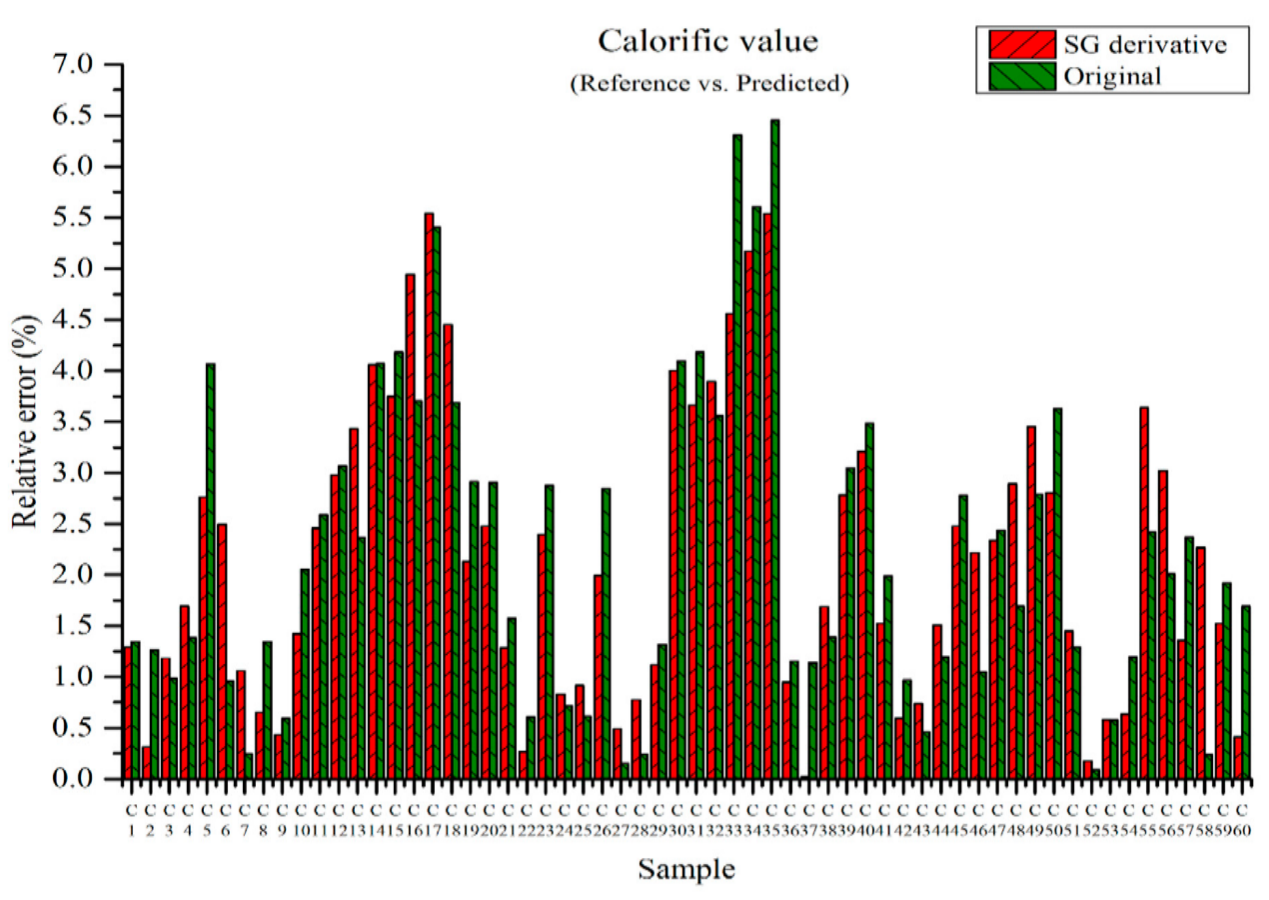
Figure 8. Relative errors between measured and predicted calorific values for the PLSR model using original data and the PLSR model pre-processed with the SG derivative method [90]. (Reproduced with permission from Ref. [90]. Copyright 2023, MDPI (Applied Sciences))
The online prediction results using the transfer learning model demonstrate the effectiveness of this approach. Traditional coal quality laboratories typically require hours to obtain coal quality parameters, providing only discrete data points at specific time intervals. In contrast, the online analysis system reveals real-time fluctuation trends of material parameters with dramatically increased sampling frequency while maintaining excellent measurement accuracy. The average absolute errors for key coal quality indicators, including moisture, ash, sulfur content, and calorific value, all remain within acceptable limits, confirming the practical viability of this method for industrial applications.
4.3. Combined use of multispectral techniques
As an atomic spectroscopy technique, LIBS can determine the composition and concentration of elements and has a good analytical accuracy for inorganic elements and ash-forming components. The volatile matter and calorific value of coal are not only related to the elemental composition but also closely related to the molecular structure [95-97]. Therefore, the combination of LIBS and molecular spectroscopy technology to simultaneously obtain elemental information and molecular information is expected to improve the accuracy of coal quality analysis.
LIBS offers distinct advantages in rapid elemental detection, including simple or no sample preparation, real-time response, and the ability to detect multiple elements simultaneously. These characteristics make it particularly suitable for online industrial applications. However, LIBS alone may struggle to fully capture organic components and molecular structures that are essential for comprehensive coal quality assessment. To address this limitation, integrating LIBS with complementary spectroscopic techniques has emerged as a promising strategy.
Research has demonstrated that combining LIBS with Fourier Transform Infrared Spectroscopy (FTIR) significantly improves the analytical performance for volatile matter and calorific value. FTIR provides detailed information about molecular bonds and organic functional groups, complementing the elemental data obtained from LIBS. The synergistic use of these two techniques enables a more complete characterization of coal properties, leading to more accurate predictions of key quality indicators.
Similarly, the integration of LIBS with Near-Infrared Reflection Spectroscopy (NIRS) has been shown to enhance prediction accuracy for coal quality parameters. NIRS is particularly sensitive to C-H, O-H, and N-H bonds, making it effective for analyzing organic components such as volatile matter and moisture content. When combined with LIBS, which excels at quantifying inorganic elements and ash-forming components, the fused spectral information provides a more holistic view of coal composition.
A stepwise analysis strategy can be employed to fully utilize the complementary nature of these techniques. First, LIBS is used to analyze ash content and inorganic elemental composition, leveraging its sensitivity to metallic elements. Meanwhile, NIRS provides information on moisture content and organic molecular structures. The results from both techniques are then integrated to infer calorific value and volatile matter content. Finally, fixed carbon content can be calculated by subtracting the measured components from the total mass.
This multi-technique fusion approach effectively overcomes the limitations of any single spectroscopic method. LIBS contributes rapid and accurate elemental analysis, while molecular spectroscopy techniques fill the gap in organic component detection. The combination not only improves prediction accuracy but also enhances the robustness and reliability of coal quality analysis, making it highly suitable for industrial online monitoring applications where comprehensive and timely coal characterization is essential [98-101].
5. Conclusions and Prospects
The rapid coal analysis technology based on LIBS has obvious advantages, but the deep, high-precision and high-reliability industrial online detection of coal still faces challenges such as spectral feature redundancy, matrix interference, self-absorption effect and online detection interference.
This paper describes the bottleneck problems affecting the performance of LIBS coal analysis and introduces the corresponding solutions from aspects such as spectral preprocessing, feature selection, machine learning models, quantitative analysis methods, and online application methods. The article focuses on strategies to enhance the accuracy of coal classification and the precision of quantitative analysis, such as the optimization of feature selection algorithms, the improvement of machine learning classification models, the enhancement of spectral preprocessing, the improvement of multivariate quantitative analysis methods, and the application of multispectral techniques. In addition, this paper mainly introduces some innovative methods for reducing the volatility of online detection spectra and improving the generalization ability of the model, including discarding invalid data, standardizing data (normalization methods), optimizing variable selection methods, and transfer learning methods, etc.
Looking ahead, we believe that the development of LIBS coal analysis technology needs to focus on the following aspects: (1) Developing low-redundancy and high-information-volume spectral feature extraction methods, and efficient mining of high-quality sample data; (2) Develop new efficient machine learning algorithms and chemical analysis methods to establish quantitative analysis models with higher accuracy and greater stability; (3) Compact and integrated LIBS online detection system, used for industrial applications such as coal-fired power plants and coal preparation plants; (4) Research on physical effects such as IBM and self-absorption has contributed to theoretical breakthroughs and material development in LIBS technology [102].
In addition, recent advances in deep learning, ensemble learning,
transfer learning, and the integration of LIBS with complementary
spectroscopic techniques such as FTIR and NIRS offer promising
strategies to overcome the current performance limitations of LIBS-based
coal analysis. With continued progress in materials science, micro-nano
fabrication, and system integration, LIBS-based coal analysis technology
is expected to play an increasingly important role in industrial online
monitoring applications.
Author Contributions
Guangtao Fu: Conceptualization, Data curation, methodology, Software, Validation, Visualization, Writing - original draft; Ruizhan Zhai: Formal analysis, Resources, Funding acquisition, Supervision, Project administration, Writing - review & editing; Rongzhou Zhang: Formal analysis; Rongxin Ma: Formal analysis, Resources, Supervision; Chunling Dang: Formal analysis; Bingxu Yang: Formal analysis; Minzhe Liu: Formal analysis, Funding acquisition, Writing - review & editing; Kun Zhao: Formal analysis; Yongjing Wu: Formal analysis.
Acknowledgements
This work was supported by National Key Research and Development Program of China (2025YFE0212500), the Science and Technology Partnership Program, Ministry of Science and Technology of China (KY202501002), the National Natural Science Foundation of China (12404485), the International Cooperation Project of Shandong Province's Key R & D Program, China (2024KJHZ025), the Pilot Projects for Integrating science, Education & Industry of Qilu University of Technology (Shandong Academy of Sciences) (2024GH11 and 2024GH13), and Shandong Laser Equipment Innovation and Entrepreneurship Community Project (JGGTT2025-01, JGGTT2025-02, JGGTT2025-03). Jinan "20 New Colleges and Universities" Innovation Team Introduction Project (202228047)
Conflicts of Interest
The authors declare that the research was conducted in the absence of any commercial or financial relationships that could be construed as a potential conflict of interest.
References
-
Z. Zhang, I. Fidan, M. Allen. “Detection of material extrusion In-process failures via deep learning.” Inventions 2020, 5, 3, 25.
-
“ISO/ASTM 52900:2015 - additive manufacturing — general principles — terminology.”
-
S. Kedziora, T. Decker, E. Museyibov, J. Morbach, S. Hohmann, A. Huwer, M. Wahl "Strength properties of 316L and 17-4 PH stainless steel produced with additive manufacturing." Materials 2022, 15, 18, 6278.
-
M. Attaran. "The rise of 3-D printing: The advantages of additive manufacturing over traditional manufacturing." Business Horizons 2017, 60, 5, 677.
-
Z. Zhang, I. Fidan. "Machine Learning-Based Void Percentage Analysis of Components Fabricated with the Low-Cost Metal Material Extrusion Process." Materials 2022, 15, 12, 4292.
-
S. Choton, N. Gupta, J. Bandral, N. Anjum, A. Choudhary. "Extrusion technology and its application in food processing: A review." The Pharma Innovation Journal 2020, 9, 2, 162-168.
-
P. Ravi. "Understanding the relationship between slicing and measured fill density in material extrusion 3D printing towards precision porosity constructs for biomedical and pharmaceutical applications." 3D Print. Med. 2020, 6, 1, 10.
-
J. Najmon, S. Raeisi, A. Tovar. "Review of additive manufacturing technologies and applications in the aerospace industry." Additive manufacturing for the aerospace industry. 2019, 7, 31.
-
M. Mohammadizadeh, H. Lu, I. Fidan, K. Tantawi, A. Gupta, S. Hasanov, Z. Zhang, F. Alifui-Segbaya, A. Rennie. "Mechanical and Thermal Analyses of Metal-PLA Components Fabricated by Metal Material Extrusion." Inventions 2020, 5, 3, 44.
-
G. Fecher, J. Kübler, C. Felser "Chirality in the solid state: Chiral crystal structures in chiral and achiral space groups." Materials. 2022, 15, 17, 5812.
-
H. Gong, D. Snelling, K. Kardel, A. Carrano. "Comparison of Stainless Steel 316L Parts Made by FDM-and SLM-Based Additive Manufacturing Processes." JOM. 2019, 71, 3, 880-885.
-
Z. Zhang, H. Wang, J. Li, H. Fu. "Recent Applications of Metal Additive Manufacturing: A Review." X-Disciplinarity. 2025, 1, 1, 8.
-
P. Huang, Pao-Ming, C. Lee. "Estimation of Tool Wear and Surface Roughness Development Using Deep Learning and Sensors Fusion." Sensors. 2021, 21, 16, 5338.
-
C. Ciracì, F. Vidal-Codina, D. Yoo, J. Peraire, S.-H. Oh, D. R. Smith. "Impact of surface roughness in nanogap plasmonic systems." ACS Photonics 2020, 7, 4, 908–13.
-
C. L. He, W. J. Zong, J. J. Zhang. “Influencing factors and theoretical modeling methods of surface roughness in turning process: state-of-the-art.” Int. J. Mach. Tools Manuf. 2018, 129, 15–26.
-
V. Alfieri, P. Argenio, F. Caiazzo, V. Sergi. “Reduction of surface roughness by means of laser processing over additive manufacturing metal parts.” Materials 2017, 10, 1, 30.
-
W. Ben Chaabene, M. Flah, M. L. Nehdi. “Machine learning prediction of mechanical properties of concrete: critical review.” Constr. Build. Mater. 2020, 260, 119889.
-
S. Badini, R. Stefano, P. Raffaele. "Unleashing the power of artificial intelligence in materials design." Materials. 2023, 16, 17, 5927.
-
C. Wang, X. P. Tan, S. B. Tor, C. S. Lim. “Machine learning in additive manufacturing: state-of-the-art and perspectives.” Addit. Manuf. 2020, 36, 101538.
-
L. Meng, B. McWilliams, W. Jarosinski, H.-Y. Park, Y.-G. Jung, J. Lee, J. Zhang. “Machine learning in additive manufacturing: a review.” JOM 2020, 72, 6, 2363–77.
-
C. Gobert, E. W. Reutzel, J. Petrich, A. R. Nassar, S. Phoha. “Application of supervised machine learning for defect detection during metallic powder bed fusion additive manufacturing using high resolution imaging.” Addit. Manuf. 2018, 21, 517–28.
-
B. Freeland, E. McCarthy, R. Balakrishnan, S. Fahy, A. Boland, K. Rochfort, M. Dabros, R. Marti, S. M. Kelleher, J. Gaughran "A review of polylactic acid as a replacement material for single-use laboratory components." Materials. 2022, 15, 9, 2989.
-
S. Liparoti, D. Sofia, A. Romano, F. Marra, R. Pantani. "Fused filament deposition of PLA: the role of interlayer adhesion in the mechanical performances." Polymers. 2021, 13, 3, 399.
-
Y. Lu, D. Li, and F. Liu. "Characterizing the chemical structure of Ti3C2Tx MXene by angle-resolved XPS combined with argon ion etching." Materials 2022, 15, 1, 307.
-
B. Salvadori, A. Cagnini, M. Galeotti, S. Porcinai, S. Goidanich, A. Vicenzo, C. Celi, P. Frediani, L. Rosi, M. Frediani, G. Giuntoli, L. Brambilla, R. Beltrami, S. Trasatti "Traditional and innovative protective coatings for outdoor bronze: Application and performance comparison." Journal of Applied Polymer Science. 2018, 135, 12, 46011.