



pplication of laser-induced breakdown spectroscopy for heavy metal detection in aqueous solutions
Abstract
Water constitutes the essential basis for sustaining life. With the escalating contamination of global water resources, there exists a critical and immediate demand for a methodology enabling rapid, precise, and comprehensive elemental detection in aqueous solutions containing elevated concentrations of heavy metals. Traditional detection methods are plagued by limitations including intricate sample pretreatment procedures, prolonged detection cycles, and a heavy reliance on specialized laboratory conditions, thereby posing challenges for achieving micro-scale, in-situ, and dynamic distribution detection and analysis. Laser-Induced Breakdown Spectroscopy (LIBS) technology has emerged as one of the premier techniques for detecting heavy metals in aqueous solutions, owing to its distinctive advantages, including the elimination of complex sample preparation, simultaneous multi-element detection, rapid analysis, and the capability for remote in situ operation. However, the direct detection of aqueous solutions using LIBS suffers from issues such as liquid splashing, plasma quenching, inhomogeneous elemental distribution, and laser energy loss, resulting in insufficient detection sensitivity, accuracy, and stability. This paper systematically reviews the key technological advances of LIBS in the detection of heavy metals in aqueous solutions and comprehensively summarizes the principles, advantages, application performance, and representative research results of various technical routes from four core perspectives: sample pretreatment, detection system optimization, data processing and combined techniques. Meanwhile, the challenges faced by LIBS in the determination of heavy metals in aqueous solutions are concluded, and its future development trends toward miniaturization, intellectualization, and multi-technology integration are prospected. This review aims to provide a comprehensive reference for the further optimization and practical application of LIBS in the monitoring of heavy metal pollution in aquatic environments.
1. Introduction
Water is the source of all life and an important cornerstone for maintaining the survival and development of human society. But with the development of the times, the demand for water resources in various fields such as service industry, agriculture, and industry continues to increase[1]. At the same time, the problem of heavy metal pollution in water is becoming increasingly severe, which not only seriously limits the sustainable development of human society and economy, but also directly threatens human life and health and the ecological environment on which they rely for survival[2-4]. Therefore, in order to ensure human health and ecological environment security, there is an urgent need to research a rapid, accurate, and efficient detection technology.
The traditional methods for detecting heavy metals in aqueous solutions mainly include atomic absorption spectroscopy AAS[5], inductively coupled plasma spectroscopy ICP-OES/MS[6], spectrophotometry[7], chemical titration[8], etc. In terms of sample processing, the pretreatment steps for aqueous solution samples are lengthy, and the use of large amounts of chemical agents during pretreatment greatly increases the risk of contamination and loss[9]. In terms of instrument usage, traditional detection instruments are expensive and bulky, making it difficult to achieve real-time on-site detection. At the same time, they rely heavily on the experimental environment and the professional technical level of operators[10]. In terms of detection and analysis requirements, most traditional detection methods can only detect the concentration of heavy metals and cannot distinguish between different forms, resulting in the inability of detection range results to accurately reflect pollution risks.
LIBS provides a new approach for the detection of heavy metal elements in aqueous solutions due to its advantages such as no need for complex sample preparation, multi-element synchronous detection, fast detection speed, and remote operation in situ[11]. The essence of LIBS is laser ablation technology, and its basic principle is that the laser emits a pulsed laser beam, focuses on the surface of the sample, and ablates the focused area. The sample absorbs a large amount of energy during the ablation process, which excites the surface of the sample to generate plasma[12-14]. By using spectral analysis equipment to extract spectral information of atoms, ions, and molecules from plasma luminescence, corresponding characteristic spectral lines can be obtained by collecting photons at specific frequencies. Through analysis of laser-induced breakdown plasma emission spectra, qualitative identification and quantitative detection of sample chemical composition can be achieved[5, 15]. Nowadays, LIBS has been fully applied in various fields such as agriculture, national defense, biology, mineral testing, coal quality testing, and water quality testing[16]. LIBS faces significant challenges in detecting heavy metal elements in aqueous solutions due to issues such as liquid splashing, uneven element distribution, plasma quenching, and laser energy loss[17]. This article provides an overview of heavy metal element detection techniques in LIBS aqueous solutions, covering four aspects: sample pretreatment, detection system optimization, data processing, and cross technology integration. Intended to provide comprehensive reference for the further development of LIBS detection technology for heavy metal elements in aqueous solutions.
2. Sample Pretreatment
2.1. Microextraction enrichment
Microextraction enrichment is the combination of microextraction technology and target enrichment function, selectively concentrating low concentration target analytes from a large number of solution samples, while separating complex matrices, and ultimately obtaining high concentration, low interference target analyte samples[18]. Reducing the detection limit and improving sensitivity of heavy metal elements in aqueous solutions for subsequent LIBS detection is a key means to enhance the trace detection capability of LIBS[19]. There are mainly liquid-liquid microextraction (DLLME) enrichment, thin film microextraction (TFME) enrichment, solid-phase microextraction (SPME) enrichment, etc.
DLLME enrichment is a pre-treatment technique that achieves separation by redistributing analytes between two incompatible liquids after mixing. It has the advantages of high enrichment efficiency, low reagent dosage, and simple and fast operation[9]. It quickly captures and centrifugally concentrates trace target substances from a large number of liquid samples to obtain high concentration enriched phases. Gaubeur et al.[20] enriched Cd, Co, Ni, Pb, Zn and other elements by injecting an appropriate amount of 1-decanol and methanol into a sample solution containing a complex formed by metal ions and 1- (2-pyridylazo) -2-naphthol (PAN). Combined with LIBS, accurate quantification was achieved with a recovery rate of 95% - 105%. Chen et al.[21] used ionic liquids, [C6MIM] PF6 as an environmentally friendly extraction solvent, and methanol as a dispersant. This method lowered the detection limits of diethyl phthalate (DEP) and dibutyl phthalate (DBP) to 0.0053 μg/mL and 0.0094 μg/mL, efficiently concentrating trace amounts of DEP and DBP in wastewater and significantly improving detection sensitivity.
TFME enrichment is the selective adsorption and enrichment of trace target analytes from liquid samples using thin and porous adsorbent films as extraction media. Ripoll et al.[22] first used a method combining thin film microextraction and laser-induced breakdown spectroscopy (TFME-LIBS) for the detection of Cu, Cr, Ni, and Pb in aqueous solutions. By optimizing the graphene oxide film formation process and extraction parameters, the mold deposition method can obtain a more uniform adsorption layer, with a detection limit as low as 41 μg/L. This provides a new strategy for rapid analysis of trace metal elements in liquid samples, as shown in Figure 1. Poggialini et al.[23] believe that thin film microextraction of carbon based adsorbents is one of the most common methods. TFME was developed by combining TFME with nanoparticle enhanced laser-induced breakdown spectroscopy (NELIBS) and depositing water-based graphene nanosheets prepared by liquid pulse laser ablation on a glass substrate. The deposition of silver nanoparticles (AgNP) on the TFME carrier showed that when AgNP was applied, the emission line of Cr was enhanced, and the estimated detection limit was lower compared to ordinary graphene TFME carriers. In addition, for the first time, a detection method was established by combining thin film microextraction (TFME) with gas chromatography-mass spectrometry (GC-MS). A divinylbenzene particle loaded membrane was prepared on a copper mesh by dip coating method. After optimizing the sampling conditions, efficient detection of methamphetamine (MAMP), chloramine ketone (KET), and methaqualone (MEQA) in wastewater samples was achieved, with detection limits as low as 5.5 ng/L, 2.0 ng/L, and 1.1 ng/L, respectively, and good precision. It was also found that the organic matter content and pH of the sample significantly affect the binding state of the target compound, meeting the needs of rapid detection of illegal drugs in wastewater epidemiology (WBE)[24].
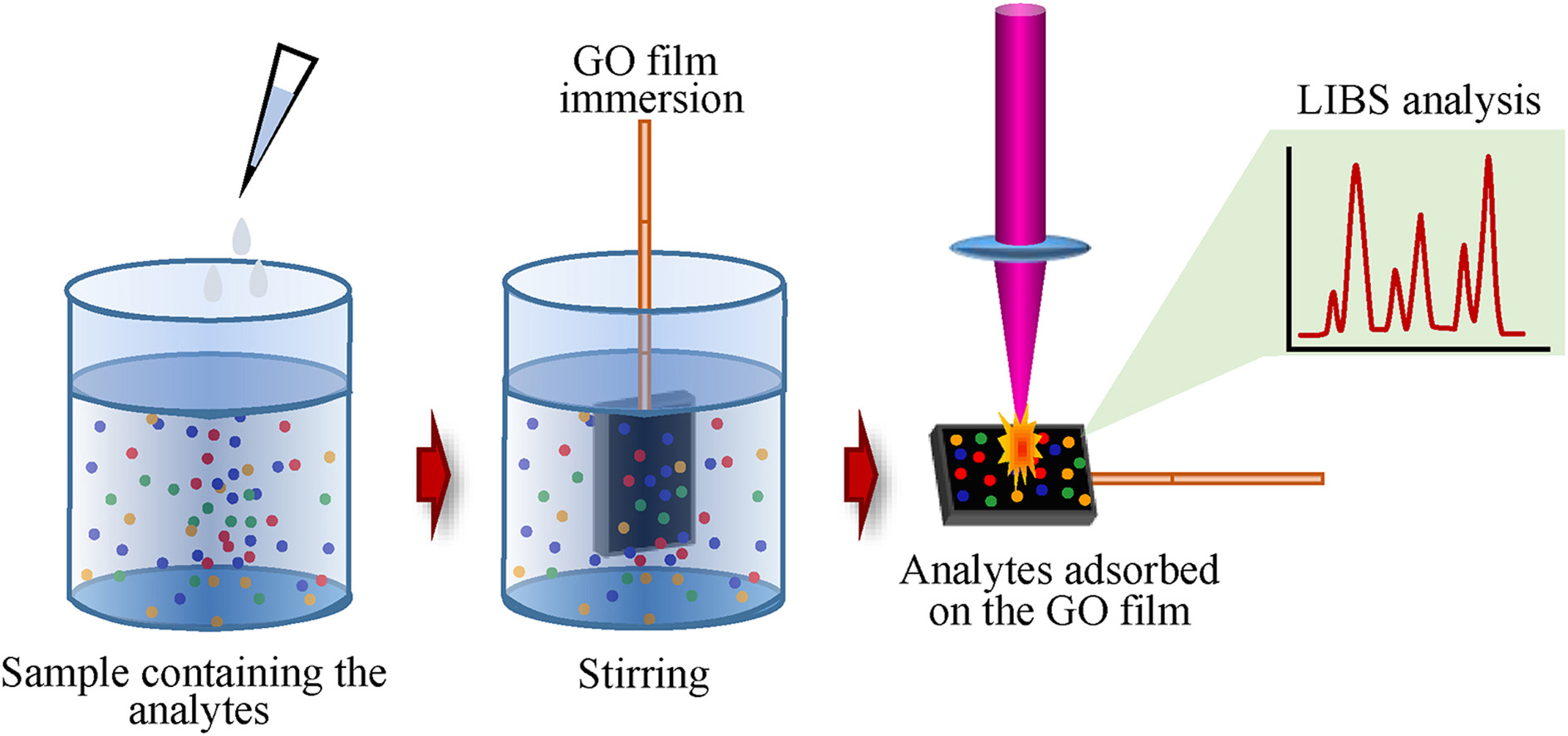
Figure 1. Thin Film Microextraction for trace elemental analysis of liquid samples using LIBS detection[22]
SPME enrichment is a rapid enrichment technique achieved through selective adsorption of target substances by fiber coating. It has the characteristics of simple operation, green and low consumption, and high enrichment efficiency, and is suitable for subsequent detection technology of LIBS[25]. Kemiao et al.[26] prepared poly (pyrrole) (PPy) in tube solid-phase microextraction (IT-SPME) nanocomposites doped with carboxylated multi walled carbon nanotubes (MWCNTs COOH) by electrodeposition method, as shown in Figure 2. This method has a good linear range in the range of 1-500 μg/L, and the correlation coefficient (R2) is higher than 0.9971. The detection limit and quantification limit are 0.12-1.27 μg/L and 0.41-4.22 μg/L, respectively. This method achieves satisfactory spiked recovery rates ranging from 80.34% to 103.23%, and has been successfully used for the analysis of actual environmental water samples. However, SPME extraction phase has a small volume and low sensitivity when analyzing trace substances, and surface coating materials also have a significant impact on extraction efficiency[27].
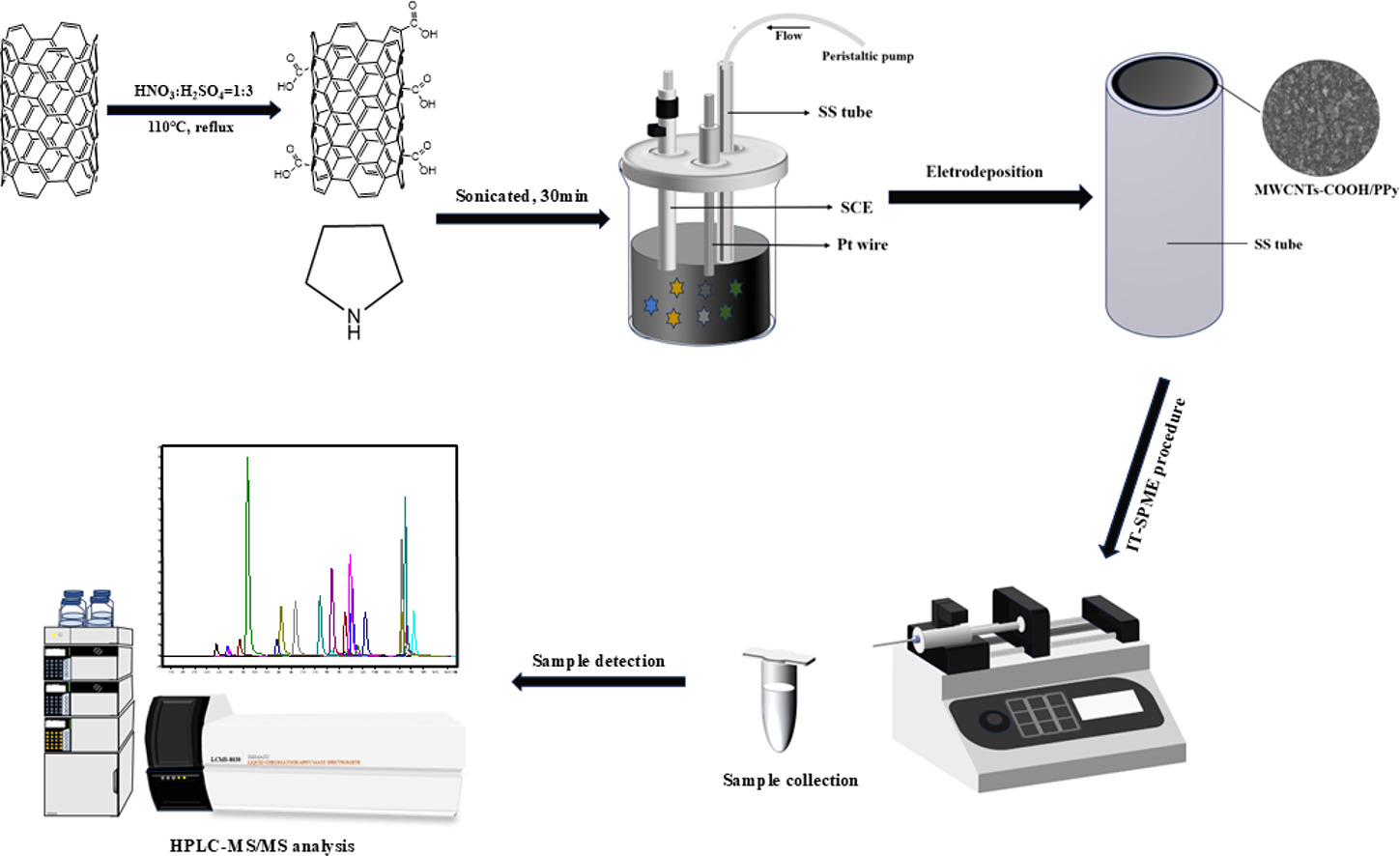
Figure 2. Systemic process of the preparation of the MWCNTs-COOH/PPy coating and IT-SPME-HPLC-MS/MS[26]
2.2. Solid-liquid conversion method
Solid-liquid conversion method is the process of using solid adsorption or substrate to capture trace elements in a liquid, transforming "liquid detection" into "solid detection" and completely solving the three major problems of sputtering, plasma quenching, and low sensitivity[28]. Foreign scholars Guanhong et al.[29] used sawdust particles as a substrate to adsorb heavy metal Cr in water. Through adsorption enrichment and liquid-solid conversion, the detection limit of Cr was reduced by 0.07 ppm, verifying the feasibility of natural porous materials in LIBS pretreatment. HerySuyanto[30] utilized Blackstone as an adsorbent to achieve qualitative and quantitative detection of Ag and Pb elements in aqueous solutions, demonstrating the application value of low-cost natural adsorbent materials. Suyanto et al.[31] further optimized the enrichment conditions of activated zeolite, and fixed Pb element in aqueous solution through its ion exchange and pore adsorption characteristics, achieving efficient detection of low concentration Pb. Yonghoon et al.[32] used filter paper as a liquid-solid conversion and heavy metal ion pre enrichment substrate for LIBS detection, providing a simple and feasible solution for sub ppm level detection of heavy metals in water: soaking the filter paper can adsorb 1.2 g of water sample, and the detection limits for Pb and Cr are 2.7 ppm and 0.36 ppm, respectively. You Zhengkai et al.[33] proposed a solid-liquid conversion method based on agarose membrane to optimize LIBS water heavy metal detection. The water sample was converted into semi-solid hydrogel by agarose and dried to form a membrane, solving the problem of droplet sputtering and laser energy attenuation, and enhancing spectral signals. The calibration curves R² for Cd, Pb, and Cr reached 0.990, 0.989, and 0.975, respectively, with detection limits as low as 0.011 mg/L, 0.122 mg/L, and 0.118 mg/L. The adsorption or substrate materials used in the above studies include sawdust, black stone, zeolite, filter paper, etc., which have the characteristics of low cost, easy availability, and excellent adsorption performance. After simple drying and liquid-solid conversion, they can be directly used for LIBS laser bombardment detection, effectively overcoming the problems of sputtering, quenching, and insufficient sensitivity in LIBS direct liquid measurement.
2.3. Other methods
Other sample pretreatment methods, including atomization detection, directed deposition enrichment, electro deposition assisted enrichment, freezing method, etc., have practical applications in the field of heavy metal detection in aqueous solutions. Professor Zheng Ronger's team[34], taking the solution of heavy metal lead as an example, established an ultrasonic spray unit to improve the quantitative analysis ability of LIBS for liquid sample detection. By measuring 12 samples with different concentrations, the linear range of lead analysis of the system within the concentration range of 0-4150 ppm was determined, and the correlation coefficient of the fitted calibration curve within the linear range was as high as 99.94%, and the detection limit of lead was 2.93 ppm. Lu Yuan[35] used guided deposition enhancement method to convert copper ions in water into solid copper elements through chemical displacement reaction, effectively increasing the quality of laser ablation and successfully achieving LIBS detection of underwater copper ions from scratch, and sub ppb underwater copper ion detection. And electro deposition assisted LIBS[36], optimizing deposition temperature and substrate temperature to achieve trace enrichment detection in water. These methods provide diverse solutions for detecting heavy metal elements in aqueous solutions through different mechanisms of action.
3. Detection System Optimization
3.1. Injection method
As the core component of LIBS detection system, static liquid level injection is the most basic and easy to operate injection method, which does not require additional injection devices and only places the aqueous solution in the container. However, when the laser beam is focused on the static liquid surface, the fluctuation of the liquid surface caused by laser sputtering can lead to a decrease in LIBS detection sensitivity and instability of the detection results[37]. Jet injection is the mainstream technology direction of liquid LIBS, which includes two forms: microporous injection and conventional liquid jet. The microporous jet assisted LIBS experimental system consists of a traditional LIBS detection device, a sampling device, a microporous jet device, and a rectification device. The solution sample is injected into the system using a variable speed peristaltic pump with a flow rate of 0.8 mL/s. The core of the jet device is a 10 mm diameter metal sheet. The circular jet area at the center of the sheet contains 450 9 μm or 20 μm horn shaped microporous arrays. The liquid is converted into dense small droplets and continuously sprayed out through a microporous matrix and piezoelectric ceramic oscillation, achieving an online detection limit of 0.96 mg/L for Ca element in aqueous solution and maintaining good linear relationship over a wide concentration range[38]. In liquid jet LIBS technology, the position of the laser focus relative to the gas-liquid interface of the liquid sample is a key parameter that determines the analytical performance. Research has shown that optimizing the matching of this relative position can significantly enhance the plasma radiation intensity and stability, thereby improving the sensitivity and accuracy of detection. For example, when the laser focus is positioned in a liquid column about 0.2 millimeters behind the front interface of the jet, or set about 0.3 millimeters below the surface of the planar liquid layer, it can generate a plasma with stronger radiation and better physical properties. Under this optimized configuration, the relative standard deviation of the target element spectral signal can be reduced to 2%, while the signal-to-noise ratio can be increased by 2 to 4 times[39]. Further narrowband filtering spatiotemporal resolution imaging studies have confirmed that in this optimized mode, there are significant differences in the spatiotemporal evolution behavior of ion radiation and atomic radiation of elements in the plasma, providing important evidence for a deeper understanding of plasma physical processes[40]. In addition to the above two injection methods, nebulization assisted injection is also commonly used. Online ultrasonic nebulization assisted devices are combined with traditional LIBS systems to achieve continuous, highly sensitive, stable, and rapid on-site detection[41]. Ultrasonic atomization technology transforms liquid samples into dense droplets, and the results show that even at a laser pulse energy of 30 mJ, the LIBS signal still has a long lifetime and high signal-to-noise ratio. Through experiments and analysis of dissolved magnesium elements in pure water, the detection limit of magnesium elements can be as low as 0.242 ppm[42]. Aerosolization assisted injection achieves sample atomization through gas-liquid coupling, and combined with orthogonal experiments, system optimization of multiple parameters such as laser energy and gas-liquid flow rate can be achieved. It has shown good application effects in online monitoring of phosphorus elements in water[43]. In addition, metal powder assisted[44] and capillary injection[45] are used in LIBS for the detection of heavy metal elements in aqueous solutions for the analysis of major, impurities, and trace elements in liquids and water without any tedious sample pretreatment, providing a more practical and simpler method for improving the accuracy of LIBS technology in quantitative element analysis of liquids. Various injection methods have been innovated around simplifying preprocessing, improving signal stability and detection sensitivity, laying a key technical foundation for the application of LIBS technology in the detection of heavy metals and other elements in aqueous solutions.
3.2. Substrate structure design
The design of substrate structure is the core optimization method to improve the sensitivity, stability, and quantitative accuracy of LIBS detection of heavy metal elements in aqueous solutions. By constructing superhydrophobic, microstructured, or composite wettable substrates, the coffee ring effect during liquid-solid conversion can be effectively suppressed, achieving uniform distribution and enrichment of analytes and fundamentally improving the problems of weak signals and poor repeatability in direct liquid detection. At present, the mainstream substrate design forms in research are diverse and each has its own advantages. Superhydrophobic substrates are an important research direction, such as superhydrophobic metal substrates and PDMS substrates prepared by nanosecond laser ablation, which can increase the spectral signal intensity of elements such as Mg, Cd, Ca by more than three times[17]. A superhydrophobic peripheral hydrophilic internal composite structure was constructed on an aluminum substrate through femtosecond laser selective irradiation and chemical modification. This structure can effectively confine droplets within the hydrophilic region, significantly suppress the "coffee ring" effect, and achieve stable enrichment of analytes. The detection limit of this method for toxic elements such as Cr, Pb, As reaches the ppb level, and the determination coefficient (R²) exceeds 0.98, significantly improving the accuracy and reliability of quantitative analysis[46]. A superhydrophobic microstructure groove array resembling lotus leaf surface was prepared on a pure copper substrate. This structure not only induces thermal capillary action through evaporation, but also transports analytes from the droplet edge to the center by initiating Marangoni flow, effectively suppressing the coffee ring effect. Using this substrate, the relative standard deviation (RSD) of Sr element spectral intensity at 407.67 nm can be as low as 3.6%, the detection limit (LOD) reaches 0.11 μg/mL, and the determination coefficient (R²) is as high as 0.995[47]. Combining circular grooves and silver nanoparticles (Ag NPs) to enhance LIBS. The prepared micro/nanostructures can suppress the coffee ring effect and improve the light absorption efficiency. By establishing calibration curves for Cu, Pb, and Cr elements, this method achieved a detection limit of at least 0.10 μg/mL and improved spectral reproducibility[48]. Wang et al.[10] proposed a dual functional LIBS enhancement strategy based on a super infiltrated copper substrate, which prepared super hydrophilic (CuO/Cu) and super hydrophobic (D-CuO/Cu) micro nano structured substrates through chemical oxidation and thiol modification, respectively. Layered CuO nano sheet arrays enhanced copper plasma emission by 46 times under 50 mJ laser. At the same time, the superhydrophilic interface suppresses CRE through capillary sweating to achieve uniform deposition, while the superhydrophobic interface utilizes Marangoni convection to enrich the analyte to a very small area with a contact area of 0.03 mm², combined with concentric PET droplet control, as shown in Figure 3. This method achieves ultra sensitive detection of Pb and Cr in water, with detection limits as low as 0.09 mg/L (Pb) and 0.08 mg/L (Cr), respectively, and a relative standard deviation of < 5.2%. The actual recovery rate of lake water samples reaches 95-105%, providing an innovative technological path for rapid and highly reliable trace analysis of heavy metals in water bodies on site.
Overall, the microstructure functionalized substrate optimized by laser etching, biomimetic preparation, composite modification and other methods can achieve multiple effects of analyte enrichment, signal enhancement and detection stability improvement, providing key technical support for the application of LIBS technology in the precise detection of trace heavy metals in aqueous solutions.
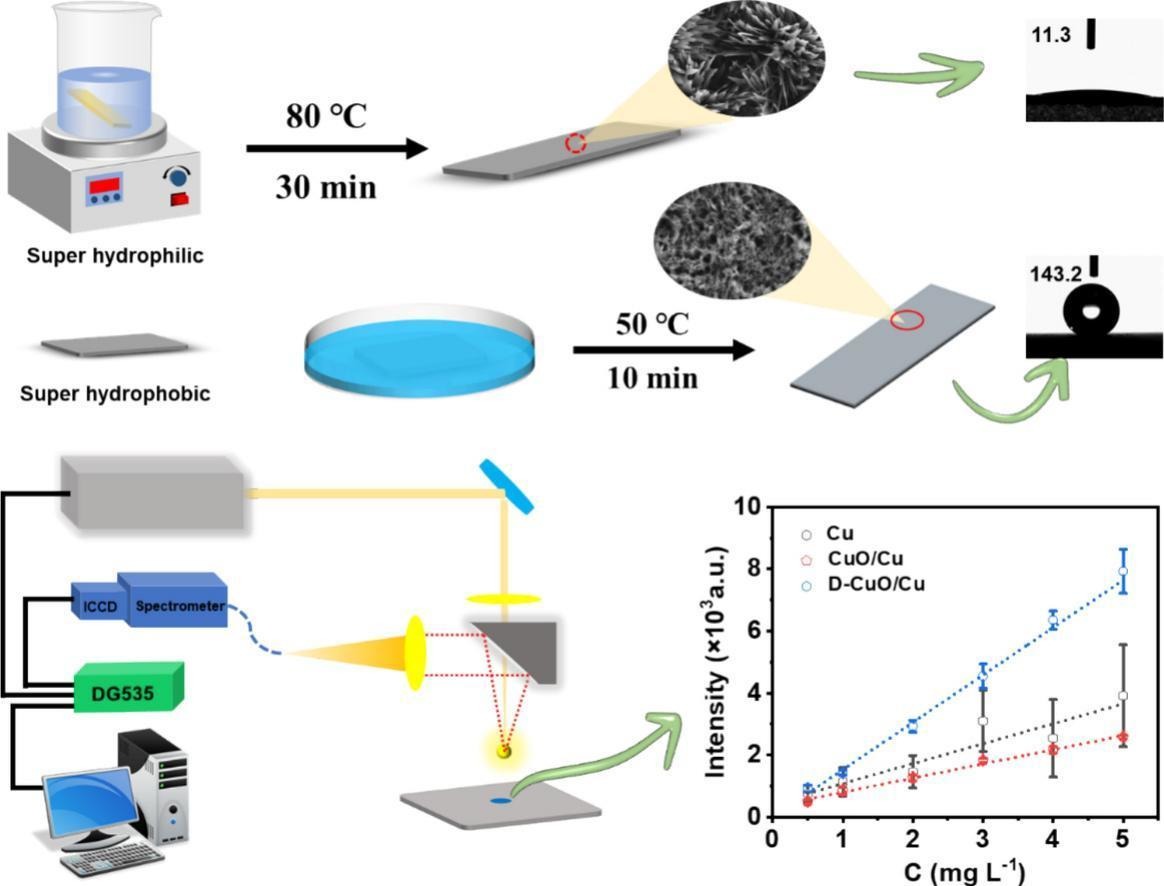
Figure 3. Schematic illustration of the fabrication process of superhydrophilic (CuO/Cu) and superhydrophobic (D-CuO/Cu) substrates, the LIBS experimental setup, and the corresponding calibration curves for heavy metal detection[10]
3.3. Laser action mode
The regulation of laser action mode, including laser pulse form, action mode, and coupling mode with the sample, is the core strategy to overcome the challenges faced by LIBS technology in aqueous solution analysis, such as liquid splashing and plasma quenching, and thus improve detection sensitivity and stability[13]. By optimizing these parameters, plasma emission signals can be significantly enhanced and quantitative analysis performance can be improved.
The optimization of the action mode of single pulse laser is the basis for improving the performance of LIBS analysis. For aqueous solution samples, the use of Thin Laminar Flow mode can effectively control the liquid morphology. Combined with spatial constraints and flow rate control, it can significantly suppress splashing and stabilize plasma. Research has shown that by optimizing parameters such as laser energy, characteristic spectral lines, and acquisition delay time, this mode can increase the characteristic spectral line intensity of Pb element in aqueous solution by four times, providing an effective method for quickly and easily solving the problems of liquid sputtering pollution and plasma quenching[49]. Another strategy is to use microstructured substrates. By preparing periodic lattice microstructures on the surface of substrates (such as brass) and utilizing the synergistic effect of microstructures and lasers, laser energy absorption and plasma confinement can be enhanced. Experimental results have shown that this microstructure can enhance the spectral line intensity of Cu element by 9.09 times compared to smooth substrates, while also increasing the plasma temperature and electron density, thereby achieving trace detection of elements such as Cr and Pb[50, 51].
Multi pulse laser technology enhances the interaction between laser and matter by coupling the timing and energy between pulses, greatly improving spectral signals and detection sensitivity. Collinear Double Pulse LIBS (DP-LIBS) achieves efficient utilization of laser energy and plasma reheating by optimizing the time interval between two pulse beams[52]. Research has shown that in the detection of sodium chromate solution, the combination of plasma self-restraint mode can significantly reduce the detection limit of Cr element[53, 54]. The multi pulse LIBS system constructed by a passive Q-switched laser can generate multiple microsecond interval pulse outputs within one pump cycle. This multi pulse sequence is beneficial for maintaining and enhancing plasma, and has been successfully applied to the synchronous detection of metal elements such as Mg, Ca, Cu in water. Combined with internal standard method, it further improves the accuracy of quantitative analysis[55]. In addition, the optoelectronic dual pulse LIBS technology integrates laser pulse stripping and secondary excitation of electric discharge, which can prolong the plasma radiation time and enhance the intensity of atomic emission lines. This method has successfully reduced the detection limit of trace mercury ions (Hg (II)) in water to 1 μg/L, and the detection limit of Cd, Mg and other elements in aluminum alloys has also been increased by 4-10 times compared to traditional LIBS, significantly enhancing the flexibility and sensitivity of detection[56].
Femtosecond laser (fs LIBS) has advantages in analyzing volatile elements or complex matrices due to its ultra short pulse width, which can generate fewer thermal effects and cleaner spectral backgrounds. Research has shown that femtosecond lasers exhibit higher sensitivity in the detection of radioactive isotopes such as Co and Cs. Combined with enhancement methods such as silica nanoparticles, the detection capability of trace elements can be further improved[57]. In contrast, nanosecond laser (ns LIBS) technology is more mature and exhibits more efficient energy coupling effects when combined with auxiliary excitation techniques such as flames and discharges. It is commonly used for rapid screening and quantitative analysis of conventional liquid and solid samples[57].
3.4. Plasma control
Plasma control optimizes the formation, evolution, and radiation characteristics of plasma through physical constraints, external energy assistance, environmental regulation, and other means, solving core problems such as poor plasma stability, rapid quenching, and significant self absorption effects in LIBS aqueous solution detection. It achieves dual enhancement of spectral signals, detection sensitivity, and repeatability. Plasma physical confinement is the fundamental way of regulation, and self confinement and spatial confinement techniques improve plasma density and stability by limiting the range of plasma expansion. The plasma self-restraint method utilizes shock waves generated by bilateral laser pulse excitation to compress each other, quickly restoring calmness to the liquid target and effectively suppressing anti shock waves[58], as shown in Figure 4. Geometric Constrained Liquid Solid Conversion (GCLSC)[59] achieves liquid-solid conversion by regulating sample morphology through specific geometric structures. When combined with LIBS detection of elements in aqueous solutions, it reduces the relative standard deviation of spectral signals from 22% to 16%, significantly improving spectral stability and detection accuracy. This simple and rapid preprocessing method effectively breaks through the technical limitations of direct liquid analysis. In addition, the geometric constraint liquid-solid conversion technology reduces the relative standard deviation of spectral signals from 22% to 16% by regulating the sample preparation morphology, effectively improving the stability of plasma emission.
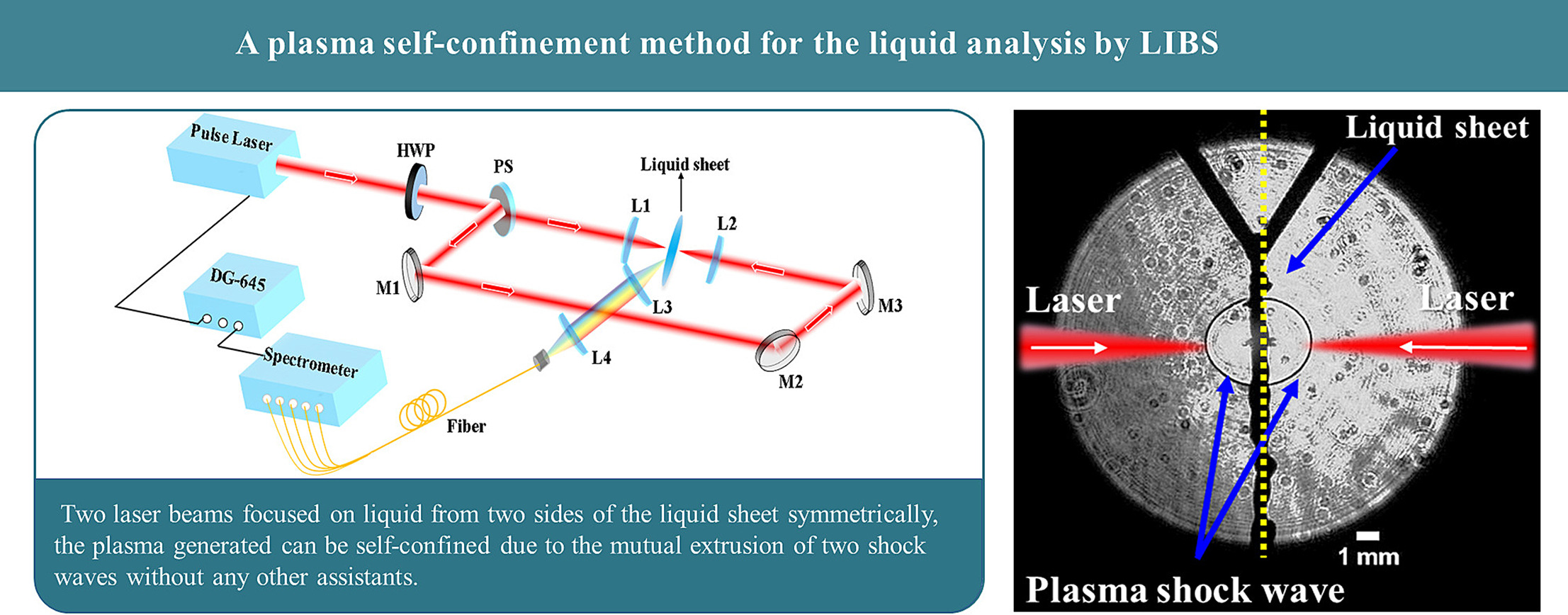
Figure 4. Schematic of the experimental setup for plasma self-confinement LIBS (left) and the shadowgraph image of plasma shock waves (right)[58]
External energy assisted regulation is a key strategy to enhance the plasma activity and analytical performance of laser-induced breakdown spectroscopy (LIBS). By introducing external energy sources such as discharge, flame, and electric field, the electron temperature and density of the plasma can be effectively increased, thereby significantly enhancing the spectral signal intensity and trace element detection capability[60]. In the discharge assisted technology system, spark discharge serves as a secondary excitation source, which can reheat the plasma, increase its temperature and lifespan, and thereby enhance the signal strength[61]. The combination of Tesla coil discharge (TCD) and LIBS exhibits significant enhancement effects. Research has shown that TCD can increase the spectral emission intensity of Cu plasma by about 40 times, while also increasing the electron temperature and density of the plasma by about 1.6 times and 1.4 times, respectively[62]. The coupling of glow discharge (GD) and LIBS (LIBS-GD) provides a highly sensitive solution for liquid sample detection. This technology significantly enhances the spectral line intensity of heavy metal elements such as Cu and Cr by optimizing discharge voltage and laser energy parameters, and has been successfully applied to the quantitative detection of Cu element in actual water samples, with a detection limit of 0.045 mg/L[63]. Flame assisted LIBS utilizes the thermal effect and chemical activity of flames to optimize the evolution process of plasma. By combining flame assisted and dry droplet pretreatment methods, high-sensitivity detection of trace Pb elements in aqueous solutions can be achieved. Research has confirmed that this method can significantly reduce the detection limit of Pb from 15.120 ng/mL to 0.741 ng/mL, an increase of about 20 times[64]. Electrostatic/electric field assisted optimization of plasma spatial distribution and dynamic processes through the application of external electric fields has also been proven to be an effective means of enhancing LIBS emission intensity and improving detection limits[65].
The combination of plasma environment and auxiliary control technology has further improved the control system, achieving precise diagnosis and signal optimization of plasma processes. Temperature regulation solidifies liquid samples through a thermoelectric cooling system[66], eliminating liquid matrix effects and significantly improving the LIBS spectral signal of solid samples compared to liquid or soft solid forms, providing a new path for high-sensitivity detection of liquid samples. Nanoparticle assisted regulation is achieved by laser ablation to prepare nanoparticles such as gold[67], copper oxide, and silicon dioxide, or by in-situ growth of silver nanoparticles on the substrate, utilizing the local field enhancement effect to enhance plasma emission intensity. Au NPs were prepared by pulsed laser ablation, and acoustic suspension was used to avoid container contamination. By optimizing parameters such as laser energy, pre enrichment factor, colloid concentration, and droplet position, the characteristic spectral line (312.6 nm) signal of Au element was significantly enhanced, providing an integrated solution for highly sensitive detection of metal nanoparticles in liquids[67], as shown in Figure 5. For example, silver particle modified filter paper enhances the Cu element signal by 14 times, with a detection limit as low as 34 μg/L[68]. In addition, the Laser Transmitting Probe (LBTP) has achieved time-resolved diagnosis of the entire process of plasma radiation, shock wave transmission, and bubble evolution. The correlation between its signal and LIBS characteristic peak area (R²>0.99), combined with partial least squares regression model, can achieve accurate correction of spectral signal fluctuations, providing important experimental basis for optimizing plasma control parameters[62]. External energy field modulation directly injects additional energy into the plasma. For example, Microwave Plasma Torch (MPT-LIBS) modulation technology modulates laser-induced plasma through the high-temperature environment of microwave and argon plasma, which can effectively improve signal strength and stability. This method does not require complex external optical path design, and significantly reduces the relative standard deviation (RSD) of measurements while improving the intensity of various element spectral lines[69].
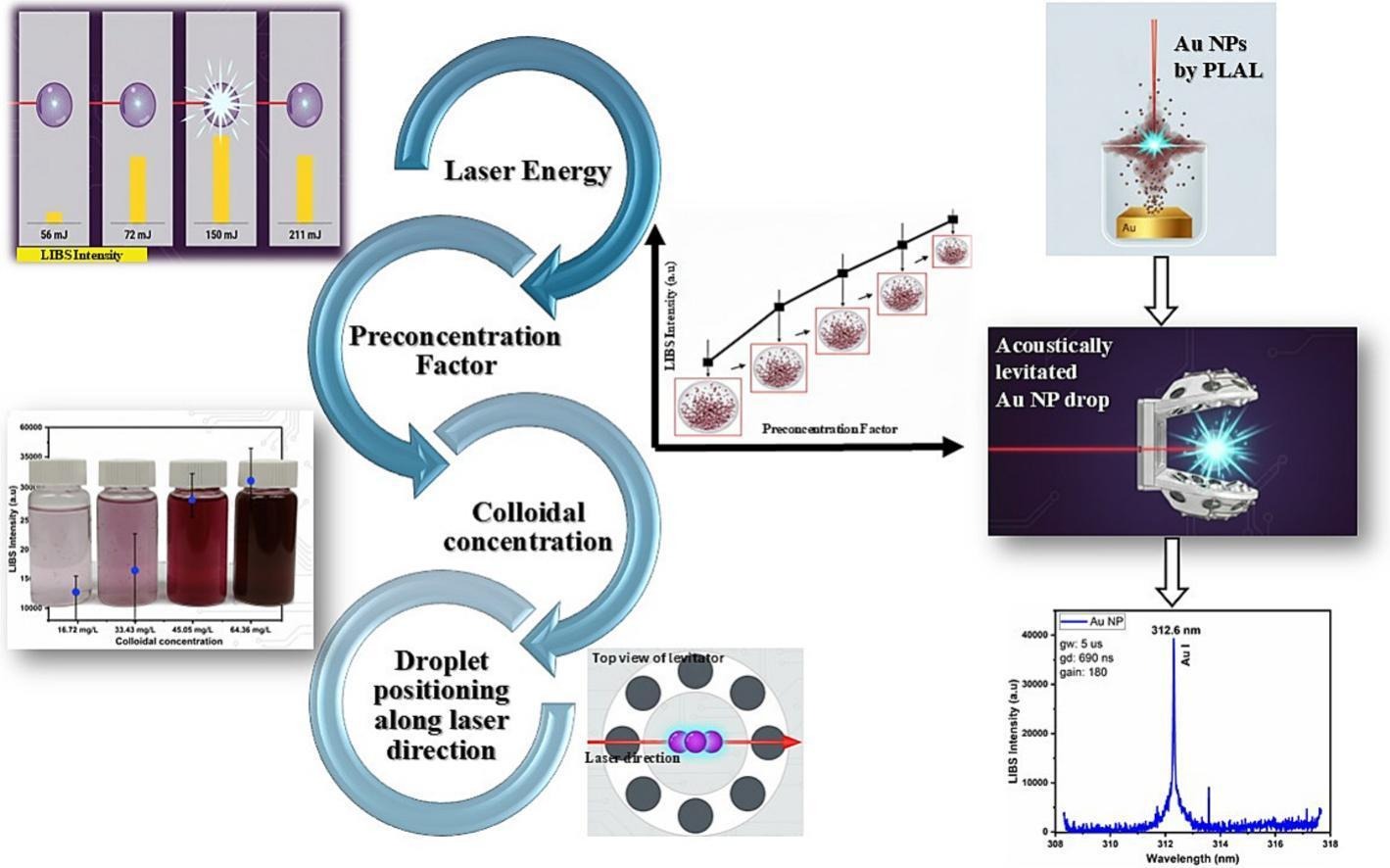
Figure 5. Schematic overview of the experimental workflow and parameter optimization for LIBS analysis of acoustically levitated Au NP droplets[67]
4. Data Processing
4.1. Spectral preprocessing
Spectral preprocessing and noise suppression are the fundamental steps in the data processing of LIBS detection of heavy metals in aqueous solutions. The core is to address issues such as background noise, spectral line overlap, and ineffective signal interference caused by the water matrix. Multiple algorithms are used to improve the signal-to-noise ratio, purity, and effectiveness of the original spectra, laying a data foundation for subsequent quantitative analysis. Classic methods such as wavelet transform, AirPLS baseline removal[70], and third-order minimum background correction[71] can be used to address spectral noise and baseline drift. Using LIBS to detect electrolyte elements Na and K in human blood, two spectral optimization methods, polynomial fitting and wavelet transform, were compared. The results showed that the wavelet transform method increased the signal-to-noise ratio (SBR) of the NaI 588.99 nm and KI 766.49 nm spectral lines by 20.57 times and 24.65 times, respectively[72]. Yuanhang et al.[73] effectively solved the problem of overlapping characteristic spectral lines of heavy metals by using Fourier self deconvolution method. Combined with domain denoising and spectral normalization, spectral line broadening correction can be achieved. The results showed that the LIBS detection limit for lead concentration in polluted water can reach 79.66 ppm. Yiping et al.[74] proposed the Blank Sample Denoising Algorithm (BSDA), which constructs a deionized water blank spectral database. Through a complete process of screening, calibration, and smoothing, the signal-to-noise ratio of target elements in the water body is improved by at least one order of magnitude, and the signal intensity of Li elements is increased by up to 36 times. It can also extract small characteristic peaks that are difficult to observe in the original spectrum. In response to the ineffective spectral interference caused by the coffee ring effect in the liquid-solid conversion process, Weihua et al.[75] used a morphology driven spectral extraction method to accurately screen the effective spectra of solute regions from the full coverage scanning spectra, reducing the RSD of Cr, Cd, and Mn mixed solution detection by 38.8% and the detection limit by 62.6%, greatly improving the effectiveness of spectral data.
4.2. Quantitative calibration and matrix interference correction
The quantitative calibration and matrix effect correction algorithm focuses on solving the core problems of low quantitative accuracy, significant matrix interference, and difficult standard matching in LIBS detection of heavy metals in aqueous solutions. By optimizing the calibration model, introducing correction factors, and improving the calibration method, the precise correlation between spectral signals and heavy metal concentrations is achieved, effectively weakening the influence of complex matrices and experimental conditions fluctuations in water bodies. Univariate calibration is a fundamental quantitative method that selects the optimal characteristic spectral lines and constructs a spectral line intensity concentration relationship. Lin Huang et al.[76] selected the Cr 425.43 nm characteristic line and used intensity ratio calibration, which can reduce the relative error of Cr element prediction from 13.2% to 10.8%. The external standard method and internal standard method are classic calibration methods. The internal standard method can effectively overcome experimental condition fluctuations by introducing reference spectral lines such as H Ⅰ 656.2 nm, resulting in a linear correlation coefficient of 0.998 for the Na element calibration curve in NaCl solution, which is superior to the external standard method[77]. The Free Calibration Method (CF-LIBS) has been improved and adapted for liquid-phase detection. The combination of electro deposition assisted underwater LIBS and standard free calibration (CF-LIBS) method[78] enables on-site multi-element analysis of multiple metal ions in aqueous solutions without relying on standard samples to construct calibration curves, providing a convenient and efficient technical solution for rapid in-situ detection. Pingsai et al.[79] used the single point calibration method (OPC-LIBS) to solve the problem of missing matching standards for underwater detection matrices, reducing the quantitative average relative errors of Mn and Cu elements in underwater alloys from 75.96% and 57.07% to 11.94% and 8.86%, respectively. In addition, Zhanjian et al.[80] used an external precipitation element addition combined with an internal standard method to achieve uniform element distribution and correct matrix effects, resulting in an increase in the R² of Ca, Mg, and Na element calibration curves from 0.906, 0.933, and 0.802 to 0.949, 0.982, and 0.997. Zhang et al.'s self absorption correction method based on plasma images can effectively reduce the influence of self absorption. The linear correlation coefficient of the constructed calibration curve is 0.9999, which can cover a wide concentration detection range[81] , as shown in Figure 6. Combined with the dominant factor PLS method, the average relative error can be controlled within 1%.
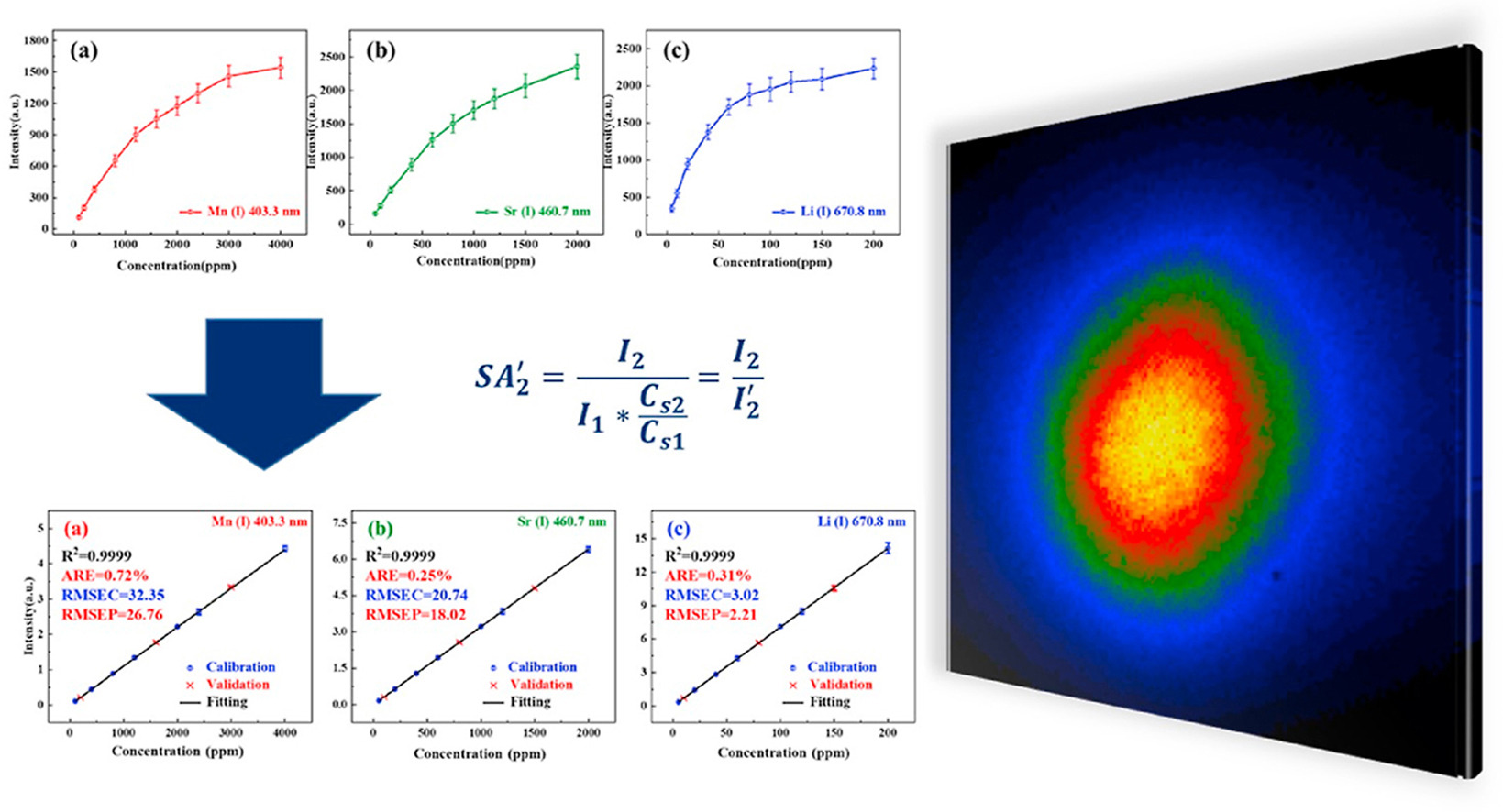
Figure 6. Self-absorption effect correction in LIBS using plasma images[81]
4.3. Algorithm analysis
The combination of laser-induced breakdown spectroscopy (LIBS) and artificial intelligence (AI) provides a powerful method for analyzing and comparing spectral data[82]. Machine learning and deep learning algorithms[83] provide intelligent data processing solutions for LIBS detection of heavy metals in aqueous solutions. With powerful feature extraction, pattern recognition, multimodal fusion, and anomaly detection capabilities, it effectively processes complex spectral data, breaks through the limitations of traditional algorithms, and further improves the quantitative accuracy, anti-interference, model robustness, and intelligence level of detection[84]. The combination of traditional machine learning and chemometrics has become the mainstream application method. Partial least squares regression (PLSR) can effectively eliminate the interference of coexisting elements. When graphite based liquid-solid conversion is combined with LIBS to detect phosphorus elements in water, PLS-SVR fusion quantitative analysis algorithm is used to construct a model[85] , which effectively eliminates the interference of coexisting elements in water and greatly improves the accuracy and stability of phosphorus element quantitative detection. It has become a typical solution for the combination of chemometrics and machine learning in LIBS water quality detection. Deep learning algorithms demonstrate excellent performance with their ability to extract deep features. Convolutional neural networks (CNNs) can directly extract deep spectral features, and CNN based feature extraction methods achieve R² values of 0.993 and 0.990 for the training and testing sets of water K-element detection, respectively[86]. PENGJU X et al.[87] proposed a dual channel convolutional neural network (DP-CNN) and constructed M-CNN models based on spectral principal matrix features and dual channel CNN models based on dual lithium characteristic spectral lines (Li I 610.35 nm, Li I 670.79 nm). The quantitative performance of DP-CNN was compared with partial least squares regression (PLSR) and principal component analysis support vector regression (PCA-SVR), as shown in Figure 7. The results showed that DP-CNN can efficiently suppress complex matrix effects and significantly improve the accuracy of lithium element detection. In five real brine sample validations, the average absolute error was only 0.28 mg/L, and the average relative error was 3.48%. The predicted values were highly consistent with the actual values, demonstrating better accuracy and resistance to matrix interference than traditional methods. LIN X et al.[88] developed a multi-channel convolutional neural network (MC-CNN), which uses spectral line screening and PCA LASSO algorithm to extract feature spectral lines that conform to physical statistical laws. Based on this, a quantitative model of CNN and multi-channel CNN (MCCNN) was constructed. The quantitative correlation coefficients for Ni and Mn elements can reach 0.9966 and 0.9965, respectively, and the sum of squared residuals is only 4.2340 and 0.0521, improving the quantitative accuracy and anti-interference ability of LIBS. Honglin et al.[89] expanded the dimensions of data processing through multimodal fusion and anomaly detection algorithms. The Event Enhanced Spectral Correction Network (EESCN) fused spectral and plasma image features, reducing spectral RSD by more than 70%. After calibration, the calibration curve R² was higher than 0.99. In addition, algorithms such as artificial neural networks (ANN)[90] and random forests (RF)[91] have been widely used for spectral feature fitting and experimental parameter optimization, becoming important supplements to intelligent data processing.
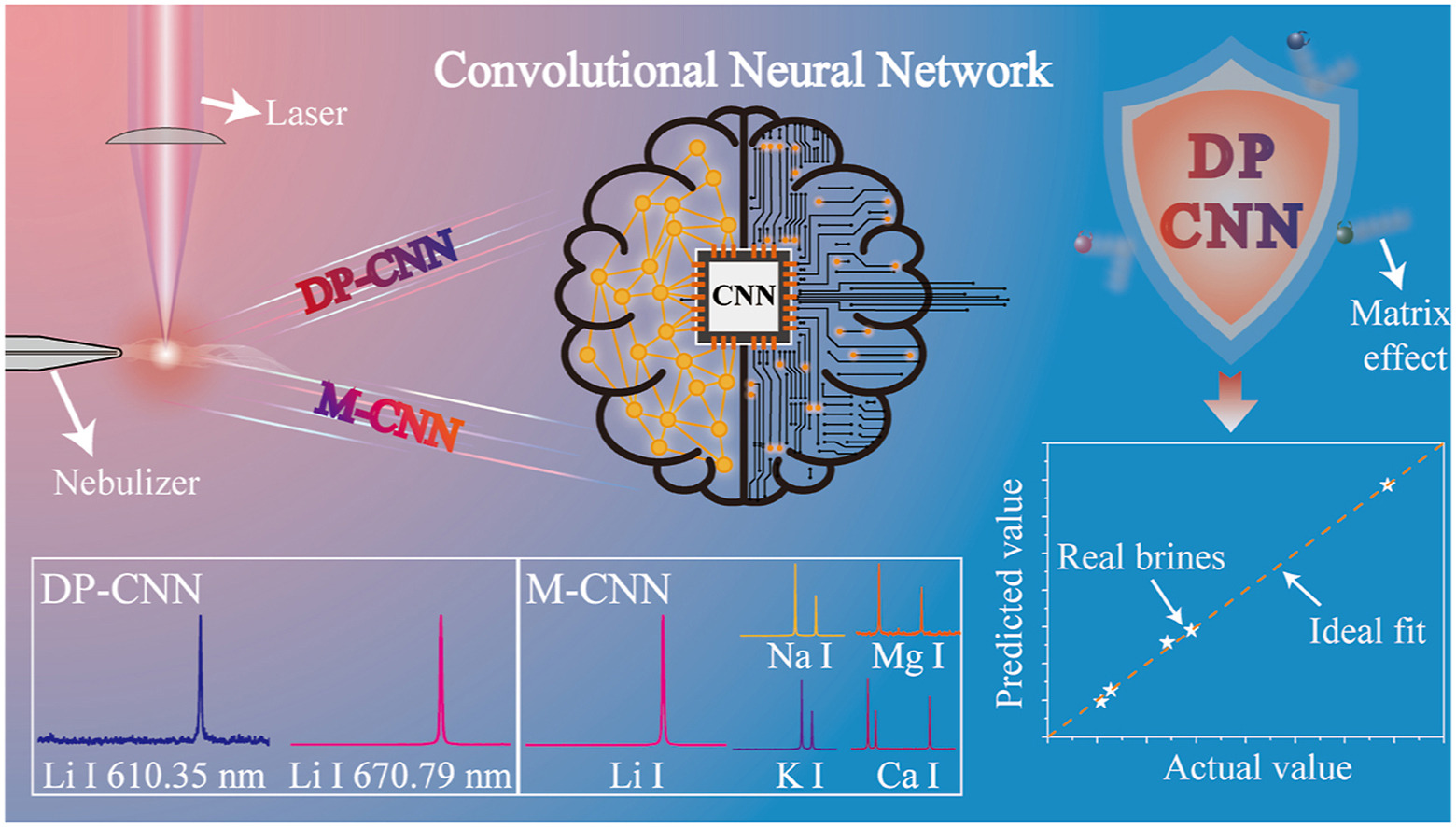
Figure 7. Schematic of the LIBS-CNN workflow for brine lithium analysis: M-CNN vs. DP-CNN model comparison[87]
5. Cross-Technology Integration
Cross technology integration is an important development direction for enhancing the detection capability and expanding the detection dimensions of LIBS aqueous solutions. By combining LIBS with technologies such as Raman spectroscopy[92], laser-induced fluorescence (LIF)[93], glow discharge (GD)[94], and surface enhanced Raman scattering (SERS)[95], complementary acquisition of atomic and molecular information and synergistic improvement of detection sensitivity can be achieved, effectively solving the limitations of single LIBS technology in qualitative identification, trace detection, and synchronous analysis of multiple pollutants. The combination of LIBS and Raman spectroscopy has become the mainstream combination for water environment detection. The two can share a laser light source and spectrometer to build an integrated detection device. When detecting underwater ores, Na₂SO₄ solutions and other samples, the element composition and molecular structure information can be synchronously obtained. The mid-level data fusion strategy of LIBS and time gated Raman spectroscopy uses SPA algorithm to screen spectral features separately, and the fused data is input into the PLS-DA model, which improves the classification accuracy of underwater ores to 99.11%[96], as shown in Figure 8. At the same time, this combination technology can also achieve synchronous monitoring of microplastics and heavy metals in water. The detection limit for heavy metals such as Al, Zn, Cr on the surface of microplastics can reach 10 ppm, and the detection effect is better than direct detection. LIBS water analysis[97]. The combination of LIBS and LIF significantly improves the sensitivity of detecting trace heavy metals in water. After achieving liquid-solid conversion using wood chip adsorption method, LIF is used to resonate and excite the plasma generated by LIBS ablation, reducing the detection limit of lead element in water to 0.32 ppb, which is two orders of magnitude higher than the single LIBS technology and greatly meets the needs of trace heavy metal detection[98]. In addition, the combination of LIBS and other technologies has also shown great potential for application. The LIBS-GD glow discharge combined technology uses the auxiliary enhancement effect of glow discharge to reduce the detection limits of Cu and Cr elements in liquids from 3.37 mg/L and 3.15 mg/L to 0.16 mg/L and 0.34 mg/L, respectively, significantly improving the sensitivity of heavy metal detection[99]. The combination of LIBS and 3D SERS enables the integrated qualitative and quantitative detection of bacteria in water bodies. With the help of SERS, PCA and HCA classification of bacterial species are completed. LIBS is used to quantify bacteria based on intracellular mineral cations, with a linear detection range of 5×10³-5×10⁷ CFU/mL. The entire detection process only takes 30 minutes[100]. Various combination technologies have achieved improved detection performance through complementary advantages, and the research on multimodal combination systems such as LIBS Raman LIF provides new technical ideas for the comprehensive detection of complex pollutants in water environments[101].
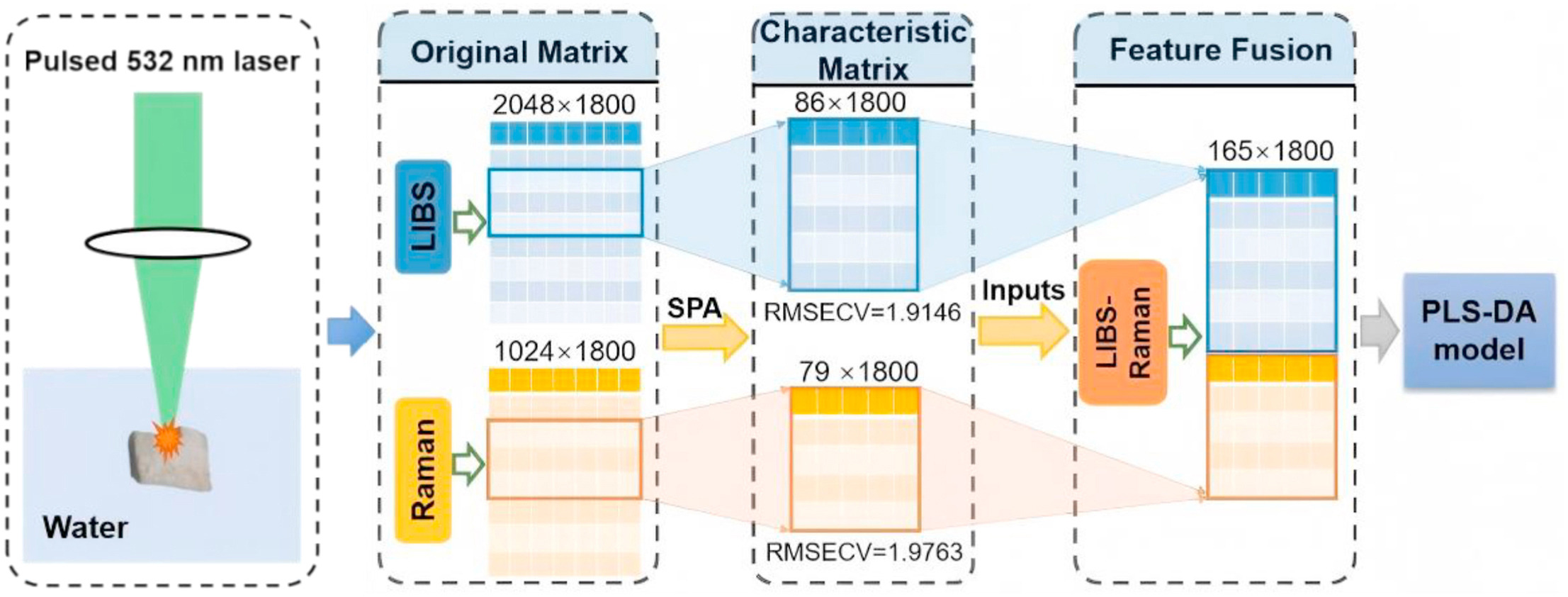
Figure 8. Schematic diagram of the mid-level data fusion strategy for underwater ores identification using LIBS and time-gated Raman spectroscopy[96]
6. Conclusion and Outlook
Laser-Induced Breakdown Spectroscopy (LIBS) has become a potential technology for heavy metal detection in aqueous solutions due to its advantages of simple sample preparation, multi-element synchronous detection, and rapid in-situ analysis, filling the gaps of traditional methods. To address issues such as sputtering and quenching when directly detecting liquids. This technology forms a complete technical system of "pre-processing system optimization data processing Cross-Technology Integration" through the collaborative development of four core technology paths: Sample Pretreatment, Detection System Optimization, Data Processing, and Cross-Technology Integration. Through enrichment and concentration, system parameter optimization, intelligent algorithm analysis, and complementary advantages of multiple technologies, it significantly improves the sensitivity, accuracy, and stability of detection, and some achievements are close to practical applications. At present, this technology still faces challenges such as complex water matrix effects, insufficient stability in on-site monitoring, and the need for breakthroughs in instrument miniaturization and low cost. In the future, we need to focus on the research and development of highly selective enrichment materials, portable integration of detection systems, fusion of spectroscopy and deep learning, integration of multiple technologies, and standardized verification in practical scenarios, promoting the development of technology towards miniaturization and intelligence, making it the core technology for monitoring heavy metal pollution in water bodies, and providing technical support for water resource protection and ecological environment security.
Author Contributions
Rongxin Ma: Conceptualization, Data curation, methodology, Software, Validation, Visualization, Writing- original draft; Chunling Dang: Formal analysis; Guangtao Fu: Formal analysis ,Resources, Supervision; Rongzhou Zhang: Formal analysis; Bingxu Yang: Formal analysis; Duo Chen: Formal analysis; Jianfei Li: Formal analysis: Xiangming Kong: Formal analysis; Huikun Tian: Formal analysis: Wenhao Zhang: Formal analysis, Resources, Funding acquisition, Supervision. Project administration, Writing-review & editing.
Acknowledgements
The research was supported by the Natural Science Foundation of Shandong Province (ZR20220F083), the first batch of talent research project of Qilu University of Technology (Shandong Academy of Sciences) (2023RCKY033)
Conflicts of Interest
The authors declare that the research was conducted in the absence of any commercial or financial relationships that could be construed as a potential conflict of interest.
References
-
C. J. VöRösmarty, P. Green, J. Salisbury, R. B. Lammers. "Global Water Resources: Vulnerability from Climate Change and Population Growth." Science 2000, 289, 5477, 284–288.
-
W. Fan, W. Xia, L. S. Lin, H. Liu, X. Qu, W. Xin, L. Tang, Y. S. Chen. "Heavy metal contamination in fish and human health risks from lakes of a mega inter-basin water diversion." Chemosphere 2025, 379, 144407.
-
S. Y. Parray, S. Singh, B. Koul, N. A. Khan, P. C. Ramamurthy, J. Singh. "Economic valuation and characterization of heavy metal contamination in Dal Lake Srinagar, Kashmir, India." Heliyon 2024, 10, 14, e34108.
-
S. Veer, S. Nidhi, N. R. Sachchida, K. Ashish, K. S. Anurag, P. S. Mohan, S. Ansunman, S. Shahank, V. Emanuel, M. Vishal. "Heavy Metal Contamination in the Aquatic Ecosystem: Toxicity and Its Remediation Using Eco-Friendly Approaches." Toxics 2023, 11, 2, 147.
-
B. B. P. "Removal of Heavy Metals from Water: An Environmentally Significant Atomic Absorption Spectrometry Experiment." J. Chem. Educ. 1999, 76, 12, 1678.
-
N. S. Medvedev, V. D. Kurbatova, A. O. Frolova, T. Y. Guselnikova, D. Y. Troitskii, V. G. Makotchenko, A. I. Saprykin, I. V. Korolkov. "Determination of heavy metals in urine by ICP-MS and ICP-OES with sorption preconcentration of analytes using graphene oxide." Int. J. Environ. Anal. Chem. 2025, 105, 19, 8309–8325.
-
M. Keisuke, K. Emiko. "Spectrophotometric determination of trace arsenic in water samples using a nanoparticle of ethyl violet with a molybdate-iodine tetrachloride complex as a probe for molybdoarsenate." Anal. Chem. 2006, 78, 22, 7682–7688.
-
H. Rathore, M. Kumar. "A new precipitation-conductometric titration technique for heavy metal ions in water." J. Indian Chem. Soc. 2006, 83, 7, 733–734.
-
N. Schlatter, B. G. Lottermoser. "Laser-Induced Breakdown Spectroscopy Applied to Elemental Analysis of Aqueous Solutions—A Comprehensive Review." Spectrosc. J. 2024, 2, 1, 1–32.
-
B. Wang, Y. Lu, Q. Wei, Q. Shan, Z. C. Zhang, Y. S. Ling, W. B. Jia. "Enhanced LIBS detection of heavy metals via substrate engineering: suppressing coffee-ring effect through superhydrophobic CuO nanosheets." Opt. Laser Technol. 2026, 193, PB, 114262.
-
Y. Chen, S. Guo, Y. Jiang, A. Chen, M. X. Jin. "Direct analysis of heavy metal elements in liquid water using femtosecond laser-induced breakdown spectroscopy for high-sensitivity detection." Talanta 2025, 286, 127512.
-
Y. Y. Xue, Y. Tian, J. M. Li, M. D. Sui, K. Z. Pan, S. L. Zong. "Characteristics of laser induced plasma near a flat gas-liquid interface and its effect on the performance of laser induced breakdown spectroscopy (LIBS) detection." Plasma Sources Sci. Technol. 2024, 33, 065001.
-
V. Lazic, S. Jovićević. "Laser induced breakdown spectroscopy inside liquids: Processes and analytical aspects." Spectrochim. Acta Part B 2014, 101, 288–311.
-
A. De Giacomo, M. Dell'Aglio, O. De Pascale, M. Capitelli. "From single pulse to double pulse ns-Laser Induced Breakdown Spectroscopy under water: Elemental analysis of aqueous solutions and submerged solid samples." Spectrochim. Acta Part B 2007, 62, 8, 721–738.
-
F. A, A. C, M. L H J. "Laser-Induced Breakdown Spectroscopy: Fundamentals, Applications, and Challenges." ISRN Spectrosc. 2012, 2012, 1–12.
-
S. Jamali, H. Fu, H. Wang, N. M. Shaikh, M. Y. Zhang, B. Wu, F. F. Shi, Z. L. Ding, S. Jamali, Z. R. Zang. "Comparison of Dual-Modality Fusion Strategies for Enhanced Rock Identification Using Laser-Induced Breakdown Spectroscopy (LIBS) and Imaging." Anal. Lett. 2026, 59, 7, 1317–1336.
-
M. Vasudeva, S. D. Varalakshmi, S. D. George, V. K. Unnikrishnan. "Engineered liquid-repellent substrate for enhanced Laser-Induced Breakdown spectroscopy (LIBS) of liquid samples." Appl. Surf. Sci. 2026, 730, 166364.
-
M. A. Aguirre, H. Nikolova, M. Hidalgo, A. Canals. "Hyphenation of single-drop microextraction with laser-induced breakdown spectrometry for trace analysis in liquid samples: a viability study." Anal. Methods 2015, 7, 3, 877–83.
-
M. A. Aguirre, E. J. Selva, M. Hidalgo, A. Canals. "Dispersive liquid–liquid microextraction for metals enrichment: A useful strategy for improving sensitivity of laser-induced breakdown spectroscopy in liquid samples analysis." Talanta 2015, 131, 348–353.
-
I. Gaubeur, M. A. Aguirre, N. Kovachev, M. Hidalgo, A. Canals. "Dispersive liquid–liquid microextraction combined with laser-induced breakdown spectrometry and inductively coupled plasma optical emission spectrometry to elemental analysis." Microchem. J. 2015, 121, 219–226.
-
X. Chen, F. Qioa, H. Chen. "Ionic Liquid Dispersion Liquid Liquid Microextraction Phthalates From Sewage Coupled With High Performance Liquid Chromatography Detection." Water Air Soil Pollut. 2025, 236, 5, 259.
-
L. Ripoll, J. Navarro-gonz, S. Legnaioli, V. Palleschi, M. Hidalgo. "Evaluation of Thin Film Microextraction for trace elemental analysis of liquid samples using LIBS detection." Talanta 2020, 223, 2.
-
F. Poggialini, B. Campanella, V. Palleschi, M. Hidalgo, S. Legnailoli. "Graphene thin film microextraction and nanoparticle enhancement for fast LIBS metal trace analysis in liquids." Spectrochim. Acta Part B 2022, 194.
-
X. L. Chen, S. Q. Liu, R. F. Luan, T. G. Luan, G. F. Ouyang. "Rapid detection and speciation of illicit drugs via a thin-film microextraction approach for wastewater-based epidemiology study." Sci. Total Environ. 2022, 842, 156888.
-
F. J. Ruiz, L. Ripoll, M. Hidalgo, A. Canals. "Dispersive micro solid-phase extraction (DµSPE) with graphene oxide as adsorbent for sensitive elemental analysis of aqueous samples by laser induced breakdown spectroscopy (LIBS)." Talanta 2019, 191, 162–170.
-
K. M. Nan, R. Jia, W. B. Feng, S. Z. Qu, Q. Shen, Y. Lin, B. Zheng, X. D. Ma. "An in-tube SPME–based analytical strategy for simultaneous determination of multi-residue pesticides in environmental water samples using a MWCNTs-COOH/Polypyrrole nanocomposite coating." Microchem. J. 2026, 224, 117522.
-
T. M. Adeniji, N. Haroon, K. J. Stine. "Applications of Nanomaterial Coatings in Solid-Phase Microextraction (SPME)." Processes 2025, 13, 1, 244.
-
B. Zhang, C. Qu, R. Wang, Y. G. Shi, M. X. Lin, W. B. Zhang, C. Qian. "Porous Chitosan Composite Membrane Tandem Laser-Induced Breakdown Spectroscopy for Detection of Metal Elements in Liquid Samples." Spectroscopy 2023, 38, 6, 18–23.
-
G. H. Wen, D. X. Sun, M. G. Su, C. Z. Dong. "LIBS Detection of Heavy Metal Elements in Liquid Solutions by Using Wood Pellet as Sample Matrix." Plasma Sci. Technol. 2014, 16, 6, 598–601.
-
H. Suyanto. "Qualitative analysis of black stone and its application for detecting Ag and Pb in liquid sample by laser-induced breakdown spectroscopy (LIBS)." AIP Conf. Proc. 2016, 1719, 1, 030049.
-
H. Suyanto, A. P. Utomo, M. Manurung, W. G. Suharta, Windaryoto. "Application of activated zeolite to quantitative analysis of Pb liquid sample using commercial laser-induced breakdown spectroscopy (LIBS)." J. Phys. Conf. Ser. 2017, 817, 1, 012044.
-
Y. Lee, S-W. Oh, S-H. Han. "Laser-Induced Breakdown Spectroscopy (LIBS) of Heavy Metal Ions at the Sub-Parts per Million Level in Water." Appl. Spectrosc. 2012, 66, 12, 1385–1396.
-
Z. K. You, X. L. Li, J. Huang, R. Q. Chen, J. Y. Peng, W. W. Kong, F. Liu. "Agarose Film-Based Liquid–Solid Conversion for Heavy Metal Detection of Water Samples by Laser-Induced Breakdown Spectroscopy." Molecules 2023, 28, 6, 2777.
-
S-L. Zhong, Y. Lu, W-J. Kong, K. Cheng, R. Zheng. "Quantitative analysis of lead in aqueous solutions by ultrasonic nebulizer assisted laser induced breakdown spectroscopy." Front. Phys. 2016, 11, 4, 145–153.
-
Y. Lu, Y. Li, F. J. Qi, R. E. Zheng. "Concentration Determination of Copper in Aqueous Solution Using Deposition-Assisted Laser-Induced Breakdown Spectroscopy (LIBS)." Appl. Spectrosc. 2015, 69, 12, 1412–1416.
-
H. Kim, Y. Lee, W. Yang, R. L. Foster, S. Choi. "Quantitative Analysis of Trace Metal Ions in Aqueous Solutions Using Electrodeposition-Assisted Laser-Induced Breakdown Spectroscopy (EA-LIBS)." Korean J. Chem. Eng. 2024, 42, 6, 1–9.
-
P. Yaroshchyk, R. J. S. Morrison, D. Body, B. L. Chadwick. "Quantitative determination of wear metals in engine oils using laser-induced breakdown spectroscopy: A comparison between liquid jets and static liquids." Spectrochim. Acta Part B 2005, 60, 7, 986–992.
-
P. Sheng, S. Zhong, X. Sun, CO. Physics, Q. University. "Micro Hole Sprayer Assisted Laser Induced Breakdown Spectroscopy for Online Analysis of Trace Metal Elements Dissolved in Water." Chin. J. Lasers 2018, 45, 7, 0711002.
-
Y. Y. Xue, M. D. Sui, R. Z. Liu, Y. P. Wang, J. J. Guo, Y. Tian, J. M. Li, M. J. Liu, S. L. Zhong, G. Y. Xue. "Influence of the position relationship between gas–liquid interface and laser focus on plasma evolution characteristics in jet LIBS technology." Plasma Sci. Technol. 2023, 25, 8.
-
J. A. Aguilera, C. Aragón. "Characterization of a laser-induced plasma by spatially resolved spectroscopy of neutral atom and ion emissions: Comparison of local and spatially integrated measurements." Spectrochim. Acta Part B 2004, 59, 12, 1861–1876.
-
M. Sui, Y. Fan, L. Jiang, Y. Xue, J. Zhou, S. Zhong. "Online ultrasonic nebulizer assisted laser induced breakdown spectroscopy (OUN-LIBS): An online metal elements sensor for marine water analysis." Spectrochim. Acta Part B 2021, 106201.
-
S. L. Zhong, Y. Lu, K. Cheng, J. S. Xiu, R. E. Zheng. "Ultrasonic nebulizer assisted LIBS for detection of trace metal elements dissolved in water." Guang Pu Xue Yu Guang Pu Fen Xi 2011, 31, 6, 1458–1462.
-
X. Y. Yang, X. Wang, X. Wang, B. Y. Wang, D. D. Li, X. Zhang, H. M. Ren, Z. X. Zhou, X. F. Zheng. "Detection of trace phosphorus in water by plasma amplification laser-induced breakdown spectroscopy." Opt. Express 2023, 31, 24, 40345–40351.
-
K. Ali, B. W. Setia, K. K. Hendrik, K. Kazuyoshi. "Metal powder-assisted laser induced breakdown spectroscopy (LIBS) using pulse CO2 laser for liquid analysis." J. King Saud Univ. Sci. 2022, 34, 3.
-
D. C. Zhang, Z. Q. Hu, Y. B. Su, B. Hai, X. L. Zhu, J. F. Zhu, X. Ma. "Simple method for liquid analysis by laser-induced breakdown spectroscopy (LIBS)." Opt. Express 2018, 26, 14, 18794–18802.
-
G. R. Fu, R. B. Chen, Y. Li, J. Wu, S. T. Wang, G. L. Deng, H. Zhou, H. Zhao, S. H. Zhou. "Enhanced toxic trace element detection in water using LIBS combined with a femtosecond laser-engineered hydrophobic–hydrophilic structured substrate." J. Anal. At. Spectrom. 2026, 41, 223–30.
-
H. B. Wang, H. L. Li, X. S. Huang, Z. C. Yao, H. M. Zhang, Y. H. Yao, X. L. Yin, Z. Y. Chen, L. D. Fang. "Design and fabrication of superhydrophobic microstructured grooved substrates to suppress the coffee-ring effect and enhance the stability of Sr element detection in liquids using LIBS." Anal. Methods 2024, 1.
-
L. Yuan, Q. Y. Wang, H. L. Yu, P. Lang, H. Li, X. Gao, J. Q. Lin. "High-sensitivity determination of heavy metal elements in water with circular grooves and nanoparticle-enhanced LIBS." J. Anal. At. Spectrom. 2024, 39, 8, 2097–2105.
-
H. Duan, Y. Q. Li, Q. Li, B. Qin, M. Y. Cai. "Detection of Heavy Metal in Thin Laminar Flowing Water Solution Based on LIBS." Electro-Optic Technol. Appl. 2025, 40, 2, 11.
-
A. Cherrier, L. Canioni, B. Bousquet. "LIBS signal enhancement by laser surface microstructuring of copper." Spectrochim. Acta Part B 2025, 234, 107318.
-
P. L. Zheng, Y. F. Li, H. M. Shan, Y. Q. Chen, R. H. Li. "Fabrication of Periodic Microstructure on Metal Surface and Its Applications in LIBS Analysis." Chin. J. Lasers 2025, 52, 1, 0111001.
-
Y. Zhao, L. Zhang, Z. H. Tian, X. G. Zhang, J. D. Bai, W. B. Yin. "Propagation Regimes and Signal Enhancement Mechanisms of Collinear Double-Pulse Plasma with Varying Inter-Pulse Delays." Sensors 2025, 25, 11, 3409.
-
Y. H. Hang, Y. Qiu, Y. Zhou, T. Liu, B. Zhu, K. X. Liao, M. X. Shi, F. Xue. "Effects of pulse energy ratios on plasma characteristics of dual-pulse fiber-optic laser-induced breakdown spectroscopy." Chin. Phys. B 2022, 31, 2.
-
A. I. Marwa, C. Gabriele, L. Stefano, P. Lorenzo, P. Vincenzo, S. Azenio, T. Elisabetta, A. H. Mohamed. "Comparison of detection limits, for two metallic matrices, of laser-induced breakdown spectroscopy in the single and double-pulse configurations." Anal. Bioanal. Chem. 2006, 385, 2, 316–325.
-
Y. Z. Wang, L. Huang, H. L. Kong, Y. Y. Zhang, T. Q. Cheng, L. Wang, H. H. Jiang. "Passively Q-switched 2.79-μm Er, Cr: YSGG laser based on pure water saturable absorber." Front. Phys. 2025, 13, 1618958.
-
M. Jiang, M. J. Ma, M. Yang, L. Fang, Y. X. Li, N. J. Zhao, X. J. Huang. "Highly sensitive and stable analysis of trace arsenic(III) and mercury(II) in water by Low-pulse-energy (15 mJ) laser-induced breakdown spectroscopy assisted by active controllable spark discharge and electrochemical enrichment." Sens. Actuators B Chem. 2020, 305, 127486.
-
F. Yang, L. Jiang, S. M. Wang, Z. T. Cao, L. Liu, M. M. Wang, Y. F. Lu. "Emission enhancement of femtosecond laser-induced breakdown spectroscopy by combining nanoparticle and dual-pulse on crystal SiO2." Opt. Laser Technol. 2017, 93, 194–200.
-
D. C. Zhang, R. Q. Yang, H. X. Ge, Z. Q. Feng, G. Y. Wang, J. J. Hou, W. L. Tian, J. F. Zhu. "A plasma self-confinement method induced by mutual extrusion of shock waves for liquid analysis of LIBS." Spectrochim. Acta Part B 2023, 204.
-
S. X. Ma, Y. Tang, Y. Y. Ma, F. Chen, D. Zhang, D. M. Dong, Z. Z. Wang, L. B. Guo. "Stability and accuracy improvement of elements in water using LIBS with geometric constraint liquid-to-solid conversion." J. Anal. At. Spectrom. 2020, 35, 5, 967–971.
-
Q. X. Li, A. Chen, D. Zhang, Q. Y. Wang, W. P. Xu, Y. Qi, S. Y. Li, Y. F. Jiang, M. X. Jin. "Time-resolved electron temperature and density of spark discharge assisted femtosecond laser-induced breakdown spectroscopy." Optik 2020, 225, 165812.
-
Q. X. Li, D. Zhang, Y. F. Jiang, S. Y. Li, A. M. Chen, M. X. Jin. "Combination of spark discharge and nanoparticle-enhanced laser-induced plasma spectroscopy." Chin. Phys. B 2022, 31, 8.
-
S. H. Sheng, B. Y. Xue, Z. J. Wang, C. Chen, X. X. Li, X. F. Wang. "Overall Temporal Diagnostic and Spectral Normalization of Liquid Phase Laser-Induced Breakdown Spectroscopy Using Laser-Beam-Transmission Probe." Laser Optoelectron. Prog. 2023, 60, 7, 0730006.
-
D. X. Sun, Y. R. Wang, M. G. Su, W. W. Han, C. Z. Dong. "Improved sensitivity on detection of Cu and Cr in liquids using glow discharge technology assisted with LIBS." Plasma Sci. Technol. 2022, 24, 8.
-
X. T. Wan, X. Yu, Y. T. Chen, Y. Wang, A. M. Chen, M. X. Jin. "Enhanced emission spectra from flame-assisted LIBS for high-sensitivity detection of Pb in water." J. Anal. At. Spectrom. 2025, 40, 365–373.
-
A. Nasar, S. Muhammad, J. Mohsan, A. Rizwan, ul. H. M. Anwar, K. F. Waheed, l. Javed, B. M. A., H. Rinda, K. K. Hendrik. "The emission intensity enhancement and improved limit of detection of Cu, Ag, and Au using electric field assisted LIBS." Opt. Mater. 2023, 143.
-
Y. S. Lim, R. K. Raja Ibrahim, M. Rashad Khan, M. Duralim, M. F. Omar. "Evaluation of laser-induced breakdown spectroscopy (LIBS) signal enhancement for liquid and soft solid samples from room to low temperature." J. Phys. Conf. Ser. 2025, 2974, 1, 012003.
-
A. P. Sreekala, D. B. Mora, M. B. de la Mora, J. Y. T. Sanchez, V. Contreras, C. S. Aké. "Laser-induced breakdown spectroscopy of water-dispersed gold nanoparticles in acoustically levitated droplets: Parameter adjustment for enhanced signal." Spectrochim. Acta Part B 2026, 239, 107483.
-
N. A. Silva, l. M. Raimundo, M. C. M. de Andrade, F. K. da Silva, A. Galembeck. "Microstructured substrate based on in situ growth of silver particles for copper determination in liquid samples by LIBS." Talanta 2026, 303, 129465.
-
B. Y. Wei, C. Yang, S. J. Wu, Y. l. Xiang, Z. X. Wang, S. H. Sun, B. T. Hu, Z. Y. Liu. "The signal quality improvement of laser-induced breakdown spectroscopy due to the microwave plasma torch modulation." Anal. Chim. Acta 2024, 1328, 343183.
-
Y. F. Bi, X. H. Bai, C. Li, T. Zhang, Z. Y. Bao, M. L. Guo, M. Wang, Z. J. Ding. "A novel feature screening algorithm for low-resolution LIBS spectrum elemental quantification." Optik 2024, 317, 172069.
-
L. X. Sun, H. B. Yu. "Automatic estimation of varying continuum background emission in laser-induced breakdown spectroscopy." Spectrochim. Acta Part B 2009, 64, 3, 278–287.
-
Y. H. Wang, Y. Bu, Y. C. Cai, X. Z. Wang. "Detection of electrolyte elements in human blood based on laser-induced breakdown spectroscopy." Proc. SPIE 2021, 11900, 1190032.
-
Y. H. Wang, Y. Bu, F. Wu, Y. Cao, Y. J. Yu, X. Z. Wang. "Research on LIBS quantitative analysis of heavy metal concentration in polluted water-based on Fourier self-deconvolution method." Proc. Appl. Opt. Photonics China 2019, 11337, 113370.
-
Y. P. Wang, J. M. Li, G. Y. Xue, K. Z. Pan, Y. S. Fan, Y. Y. Xue, S. L. Zhong, C. H. Zhang, M. J. Liu. "Blank sample denoising algorithm (BSDA): An effective spectral noise reduction in water sample LIBS detection." Talanta 2024, 275, 126086.
-
W. H. Huang, K. Q. Li, A. J. Gong, H. Sattar, J. F. Nie, L. B. Guo. "Morphology-driven spectral extraction method for enhanced liquid–solid transition LIBS detection of heavy metals in water." Opt. Laser Technol. 2025, 186, 112686.
-
L. Huang, M. Y. Yao, Y. Xu, M. H. Liu. "Determination of Cr in water solution by laser-induced breakdown spectroscopy with different univariate calibration models." Appl. Phys. B 2013, 111, 1, 45–51.
-
X. M. Lin, M. Guo, X. S. Wang, X. Gao. "Determination of Na Element in NaCl Solution by Laser Induced Breakdown Spectroscopy." Spectrosc. Spectr. Anal. 2018, 39, 06, 1953–1957.
-
A. Matsumoto, A. Tamura, R. Koda, K. Fukami, Y. H. Ogata, N. Nishi, B. Thornton, T. Sakka. "A calibration-free approach for on-site multi-element analysis of metal ions in aqueous solutions by electrodeposition-assisted underwater laser-induced breakdown spectroscopy." Spectrochim. Acta Part B 2016, 118, 45–55.
-
P. S. Chu, Y. Tian, Y. Y. Xue, Q. X. Liu, B. Y. Xue, J. J. Guo, Y. Lu, R. E. Zheng. "One-point calibration of underwater double-pulse laser-induced breakdown spectroscopy." Spectrochim. Acta Part B 2026, 237, 107455.
-
Z. J. Lin, L. Z. Kang, W. Wang, B. Lu, X. Y. Li. "Addition of precipitating element to uniform the distribution of elements in LIBS analysis of liquid samples." Spectrochim. Acta Part B 2026, 235, 107360.
-
Y. Q. Zhang, Y. Lu, Y. Tian, Y. Li, W. Q. Ye, J. J. Guo, R. E. Zheng. "Quantitation improvement of underwater laser induced breakdown spectroscopy by using self-absorption correction based on plasma images." Anal. Chim. Acta 2022, 1195, 339423.
-
Z. E. Ahmed, R. M. Abdelazeem, M. Abdelhamid, Z. A. Salam, M. A. Harith. "Conventional versus AI-based spectral data processing and classification approaches to enhance LIBS's analytical performance." Anal. Methods 2025, 13.
-
L. E. Rinaldi, A. Lucia, C. A. Ibarguen, C. A. Rinaldi. "Application of deep learning methods to LIBS imaging data." Spectrochim. Acta Part B 2025, 233, 107315.
-
P. Dehbozorgi, L. Duponchel, V. M. Ros, T. Bocklitz. "Harnessing Machine Learning and Deep Learning Approaches for Laser‐Induced Breakdown Spectroscopy Data Analysis: A Comprehensive Review." Anal. Sens. 2025, 6, 1, e202500106.
-
H. J. Zhang, Y. Chen, Z. J. Bi, X. H. Chen, Z. S. Tian. "Detection of Phosphorus in Water by Laser-Induced Breakdown Spectroscopy Based on Liquid-Solid Transformation of Graphite Substrate Combined with PLS-SVR Fusion Quantitative Analysis Algorithm." Photonics 2025, 12, 6, 616.
-
X. Lin, S. Gao, Y. Du, Y. Yang, C. Che. "Libs Feature Variable Extraction Method Based on Convolutional Neural Network." J. Appl. Spectrosc. 2025, 92, 1, 1–7.
-
P. J. Xing, J. H. Dong, P. W. Yu, H. T. Zheng, X. Liu, S. H. Hu, Z. L. Zhu. "Quantitative analysis of lithium in brine by laser-induced breakdown spectroscopy based on convolutional neural network." Anal. Chim. Acta 2021, 1178, 338799.
-
X. M. Lin, W. Liu, P. Y. Dai, J. F. Yang, J. J. Lin, Y. T. Huang. "Enhancing Quantitative Analysis by Laser-Induced Breakdown Spectroscopy (LIBS) with Machine Learning." Anal. Lett. 2026, 59, 4, 672–683.
-
H. L. Jian, L. Deng, Y. Deng, Q. S. Lyv, M. Z. Hou, J. Wang, X. L. Wang, Z. D. Jia. "EXPRESS: Enhanced Laser-Induced Breakdown Spectroscopy Using Multimodal Fusion Correction of Event-Reconstructed Plasma Images and Spectral Features." Appl. Spectrosc. 2026, 37028261424291.
-
S. Yoshino, B. Thornton, T. Takahashi, Y. Takaya, T. Nozaki. "Signal preprocessing of deep-sea laser-induced plasma spectra for identification of pelletized hydrothermal deposits using Artificial Neural Networks." Spectrochim. Acta Part B 2018, 145, 1–7.
-
F. Q. Ruan, J. Qi, C. H. Yan, H. S. Tang, T. L. Zhang, H. Li. "Quantitative detection of harmful elements in alloy steel by LIBS technique and sequential backward selection-random forest (SBS-RF)." J. Anal. At. Spectrom. 2017, 32, 11, 2194–2199.
-
Y. S. Fan, Y. Y. Xue, Y. P. Wang, R. Z. Liu, S. L. Zhong. "Combined LIBS and Raman spectroscopy: an approach for salinity detection in the field of seawater investigation." Appl. Opt. 2022, 61, 7, 1718–1725.
-
K. Z. H., Ulah M. Hedavet, R. Bulu, T. Aminul l, W. Md., A. K, M., Haider A. F. M. Y. "Laser-Induced Breakdown Spectroscopy (LIBS) for Trace Element Detection: A Review." J. Spectrosc. 2022, 2022.
-
M. R. Webb, F. J. Andrade, G. M. Hieftje. "Compact glow discharge for the elemental analysis of aqueous samples." Anal. Chem. 2007, 79, 20, 7899–7905.
-
Z. T. Sun, C. Kang, X. H. Fang, H. M. Liu, J. X. Guo, X. P. Zhang. "A SERS-active capillary for direct molecular trace detection in liquids." Nanoscale Adv. 2021, 3, 9, 2617–2622.
-
J. J. Song, Y. Tian, Y. Y. Xue, Q. X. Liu, P. S. Chu, J. J. Guo, Y. Lu, R. E. Zheng. "Combining laser-induced breakdown spectroscopy (LIBS) and time-gated Raman spectroscopy for underwater ores identification." Anal. Chim. Acta 2026, 1393, 345204.
-
P. S. Vaisakh, U. K. Adarsh, K. Amrutha, A. K. Warrier, V. B. Kartha, V. K. Unnikrishnan. "Integrated LIBS-Raman spectroscopy: A comprehensive approach to monitor microplastics and heavy metal contamination in water resources." Environ. Res. 2023, 231, 2, 116198.
-
J. Kang, R. H. Li, Y. R. Wang, Y. Q. Chen, Y. X. Yang. "Ultrasensitive detection of trace amounts of lead in water by LIBS-LIF using a wood-slice substrate as a water absorber." J. Anal. At. Spectrom. 2017, 32, 11, 2292–2299.
-
D. X. Sun, Y. R. Wang, M. G. Su, W. W. Han, C. Z. Dong. "Improved sensitivity on detection of Cu and Cr in liquids using glow discharge technology assisted with LIBS." Plasma Sci. Technol. 2022, 24, 08, 77–83.
-
W. L. Liao, Q. Y. Lin, S. C. Xie, Y. He, Y. H. Tina, Y. X. Duan. "A novel strategy for rapid detection of bacteria in water by the combination of three-dimensional surface-enhanced Raman scattering (3D SERS) and laser induced breakdown spectroscopy (LIBS)." Anal. Chim. Acta 2018, 1043, 64–71.
-
D. V. S, S. D. George, V. B. Kartha, S. Chidangil, U, V, K. "Hybrid LIBS-Raman-LIF systems for multi-modal spectroscopic applications: a topical review." Appl. Spectrosc. Rev. 2020, 56, 6, 1–29.