



Developmental Patterns of Artificial Intelligence Research in Geriatric Diseases: A Bibliometric Analysis of Growth and Evidence Depth
Abstract
The rapid adoption of artificial intelligence (AI) in geriatric medicine has led to substantial growth in related research, yet the overall structure and developmental patterns of this field remain incompletely understood. In this study, we conducted a comprehensive bibliometric analysis of AI-based research in geriatric diseases published between 2006 and 2025. Publications were retrieved from the Web of Science Core Collection and analyzed across multiple dimensions, including annual publication trends, geographic and institutional contributions, collaboration networks, thematic structure and evolution, alignment between research activity and aging-related disease burden, and the relationship between research growth and citation-based evidence depth. The results demonstrate a clear stage-dependent development pattern, characterized by rapid expansion in publication output in recent years accompanied by declining average citation impact. Research activity is highly concentrated among a limited number of countries, institutions, and authors, forming a centralized collaboration structure. Thematic analyses reveal a gradual shift from early neuroimaging focused and disease-centered studies toward more method-driven and application-oriented research, with Alzheimer’s disease and machine learning remaining dominant organizing cores. However, many rapidly growing topics exhibit limited citation depth, indicating exploratory or transitional stages of development rather than consolidated research cores. In addition, the geographic distribution of research output shows marked heterogeneity and does not consistently align with global patterns of aging-related disease burden. Overall, this bibliometric study highlights substantial structural heterogeneity within geriatric disease-AI research, reflecting uneven thematic maturity, concentrated knowledge production, and variable evidence consolidation. These findings provide a quantitative perspective on the current developmental stage of the field and may inform more balanced and integrative future research efforts.
1. Introduction
With the accelerating pace of global population aging, aging-related diseases have emerged as a central challenge for contemporary public health systems and healthcare delivery worldwide[1]. Unlike single-disease conditions, geriatric disorders are commonly characterized by multimorbidity, slow disease progression, and pronounced heterogeneity in clinical presentation. For example, Alzheimer’s disease frequently coexists with cardiometabolic abnormalities, depressive symptoms, and functional decline, while older patients with cardiovascular disease often present with concomitant cognitive impairment and complex polypharmacy[2]. Such clinical complexity substantially complicates early disease detection, risk stratification, and prognostic assessment, thereby exposing the limitations of traditional analytical approaches that rely on single predictors or linear assumptions[3]. Against this backdrop, artificial intelligence methods particularly machine learning and deep learning techniques have been increasingly introduced into geriatric research due to their capacity to model high-dimensional data, capture nonlinear relationships, and integrate information across multiple modalities. These approaches have been applied to a range of geriatric relevant tasks, including medical imaging based diagnosis, disease progression prediction, and clinical risk assessment.
In recent years, the volume of research on artificial intelligence applied to geriatric diseases has increased rapidly, encompassing a wide range of concrete application areas such as imaging-based detection of Alzheimer’s disease, risk prediction of cardiovascular events, assessment of falls and functional decline, and screening for mental health conditions in older adults[4-6]. However, this expansion has been driven primarily by growth in publication output rather than by parallel maturation of the underlying evidence structure. Existing studies are frequently concentrated on single diseases or specific data modalities, such as MRI- or PET-based classification models for Alzheimer’s disease or electronic health record-based models for cardiovascular risk prediction[7]. Substantial heterogeneity exists across studies with respect to disease focus, algorithmic approaches, sample size, and outcome definitions, leaving unresolved questions regarding whether the field has developed stable research cores and how different research directions are interconnected and evolve over time[8]. From an organizational perspective, knowledge production in geriatric disease-AI research appears to be highly dependent on a limited number of research-active countries, institutions, and teams. Studies with higher visibility and impact are often concentrated in high-income settings with access to advanced imaging facilities, long-term cohort data, and substantial computational resources, whereas contributions from regions experiencing rapid population aging or substantial disease burden remain comparatively limited[9, 10]. Such concentration may not only constrain thematic diversity but also lead to model development and validation that are largely anchored in specific populations and healthcare systems, thereby restricting generalizability and clinical transferability across diverse older adult populations[11]. Moreover, the burden of aging-related diseases is unevenly distributed worldwide, with pronounced differences across countries in aging trajectories, disease profiles, and healthcare capacity[12]. Despite this, whether the geographic distribution of geriatric disease-AI research aligns with underlying disease burden, and whether research attention adequately reflects high-burden settings, has rarely been examined in a quantitative and systematic manner. In this context, synthesizing progress solely at the level of individual diseases or algorithms provides limited insight into the broader structural characteristics and potential imbalances shaping the development of the field as a whole.
To address these gaps, this study conducts a bibliometric analysis of research on artificial intelligence applied to geriatric diseases published between 2006 and 2025. Rather than assessing individual models or clinical performance, the analysis focuses on characterizing the overall structure and developmental patterns of the field. Specifically, we examine temporal publication trends, geographic and institutional contributions, collaboration structures, thematic organization and evolution, and the relationship between research growth and citation-based evidence depth. By providing an integrative overview of research ecosystems, thematic maturity, and structural heterogeneity, this study aims to clarify the current developmental stage of geriatric disease-AI research and to offer a quantitative reference for more coherent and balanced future research directions.
2. Methods
2.1. Data Source and Search Strategy
A comprehensive literature search was conducted on 15 December 2025 using the Web of Science Core Collection (WoSCC), specifically the Science Citation Index Expanded (SCI-E). All records were retrieved on the same day to minimize potential bias arising from database updates. The search strategy was designed to identify publications addressing the application of artificial intelligence–based algorithmic methods in geriatric medicine, with a particular focus on diagnostic, prognostic, and clinical outcome–related research. To avoid conceptual inflation of the term “artificial intelligence,” the search was anchored to explicit machine learning and deep learning paradigms, rather than generic AI descriptors.
A Topic-based search (Title, Abstract, Author Keywords, and Keywords Plus) was performed using the following query: ("machine learning" OR "deep learning" OR "neural network*" OR "support vector machine*" OR "random forest*" OR "gradient boosting" OR XGBoost OR LightGBM OR "convolutional neural network*" OR CNN OR "recurrent neural network*" OR RNN ) AND (geriatrics OR "geriatric medicine" OR frailty OR "geriatric assessment" OR multimorbidity OR polypharmacy OR falls OR dementia OR "cognitive impairment" OR "functional decline") AND (older adult* OR elderly OR aging ) AND (diagnos* OR prognos* OR "clinical outcome*" ) NOT (pediatric* OR child* OR adolescent* OR pregnancy OR animal* OR mouse OR rat).
The publication time span was restricted to 1 January 2006 through 31 December 2025, reflecting the period during which machine learning–based methods began to be increasingly applied in clinical research contexts. Only original research articles and review articles written in English and indexed in SCI-E were considered eligible. Early Access records were excluded to ensure bibliographic stability and consistency of citation data. Following application of document type filters and removal of duplicate records, a total of 1833 publications were retained for subsequent bibliometric analysis. The detailed literature retrieval and screening process is summarized in the PRISMA flowchart (Figure 1, Supplementary Materials). All bibliometric analyses were conducted on the same final dataset of 1,833 records unless otherwise specified.
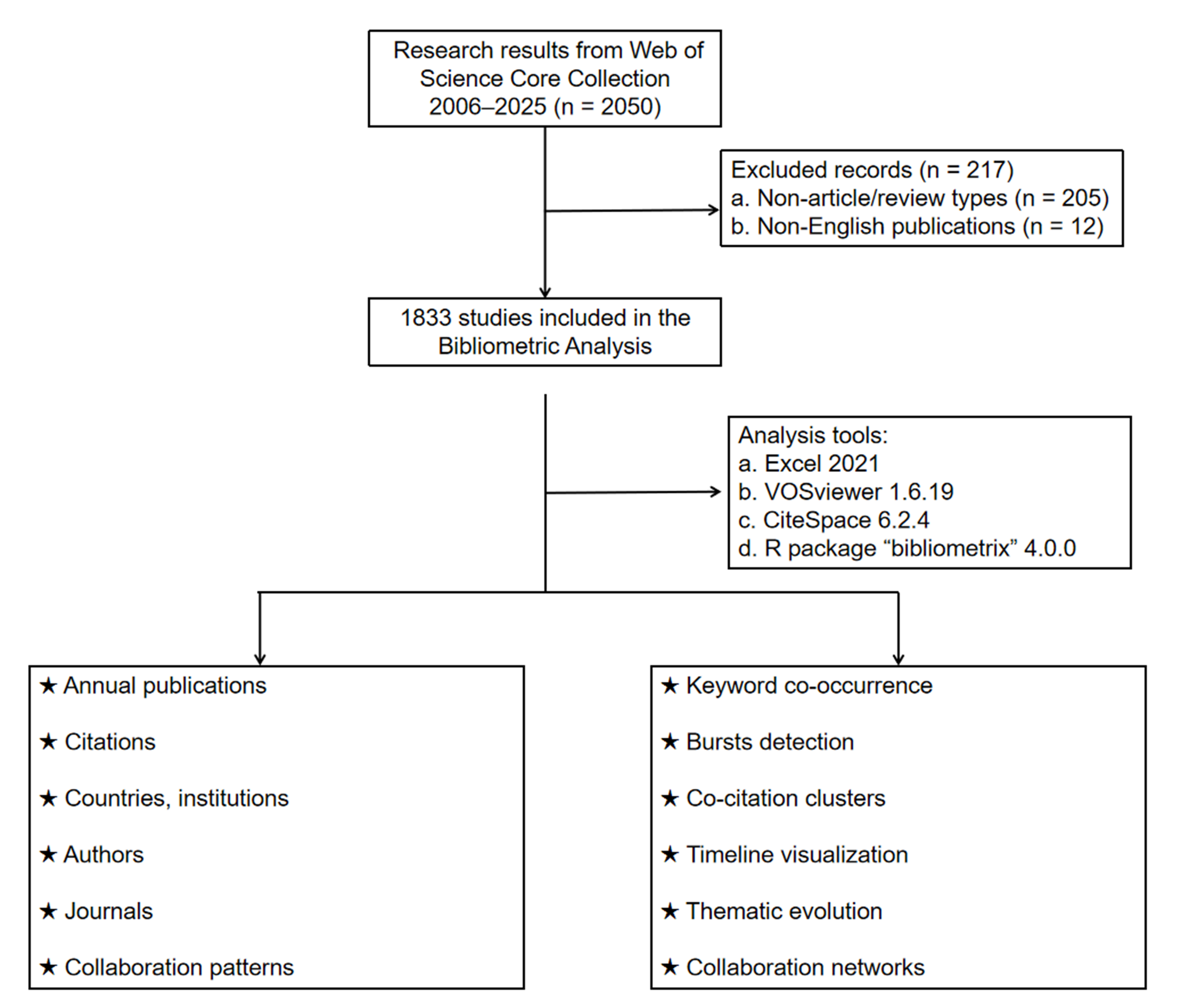
Figure 1. Flowchart of literature retrieval, screening, and bibliometric analysis workflow. Publications related to artificial intelligence-based applications in geriatric medicine were retrieved from the Web of Science Core Collection for the period 2006-2025. After exclusion of non-article and non-review document types and non-English publications, a total of 1,833 studies were included in the bibliometric analysis. Data extraction, preprocessing, and analyses were conducted using Excel 2021, VOSviewer (version 1.6.20), CiteSpace (version 6.3.R4), and the R package bibliometrix (version 4.2.1). The analytical framework included assessment of publication trends, citation characteristics, contributions by countries, institutions, authors, and journals, as well as collaboration patterns, keyword co-occurrence, co-citation structures, timeline visualization, and thematic evolution.
2.2. Inclusion and Exclusion Criteria
All retrieved records were independently screened by two reviewers based on titles and abstracts, with discrepancies resolved through discussion.
Inclusion criteria:(1) Studies applying machine learning or deep learning–based methods (e.g., neural networks, ensemble learning, support vector machines) in geriatric or geriatric-relevant clinical contexts. (2) Publications focusing on older adult populations and addressing geriatric-specific conditions or functional states (e.g., frailty, multimorbidity, cognitive impairment, functional decline). (3) Studies evaluating diagnostic performance, prognostic value, or clinical outcomes associated with AI-based models. (4) Articles published as original research or review articles, written in English, and indexed in SCI-E.
Exclusion criteria: (1) Studies with only superficial or conceptual references to AI without substantive algorithmic implementation. (2) Publications exclusively involving pediatric populations, pregnancy-related research, or animal models without relevance to geriatric medicine. (3) Editorials, commentaries, letters, conference abstracts, book chapters, corrections, or non-English literature. (4) Duplicate records identified during data cleaning.
2.3. Data Extraction and Processing
Bibliographic records-including titles, authors, institutional affiliations, publication years, journals, citation counts, keywords, and reference lists-were exported from WoSCC in plain-text and tab-delimited formats. Data preprocessing involved:(1) removal of duplicate records; (2) standardization of author names and institutional affiliations; (3) harmonization of keyword variants and synonymous terms (e.g., “older adults” vs. “elderly”); (4) verification of document types and publication years; and (5) consolidation of closely related methodological descriptors.
The finalized dataset served as the basis for all subsequent bibliometric and visualization analyses.
2.4. Bibliometric Analysis and Visualization Tools
Bibliometric analyses were conducted using a combination of CiteSpace (version 6.3.R4), VOSviewer (version 1.6.20), and R (Bibliometrix package, version 4.2.1). CiteSpace was employed for reference co-citation analysis, cluster identification, and timeline visualization, with a time slicing of 2006–2025 at 1-year intervals. Network pruning methods included Pathfinder and pruning of sliced networks. VOSviewer was used to construct co-authorship networks, as well as country- and institution-level collaboration maps and keyword co-occurrence networks. The Bibliometrix package in R was applied to compute descriptive scientometric indicators, analyze annual publication trends, examine thematic evolution, and generate conceptual structure maps.
2.5. Assessment of Structural Imbalance in Knowledge Development
To characterize structural imbalances in the development of AI-based knowledge within geriatric medicine, analyses were conducted across multiple dimensions, including research output distribution, thematic orientation, and relative evidence consolidation. Rather than focusing solely on publication volume, emphasis was placed on differentiating between exploratory algorithm driven research and studies with clearer clinical or translational relevance, primarily through thematic structure and citation-based indicators, thereby enabling characterization of heterogeneous developmental stages within the literature.
2.6. Identification of Emerging and Transitional Research Topics
At the topic level, publication growth was defined as the change in publication counts between 2019-2025 and 2006-2013, while citation depth was calculated as the mean citations per article during 2021-2025. Topics were mapped within a two-dimensional growth–depth framework and categorized into four quadrants using median values as cutoffs. Topics exhibiting high growth but relatively low citation depth were interpreted as emerging or transitional research domains, whereas those with both high growth and high citation depth were considered more consolidated research cores. Topic labels were derived from curated, clinically relevant keywords, with purely methodological terms excluded to enhance interpretability.
2.7. Data Availability and Limitations
All data analyzed in this study were obtained from the Web of Science Core Collection. Publications not indexed in WoSCC, including regional journals, preprints, and non-English literature, were not included and may introduce selection bias. In addition, the use of bibliometric indicators does not substitute for study-level assessment of methodological quality or clinical effectiveness.
2.8. Ethical Considerations
This study was based exclusively on publicly available bibliographic data and did not involve human participants or animal experimentation. Therefore, ethical approval was not required.
3. Results
3.1. Research ecosystem and annual publication dynamics
As shown in Figure 2, research on geriatric disease-artificial intelligence exhibited a clear stage-dependent development pattern between 2006 and 2025. Overall, annual publication output remained low for an extended initial period, followed by gradual growth and a pronounced acceleration in recent years. From 2006 to 2012, publication activity was minimal and scattered, indicating an exploratory early stage. Despite the limited number of studies, the average number of citations per publication was relatively high, reflecting concentrated scholarly attention on a small body of early foundational or methodological work. Beginning in 2013, annual publication output increased steadily, marking a transition toward more sustained research activity. During this period, average citation counts declined progressively, consistent with the diffusion of scholarly attention across an expanding and more heterogeneous literature. After 2020, publication output increased sharply, with annual counts rising rapidly and reaching their highest levels between 2023 and 2025, indicating entry into a phase of rapid expansion. Original research articles consistently accounted for the majority of publications and remained the primary driver of growth. At the same time, the number of review articles increased gradually, with a higher relative contribution observed in recent years, suggesting growing demand for evidence synthesis as the literature accumulated. In contrast to the rapid increase in publication volume, average citation impact remained low and continued to decline during the expansion phase. This divergence between output growth and citation intensity indicates that recent development in geriatric disease-AI research has been characterized predominantly by quantitative expansion rather than the consolidation of highly influential studies. Taken together, the field appears to have progressed from an early stage marked by low output but high citation concentration toward a recent phase defined by rapid growth, increasing diversification, and limited citation consolidation.
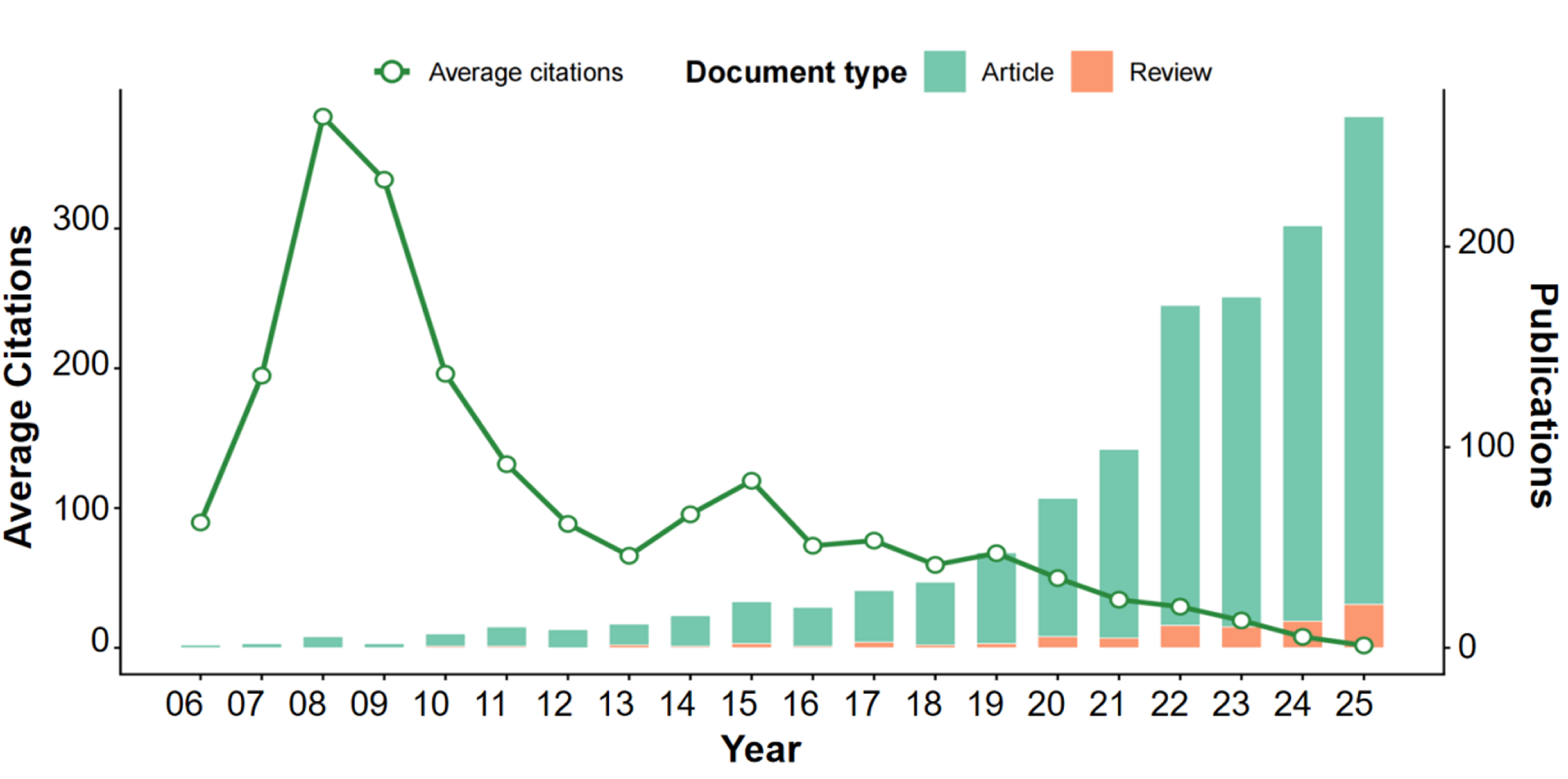
Figure 2. Annual publication output, document type distribution, and average citation impact in geriatric disease-artificial intelligence research (2006-2025). stacked bars represent the annual number of publications by document type (articles and reviews). The solid line indicates the average number of citations per publication for each year. Publication counts are shown on the right y-axis, and average citations are shown on the left y-axis.
3.2. Collaboration patterns and research power structure
Figure 3 summarizes the geographic distribution, productivity profiles, and collaboration networks of geriatric disease-artificial intelligence research across multiple analytical levels. Overall, the field exhibits a pronounced concentration of research output and collaborative activity, with clear hierarchical organization observed at the country, institutional, and author levels.
At the global scale, publication output is unevenly distributed across regions (Figure 3A). High-output countries are predominantly located in North America, Western Europe, and selected parts of East Asia and Oceania, whereas research activity remains limited across large areas of Africa, South America, and parts of Asia. Several countries show minimal or no publication output, indicating substantial geographic disparities in participation within this research domain. Author-level analysis reveals a highly skewed productivity distribution (Figure 3B). A small number of authors contribute a disproportionate share of publications, while most authors have relatively low output. Across leading authors, original research articles dominate, with review publications accounting for a minor proportion, suggesting that knowledge production in this field is driven primarily by empirical studies rather than synthesis-oriented output. At the country level, a similar concentration pattern is observed (Figure 3C). A limited number of countries account for the majority of publications, with the United States and China occupying leading positions, followed by a second tier of high-income countries including the United Kingdom, Canada, Germany, Japan, and Australia. Although variation exists in the proportion of review articles across countries, original research remains the principal contributor to national research output. International collaboration network analysis further highlights the centralized structure of the field (Figure 3D). High-output countries occupy central positions within the network and are densely interconnected, whereas lower-output countries tend to appear at the periphery with fewer and weaker collaborative links. This core-periphery configuration indicates that cross-national collaboration is concentrated among a relatively small group of research-intensive countries. Institutional-level analysis mirrors these patterns (Figure 3E). Research output is concentrated within a limited number of institutions, primarily well-established universities and medical research centers in high-output countries. Original research constitutes the majority of institutional output, while review articles represent a smaller but gradually increasing component in some institutions. The institutional collaboration network further illustrates this hierarchical organization (Figure 3F). A small number of highly productive institutions function as central hubs, maintaining dense collaborative ties with one another and with several moderately productive institutions. In contrast, peripheral institutions exhibit more limited connectivity. Taken together, these findings indicate that geriatric disease-AI research is characterized by a centralized and stratified research ecosystem, in which both productivity and collaborative influence are concentrated within a relatively small set of core actors.
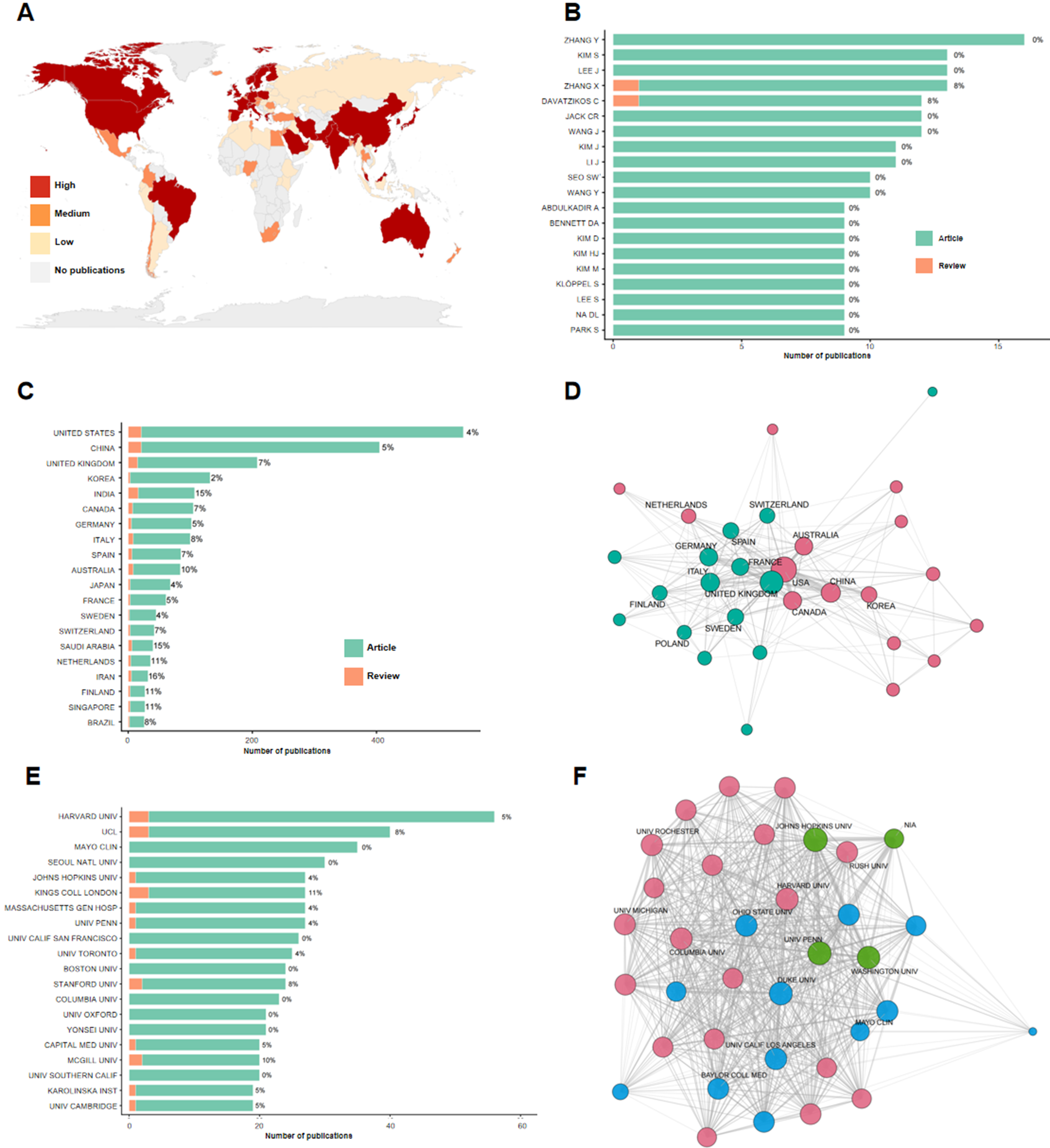
Figure 3. Global distribution, productivity, and collaboration patterns in geriatric disease-artificial intelligence research. (A) Global geographic distribution of publications by country, categorized into high, medium, and low output levels, with countries without publications shown in grey. (B) Top 20 most productive authors ranked by number of publications, with document types indicated. (C) Top 20 most productive countries and their publication output by document type. (D) International collaboration network among countries, where node size represents publication volume and edge thickness reflects collaboration strength; node colors indicate collaboration clusters. (E) Top 20 most productive institutions ranked by publication output, with document types indicated. (F) Institutional collaboration network illustrating collaborative relationships among leading institutions; node size reflects publication volume, and node colors denote collaboration clusters identified by community detection.
3.3. Thematic structure and temporal evolution of research topics
Figure 4 illustrates the thematic organization and evolution of geriatric disease-artificial intelligence research across time. Overall, the field demonstrates a gradual shift from early neuroimaging- and disease-centered topics toward increasingly method-oriented and application-driven themes, accompanied by progressive diversification of research focus.
The Sankey diagram reveals clear continuity and transformation of major themes across the three study periods (Figure 4A). During the early phase (2006-2013), research was dominated by topics related to neurodegenerative diseases, hippocampal function, functional connectivity, and early applications of machine learning, reflecting an exploratory stage grounded in neuroimaging and cognitive neuroscience. In the intermediate period (2014-2019), themes such as Alzheimer’s disease, mild cognitive impairment, and machine learning became more prominent and structurally integrated, with methodological keywords increasingly embedded within disease-oriented research. In the most recent period (2020-2025), the thematic structure further consolidated around Alzheimer’s disease and older adults, alongside expanded use of machine learning approaches, indicating a shift toward broader clinical application and population-level relevance. The thematic map provides additional insight into the internal organization of research topics (Figure 4B). Themes centered on machine learning, artificial intelligence, and dementia occupy positions of relatively high relevance and moderate development, suggesting their role as organizing cores of the current research landscape. In contrast, themes related to Alzheimer’s disease, mild cognitive impairment, and deep learning exhibit high relevance but lower internal density, indicating their function as foundational topics that are widely connected but still undergoing conceptual consolidation. A smaller set of niche themes, including feature extraction and specific older-adult focused applications, show higher internal development but limited connectivity with the broader thematic structure. Temporal keyword trend analysis further highlights heterogeneous trajectories across topics (Figure 4C). Machine learning shows a sustained and pronounced increase in relative frequency throughout the study period, becoming the most prominent methodological theme in recent years. Deep learning and artificial intelligence display later but steadily rising trajectories, particularly after 2018, while disease-related keywords such as dementia and cognitive impairment exhibit more moderate growth with periods of fluctuation. Prediction-oriented terms remain comparatively infrequent, suggesting that predictive modeling, while present, has not yet become a dominant focus.
Taken together, these results indicate that geriatric disease-AI research has evolved from an early, neurobiologically anchored phase toward a more method-driven and application-oriented thematic structure. Despite increasing diversification and methodological expansion, the field remains characterized by a limited number of central disease entities and analytical approaches, with several high-relevance themes still in the process of conceptual and structural consolidation.
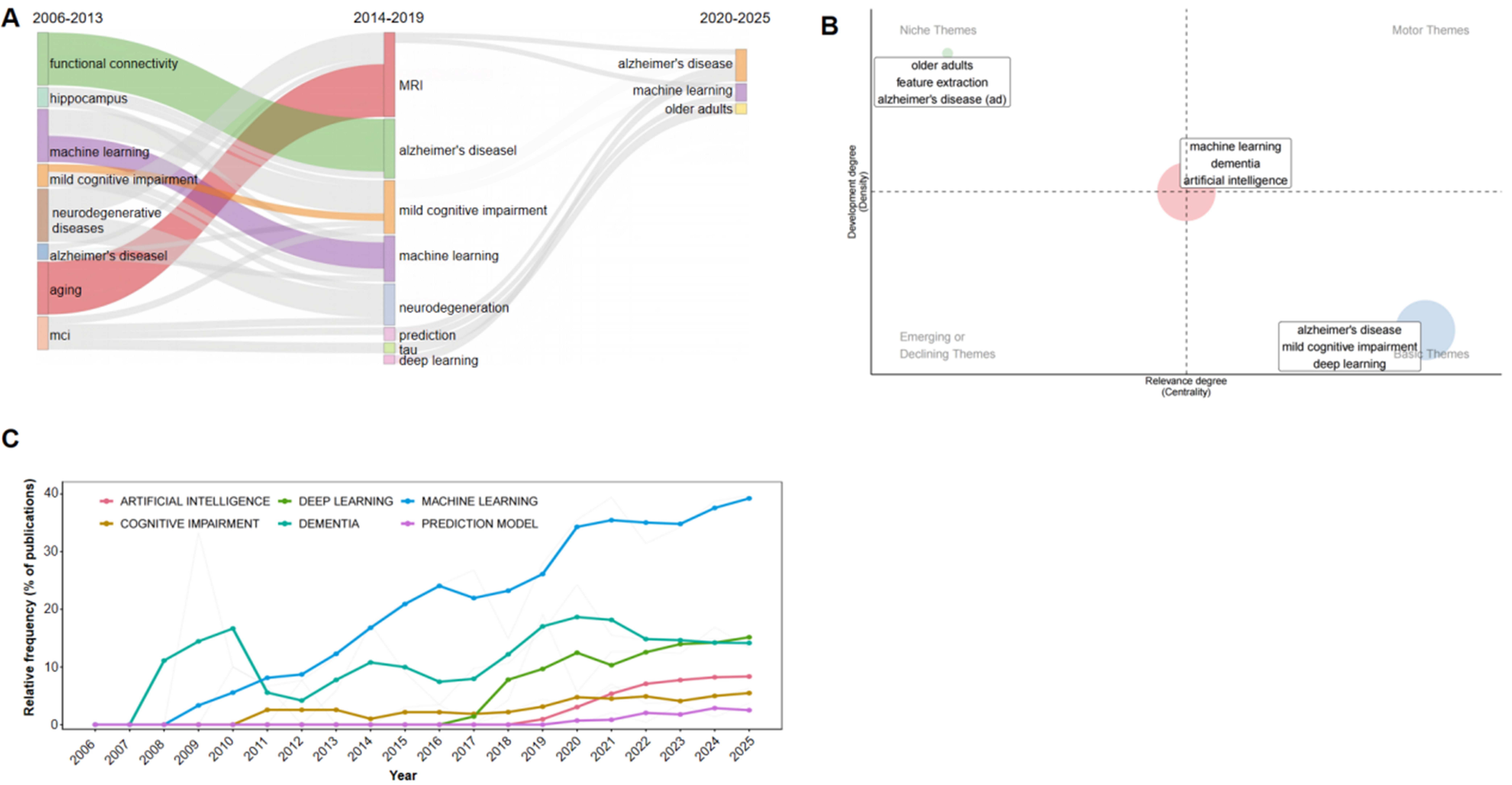
Figure 4. Thematic structure, temporal evolution, and keyword dynamics in geriatric disease-artificial intelligence research. (A) Sankey diagram illustrating the evolution and continuity of major research themes across three periods (2006-2013, 2014-2019, and 2020-2025), based on keyword co-occurrence. (B) Thematic map depicting the distribution of research themes according to relevance (centrality) and development (density), with themes classified into motor, basic, niche, and emerging or declining categories. (C) Temporal trends in the relative frequency of selected keywords from 2006 to 2025, with solid lines indicating smoothed trends.
3.4. Global distribution of aging burden inequality
Figure 5 illustrates the global distribution of the aging burden inequality index across countries. Overall, marked geographic heterogeneity is observed, indicating substantial cross-national differences in the alignment between aging-related disease burden and available research evidence.
Countries classified in the upper tertile of the inequality index are distributed across multiple regions, including parts of South America, Southeast Asia, and selected areas of Eastern Europe and North Africa. In contrast, many countries in North America, Western Europe, and Oceania fall within the lower tertile, reflecting comparatively lower levels of inequality. A large number of countries are positioned in the middle tertile, suggesting moderate imbalance between aging burden and research activity across diverse geographic contexts. Notably, high inequality is not confined to a single region but appears across countries with differing economic and demographic profiles. At the same time, several regions lack available data, limiting comprehensive global coverage and indicating gaps in the underlying information base. Taken together, this spatial pattern highlights that inequality in aging-related research evidence is unevenly distributed worldwide and varies substantially across national contexts, underscoring the presence of structural disparities in the global research landscape.
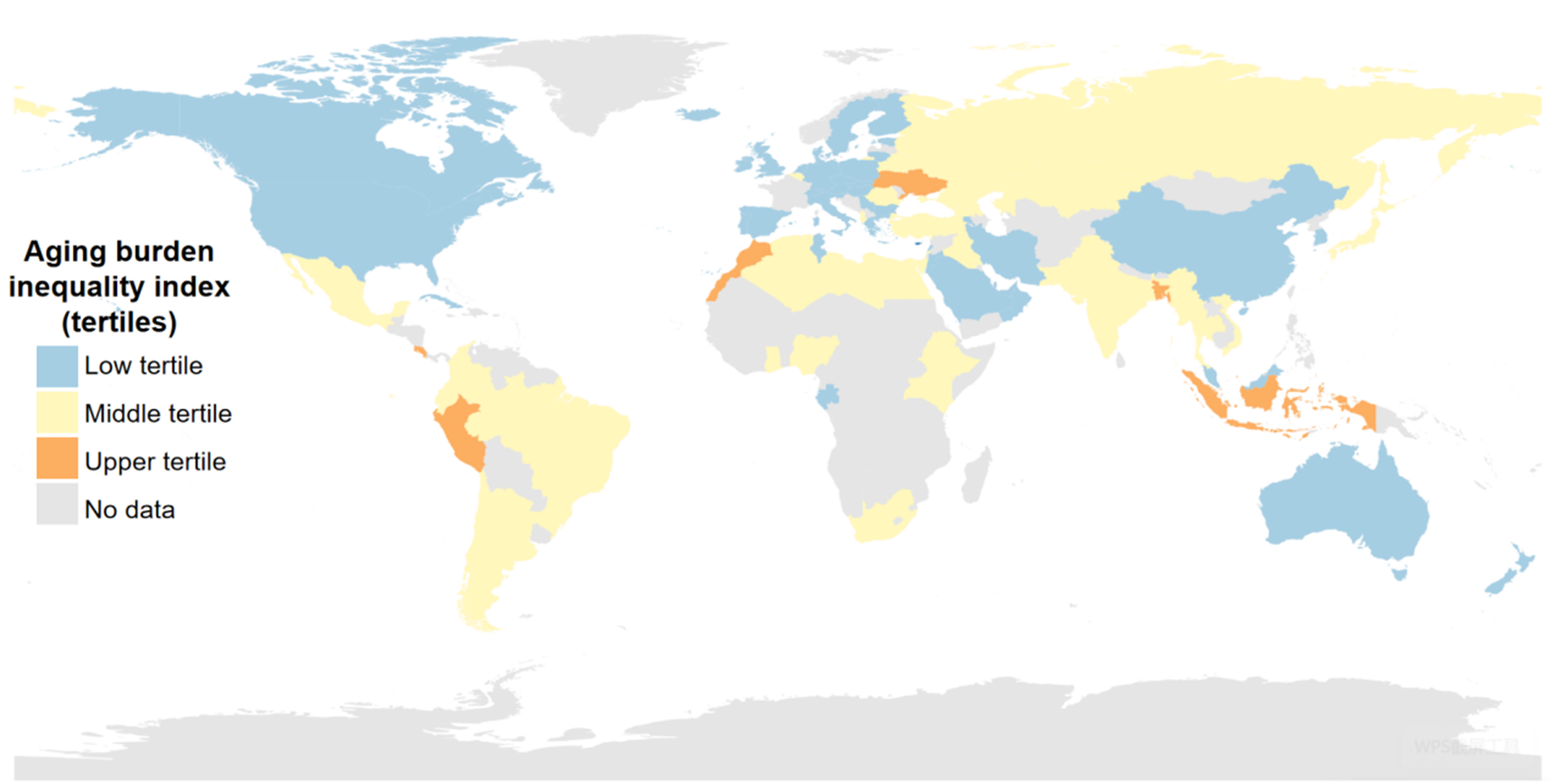
Figure 5. Global distribution of the aging burden inequality index. Countries are classified into tertiles (low, middle, and upper) according to the aging burden inequality index. Higher tertiles indicate greater disparity between aging-related disease burden and research evidence. Countries without available data are shown in grey.
3.5. Joint analysis of topic growth and citation depth
Figure 6 presents a joint analysis of publication growth and citation depth to characterize the developmental profiles of major research topics in geriatric disease-artificial intelligence research. Overall, substantial heterogeneity is observed across topics, indicating that increases in research output are not uniformly accompanied by corresponding accumulation of citation impact.
Several topics are located in the high-growth and high-depth quadrant, reflecting concurrent expansion in publication volume and sustained citation influence. These include AI-based multimodal imaging for Alzheimer’s disease detection and AI-based risk prediction for cardiovascular disease, which exhibit both rapid growth and relatively high citation depth, suggesting more advanced stages of evidence consolidation. In contrast, a group of topics occupies the high-growth but low-depth quadrant. Topics such as artificial intelligence in geriatric mental health and AI-based cardiac MRI show marked increases in publication output but comparatively limited citation depth. This pattern indicates that research activity in these areas has expanded faster than scholarly consolidation, consistent with emerging or transitional stages of development. Several topics fall within the low-growth and high-depth quadrant, characterized by modest expansion but relatively strong citation impact. These topics likely represent established research directions with stable influence but limited recent growth. By comparison, topics positioned in the low-growth and low-depth quadrant display both limited expansion and low citation impact, suggesting peripheral or weakly consolidated areas within the broader research landscape. Taken together, the joint growth-depth framework reveals pronounced disparities in the developmental trajectories of geriatric disease-AI research topics. While some areas demonstrate balanced growth and impact, a substantial proportion of rapidly expanding topics remain characterized by shallow citation depth, highlighting uneven progression toward mature and consolidated evidence structures within the field.
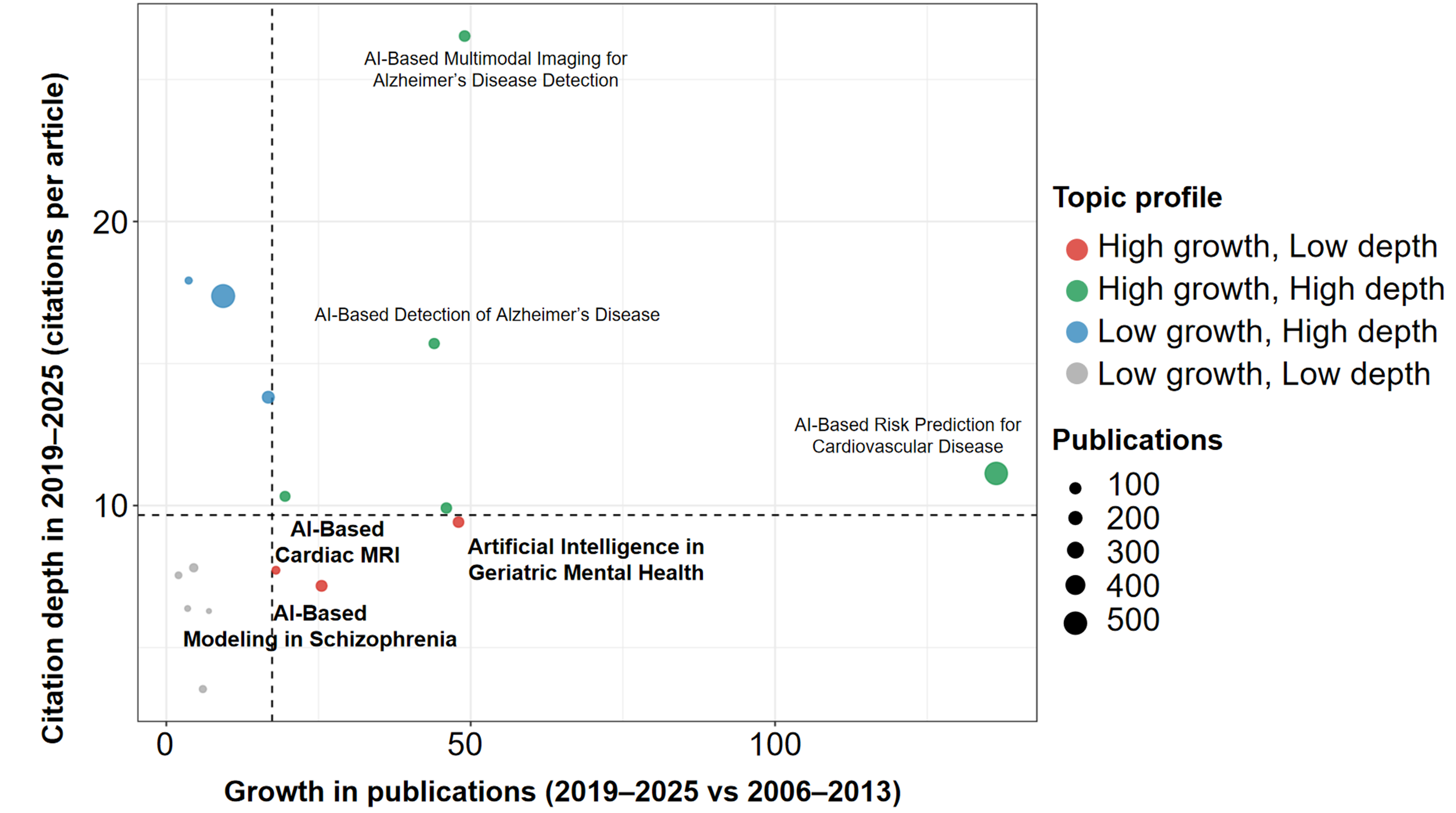
Figure 6. Joint analysis of topic growth and citation depth in geriatric disease-artificial intelligence research. Each bubble represents a research topic positioned according to growth in publication output (2019-2025 vs 2006-2013) on the x-axis and citation depth (mean citations per article, 2019-2025) on the y-axis. Dashed lines indicate median values used to divide topics into four quadrants representing distinct developmental profiles. Bubble size reflects recent publication volume, and colors denote topic profiles based on growth and citation depth.
4. Discussion
This bibliometric analysis provides a structured overview of how research on artificial intelligence applied to geriatric diseases has evolved over the past two decades. Across multiple analytical dimensionsincluding publication dynamics, collaboration structures, thematic organization, and the relationship between research growth and citation depth the findings consistently point to a field characterized by rapid expansion accompanied by pronounced structural heterogeneity. Rather than indicating a fully consolidated research domain, these patterns suggest that geriatric disease-AI research is currently in a transitional stage, where methodological innovation has outpaced integrative evidence development.
One of the most prominent observations is the divergence between publication growth and citation-based evidence consolidation. Although annual publication output has increased sharply in recent years, average citation impact and topic-level citation depth remain relatively modest. The joint growth-depth analysis further demonstrates that many rapidly expanding topics occupy the high-growth but low-depth quadrant, reflecting exploratory rather than mature research trajectories. Similar dynamics have been reported in other biomedical fields undergoing rapid methodological innovation, where technical feasibility often precedes the accumulation of stable, high-impact evidence[13, 14]. This pattern does not necessarily reflect deficiencies in research quality but is more likely indicative of differences in developmental stages across research directions. At the level of research organization, the analysis reveals a highly centralized collaboration structure. A small number of countries, institutions, and research teams account for a disproportionate share of publications and occupy central positions within international collaboration networks. While such concentration may facilitate resource-intensive model development and methodological refinement, it also implies that research agendas and validation settings are shaped predominantly by a limited range of healthcare systems and population contexts[16, 17]. This structural concentration may partially explain why certain diseases and data modalitiessuch as neuroimaging-based studies of Alzheimer’s diseasehave achieved greater thematic coherence than others.
Thematic analyses further highlight an uneven distribution of research attention across clinical domains. Core themes related to Alzheimer’s disease and machine learning methodologies remain highly central, whereas topics associated with functional decline, mental health, or broader geriatric syndromes exhibit less thematic consolidation despite observable growth. This imbalance suggests that methodological focus, rather than comprehensive coverage of geriatric complexity, has been a primary driver of topic development. Comparable patterns have been discussed in recent translational research reviews, where advances in analytical techniques have outpaced systematic integration with underlying biological or clinical frameworks[18]. The geographic distribution of research activity also reveals notable disparities when viewed alongside global patterns of aging-related disease burden. The aging burden inequality analysis indicates that regions experiencing substantial demographic aging are not always those with the highest research output. From a bibliometric perspective, this observation does not imply causality but instead points to a potential misalignment between knowledge production and health needs at a global scale[19]. Similar concerns regarding representativeness, bias, and contextual validity have been raised in broader discussions of artificial intelligence applications in sensitive biomedical domains[20]. Importantly, this study does not aim to assess the clinical effectiveness or methodological quality of individual AI models. Rather, its contribution lies in delineating the structural contours of the field and identifying areas where research growth, thematic maturity, and evidence consolidation diverge. By mapping these patterns, the analysis provides a contextual framework for interpreting existing findings and for identifying directions where further integration, validation, or diversification may be warranted.
Several limitations should be acknowledged. The analysis is restricted to publications indexed in the Web of Science Core Collection and relies on citation-based indicators as proxies for research influence. As a result, emerging studies, regional journals, and non-English literature may be underrepresented. Nevertheless, within these constraints, the findings offer a coherent snapshot of how geriatric disease-AI research has developed and differentiated over time.
In summary, the results suggest that while artificial intelligence has become firmly embedded in geriatric disease research, the field remains marked by uneven thematic maturity, concentrated knowledge production, and variable evidence consolidation. Recognizing these structural features may help guide future efforts toward more balanced, integrative, and clinically grounded development of AI-based research in geriatric medicine.
5. Limitations
Several limitations of this study should be acknowledged. First, although a broad conceptual scope of geriatric diseases was adopted, the thematic structure of the retrieved literature was strongly dominated by research related to Alzheimer’s disease. This pattern is likely influenced by the long-standing availability of large, standardized neuroimaging datasets, well-defined diagnostic frameworks, and established evaluation benchmarks in this disease area, which collectively lower methodological barriers for artificial intelligence applications and facilitate cumulative research activity. As a result, the prominence of Alzheimer’s disease in the bibliometric landscape should be interpreted as a reflection of data and infrastructure maturity rather than as a comprehensive representation of the full spectrum of geriatric disease complexity. Second, citation-based indicators, including citation depth, were used as relative measures of scholarly accumulation and thematic consolidation rather than as direct proxies for methodological rigor, clinical validity, or evidentiary quality. Citation patterns may be influenced by multiple external factors, such as disease popularity, accessibility of shared datasets, journal visibility, and publication incentives, particularly in rapidly expanding methodological fields. Consequently, research topics characterized by high publication growth but relatively limited citation depth should not be interpreted as low-quality or weak evidence, but rather as areas that may be at earlier or transitional stages of development. Finally, the observed geographic misalignment between aging-related disease burden and research output should be interpreted with caution. Such disparities are likely shaped by structural determinants beyond demographic need alone, including variations in data infrastructure, research funding capacity, healthcare digitization, language and database indexing biases, and institutional research incentives. From a bibliometric perspective, these findings do not imply causal relationships but instead highlight persistent systemic constraints that influence where and how research evidence is generated.
6. Conclusion
This bibliometric analysis outlines the development of artificial intelligence research in geriatric diseases between 2006 and 2025. Although publication output has increased substantially, the field remains marked by uneven thematic maturity, concentrated research activity, and variable evidence consolidation. Several rapidly expanding topics appear to be at exploratory or transitional stages, while research output is unevenly distributed across regions. These findings provide a structural perspective on the current state of geriatric disease-AI research and may inform more balanced and integrated future studies.
Funding
No funding.
Acknowledgments
The authors thank the developers of the Web of Science Core Collection and the bibliometric analysis tools used in this study for providing access to the data and software resources.
Conflict of Interest
The authors declare that the research was conducted in the absence of any commercial or financial relationships that could be construed as a potential conflict of interest.
Author Contributions
Bin Yu: Conceptualization, Investigation, Formal analysis, Writing – Original Draft. Xue Zhang: Data Curation, Visualization, Writing – Review & Editing, Supervision.
Reference
[1]. G. Vincenza, D. Nucci, F. Pennisi, S. Maggi, N. Veronese, and P. Soysal. “Aging, longevity, and healthy aging: the public health approach.” Aging Clin. Exp. Res. 2025, 37,1, 125.
[2]. V. Patel and P. Edison. “Cardiometabolic risk factors and neurodegeneration: a review of the mechanisms underlying diabetes, obesity and hypertension in Alzheimer's disease.” J. Neurol. Neurosurg. Psychiatry 2024, 95,6, 581–589.
[3]. X.R. Zhang, W.F. Zhong, R.Y. Liu, J.L. Huang, J.X. Fu, J. Gao, P.D. Zhang, D. Liu, Z.H. Li, Y. He, H. Zhou, and Z. Li. “Improved prediction and risk stratification of major adverse cardiovascular events using an explainable machine learning approach combining plasma biomarkers and traditional risk factors.” Cardiovasc. Diabetol. 2025, 24,1, 153.
[4]. A. Pinto, F. Pennisi, S. Odelli, E. De Ponti, N. Veronese, C. Signorelli, V. Baldo, and V. Gianfredi. “Artificial intelligence in the management of infectious diseases in older adults: diagnostic, prognostic, and therapeutic applications.” Biomedicines 2025, 13,10, 2525.
[5]. W. Zhou, R. Qu, W. Luo, H. Zhang, L. Gong, and Alzheimer’s Disease Neuroimaging Initiative. “Identification of cognitive brain diseases using a dual-branch siamese network on structural magnetic resonance imaging data.” Neuroscience 2025, 591, 83–92.
[6]. J. Wang, Y. Liang, S. Cao, P. Cai, and Y. Fan. “Application of artificial intelligence in geriatric care: bibliometric analysis.” J. Med. Internet Res. 2023, 25, e46014.
[7]. R.C. Christodoulou, A. Woodward, R. Pitsillos, R. Ibrahim, and M.F. Georgiou. “Artificial intelligence in Alzheimer's disease diagnosis and prognosis using PET-MRI: a narrative review of high-impact literature post-Tauvid approval.” J. Clin. Med. 2025, 14,16, 5913.
[8]. A. Zhavoronkov, P. Mamoshina, Q. Vanhaelen, M. Scheibye-Knudsen, A. Moskalev, and A. Aliper. “Artificial intelligence for aging and longevity research: recent advances and perspectives.” Ageing Res. Rev. 2019, 49, 49–66.
[9]. E. Burnazovic, A. Yee, J. Levy, G. Gore, and S. Abbasgholizadeh Rahimi. “Application of artificial intelligence in COVID-19-related geriatric care: a scoping review.” Arch. Gerontol. Geriatr. 2024, 116, 105129.
[10]. D. Klingelhöfer, M. Braun, J. Dröge, D.A. Groneberg, and D. Brüggmann. “Research on artificial intelligence, machine and deep learning in medicine: global characteristics, readiness, and equity.” Global Health 2025, 21,1, 36.
[11]. S. Park, E. Ahn, T.-H. Ahn, S. Ahn, S. Park, E. Kwon, S. Ahn, and Y. Yang. “Artificial intelligence and aging in place: a scoping review of current applications and future directions.” Gerontologist 2025, 65,6, gnaf130.
[12]. GBD 2019 Ageing Collaborators. “Global, regional, and national burden of diseases and injuries for adults 70 years and older: systematic analysis for the Global Burden of Disease 2019 Study.” BMJ 2022, 376, e068208.
[13]. V.L. Bartlett, S.S. Dhruva, N.D. Shah, P. Ryan, and J.S. Ross. “Feasibility of using real-world data to replicate clinical trial evidence.” JAMA Netw. Open 2019, 2,10, e1912869.
[14]. J. Saez-Rodriguez, J.C. Costello, S.H. Friend, M.R. Kellen, L. Mangravite, P. Meyer, T. Norman, and G. Stolovitzky. “Crowdsourcing biomedical research: leveraging communities as innovation engines.” Nat. Rev. Genet. 2016, 17, 8,470–486.
[15]. S. Moll, M. Wyndham-West, G. Mulvale, S. Park, A. Buettgen, M. Phoenix, R. Fleisig, and E. Bruce. “Are you really doing 'codesign'? Critical reflections when working with vulnerable populations.” BMJ Open 2020, 10,11, e038339.
[16]. D.D. Saulnier, K. Blanchet, C. Canila, D. Cobos Muñoz, L. Dal Zennaro, D. de Savigny, K.N. Durski, F. Garcia, P.Y. Grimm, A. Kwamie, D. Maceira, R. Marten, I. Peytremann-Bridevaux, C. Poroes, V. Ridde, L. Seematter, B. Stern, P. Suarez, G. Teddy, D. Wernli, K. Wyss, and F. Tediosi. “A health systems resilience research agenda: moving from concept to practice.” BMJ Glob. Health 2021, 6,8, e006779.
[17]. R.C. Vos, L.A.D.M. van Osch, J.H.M. van Bilsen, M.J. Knapen, A.W.M. Evers, M.T.E. Hopman, L.A.L.M. Kiemeney, S. Wopereis, N.H. Chavannes, J.C. Kiefte-de Jong, J. Mierau, and S. Kremers. “Evidence-based implementation of lifestyle medicine in healthcare practice: a research agenda.” Fam. Med. Community Health 2025, 13,3, e003324.
[18]. Y. Xu, J. Ma, C. Ding, W. Liang, Q. Zeng, and B. Lv. “The role of long non-coding RNAs in breast cancer drug resistance: a comprehensive review.” J. Transl. Genet. Genom. 2025, 9, 381–405.
[19]. A. Yegros-Yegros, W. van de Klippe, M.F. Abad-Garcia, and I. Rafols. “Exploring why global health needs are unmet by research efforts: the potential influences of geography, industry and publication incentives.” Health Res. Policy Syst. 2020, 18,1, 47.
[20]. R. Zhang. “Artificial intelligence in forensic genetics: applications and ethical challenges.” J. Transl. Genet. Genom. 2025, 9, 359–367.