Mapping the Intersections of Physical Activity and Gut Microbiota: A Global Bibliometric Analysis of Research Patterns, Gaps, and Emerging Trends (2010–2025)
published: 31 July 2025 | https://doi.org/10.63174/xdi.ZRER7962
Abstract
The interplay between physical activity and gut microbiota has attracted growing attention across disciplines ranging from microbiology to behavioral science. While studies increasingly suggest that exercise can modulate gut microbial diversity and function, the broader landscape of this research field - its development trajectory, collaboration patterns, and thematic evolution—remains unclear. In this study, we conducted a comprehensive bibliometric analysis of publications from 2010 to 2025, aiming to clarify the field’s structural characteristics and identify key knowledge gaps. Our findings reveal a rapidly expanding body of work, with publication surges after 2017 and concentrated outputs from a limited number of countries, institutions, and journals. Network analysis uncovered regionally imbalanced collaborations, while keyword mapping showed a transition from compositional profiling to mechanistic exploration, yet limited coverage of diverse exercise types, populations, and cultural contexts. These results underscore the need for broader, more inclusive research frameworks to guide future empirical and translational efforts in this evolving domain.
1. Introduction
The gut microbiota is increasingly recognized as a pivotal ecological system in regulating human health, playing essential roles in nutrition metabolism, immune homeostasis, and neuroregulation[1]. Accumulating evidence has linked gut microbial dysbiosis not only to chronic diseases such as obesity, diabetes, and cardiovascular disorders, but also to emotional and cognitive functions via the gut–brain axis[2]. In parallel, physical activity—characterized by its low cost and high efficacy - has been widely validated for its capacity to improve metabolic health, reduce inflammation, and enhance cognitive performance[3]. This convergence of research interests has prompted growing attention toward whether exercise can modulate gut microbiota to achieve integrative benefits across physiological systems. However, this topic spans multiple disciplines, including exercise physiology, microbial ecology, nutritional science, and neuroscience. The diversity of research pathways and the complexity of mechanistic frameworks call for a systematic overview of developmental trajectories, key issues, and blind spots to advance cross-disciplinary collaboration and empirical progress.
Existing studies have preliminarily demonstrated the multidimensional regulatory effects of physical activity on the gut microbiota, particularly in enhancing microbial diversity, promoting probiotic colonization, modulating short-chain fatty acid production, and reducing inflammation[4]. Interventional trials have shown that aerobic exercise can increase the abundance of beneficial taxa such as Akkermansia and Faecalibacterium, often accompanied by improvements in metabolic indicators[5]. Nevertheless, a systematic review of the current literature reveals four major structural gaps in this field: First, research on exercise modalities remains narrow, with a predominant focus on aerobic activities such as running and cycling, and limited exploration of traditional practices like Tai Chi, Baduanjin, and Pilates and their underlying microbial mechanisms; second, population coverage is restricted, with an overrepresentation of young males, athletes, and individuals with metabolic disorders, while older adults, women, and sub-healthy individuals remain underexamined; third, studies are largely confined to compositional profiling of microbiota, lacking sufficient exploration of metabolic, immune, and neurological mechanisms or causal inference; fourth, the geographic and cultural scope is heavily centered on Western populations, with insufficient attention to the diversity of exercise modalities and microbial responses in non-Western contexts[6]. These limitations constrain the generalizability and translational value of current findings and underscore the necessity of using bibliometric approaches to systematically dissect the field’s thematic evolution and identify latent research gaps.
Against this backdrop, the present study employed bibliometric methods to map the development of research on “physical activity and gut microbiota” from 2010 to 2025. Through multi-dimensional perspectives - including country, institution, and author distributions, collaboration networks, source journals, and thematic keyword dynamics - we aimed to uncover developmental patterns, structural characteristics, and potential blind spots in the field. Unlike traditional reviews, bibliometric analysis enables the identification of structural patterns and temporal shifts in knowledge networks based on large-scale data, offering strategic insights for future research planning and resource allocation[7]. Moreover, given the inherently interdisciplinary nature of this topic - spanning microbiology, exercise science, nutrition, and cognitive psychology—our study also explores the potential for cross-disciplinary integration and culturally adaptive research, with the goal of steering future studies toward more inclusive, mechanistic, and globally relevant directions.
To systematically elucidate the research landscape and evolutionary pathways of this interdisciplinary domain, we focused on six core questions using bibliometric analysis: (1) trends in research activity and thematic growth; (2) distribution and evolution of publishing platforms and journal ecosystems; (3) spatial patterns of national, institutional, and author contributions; (4) structures of international and author-level collaborations; (5) trajectories of institutional productivity; and (6) dynamic evolution of research themes and keywords. Through a comprehensive synthesis of these dimensions, we aim to clarify the field’s developmental logic and structural features, identify gaps related to exercise modalities, population structures, mechanistic depth, and cultural context, and ultimately provide a structural reference for guiding future empirical research and advancing the interdisciplinary integration of exercise science, microbiome research, and public health on a global scale.
2. Materials and Methods
2.1. Data Source and Search Strategy
A systematic literature search was performed in the Web of Science Core Collection on July 6, 2025, to identify publications concerning the relationship between gut microbiota and physical activity. The following topic-based search query was applied:
TS = (("gut microbiota" OR "gut microbiome" OR "intestinal microbiota") AND ("physical activity" OR "exercise" OR "training" OR "sport" OR "fitness") AND ("human" OR "cohort" OR "intervention")). The search included all document types and languages, covering the publication period from January 1, 2000, to July 1, 2025.
2.2. Inclusion and Exclusion Criteria
Two independent reviewers screened the retrieved articles based on title and abstract. Studies were included if their primary focus involved gut microbiota and its associations with physical activity, exercise, or sport-related behaviors in human populations. Studies that mentioned these terms only peripherally or lacked substantive relevance were excluded. Any disagreement was resolved through discussion or third-party consultation.
2.3. Data Extraction and Processing
For eligible publications, bibliographic metadata—including title, authorship, institutional affiliation, year, document type, journal, citation count, and research area—were exported in plain text and tab-delimited formats. Data processing and manual cleaning were carried out in Microsoft Excel 2019. Document types were classified into original research articles, reviews, and other forms.
2.4. Bibliometric Analysis and Visualization
Multiple bibliometric tools were employed for analysis and visualization. VOSviewer (version 1.6.17) was used to construct co-authorship and institutional collaboration networks, as well as keyword co-occurrence maps. CiteSpace (version 6.1.R6) was applied to detect citation bursts, map reference co-citation clusters, and analyze thematic evolution. R software (version 4.2.1) with the Bibliometrix package was utilized to generate plots of annual publication trends, thematic maps, and Sankey diagrams.
The bibliometric indicators included:
– Annual publication and citation trends
– Country and institutional productivity
– Author and collaboration network structure
– Journal and subject category distribution
– Keyword frequency, clustering, and temporal evolution
Figures were exported in high-resolution TIFF or PDF formats for publication purposes.
2.5. Ethical Considerations
As this study is based solely on publicly available bibliographic data, no ethical approval was required.
2.6. Limitations of Data Source
This study used only the Web of Science Core Collection. Therefore, literature not indexed by this database, including preprints and regional journals, may have been omitted.
3. Results
3.1. Annual Publication Trends and the Author - Institution - Journal Collaboration Network
The temporal distribution of publications and citation metrics provides a foundational lens through which to evaluate the maturation and saturation of the “physical activity - gut microbiota” research field. As illustrated in Figure 1A, annual publication volume exhibited a steady upward trajectory from 2010 to 2025, with a marked acceleration beginning in 2017 and peaking in 2024. Despite a slight decline in 2025, publication levels remained historically high, reflecting sustained scholarly interest. In contrast, average citations per article peaked during 2015 - 2018 but declined notably after 2020. This divergence between publication quantity and citation impact suggests a potential dilution of academic influence, possibly driven by thematic fragmentation, methodological redundancy, or a plateau in conceptual novelty. To further delineate the structural ecology of scholarly production, a Sankey diagram (Figure 1B) maps the triadic relationships among high - output authors (AU), their affiliated institutions (AU_UN), and key publishing journals (SO). On the left, prolific contributors such as Segal Eran, Gordon Jeffrey I, and Rodionov Dmitry A stand out for their consistent output at the intersection of microbiota, metabolism, and exercise science. The central panel highlights institutional affiliations including Washington University School of Medicine, University of Parma, and Harvard Medical School - entities that function as major research hubs in this domain. The right - hand segment showcases key journals such as Nutrients, Cell Host & Microbe, Gut Microbes, and Frontiers in Microbiology, underscoring the multidisciplinary nature of knowledge dissemination. This tripartite network reveals a distinctly institution - centered collaboration model, where a handful of academic centers serve as coordination nuclei linking multiple authors and journals. Simultaneously, certain authors maintain trans - institutional collaborations, suggesting the emergence of flexible and interdisciplinary knowledge networks. Notably, journals like Gut Microbes and Cell Host & Microbe act as recurrent bridges between disparate research nodes, reflecting their status as authoritative and integrative platforms. Taken together, these patterns indicate that while the field is experiencing quantitative growth, its collaborative architecture remains skewed toward a small number of institutions and author clusters. This underscores the importance of broadening global participation and fostering culturally diverse collaborations to avoid epistemic bottlenecks and to enrich the translational potential of microbiota - exercise research.
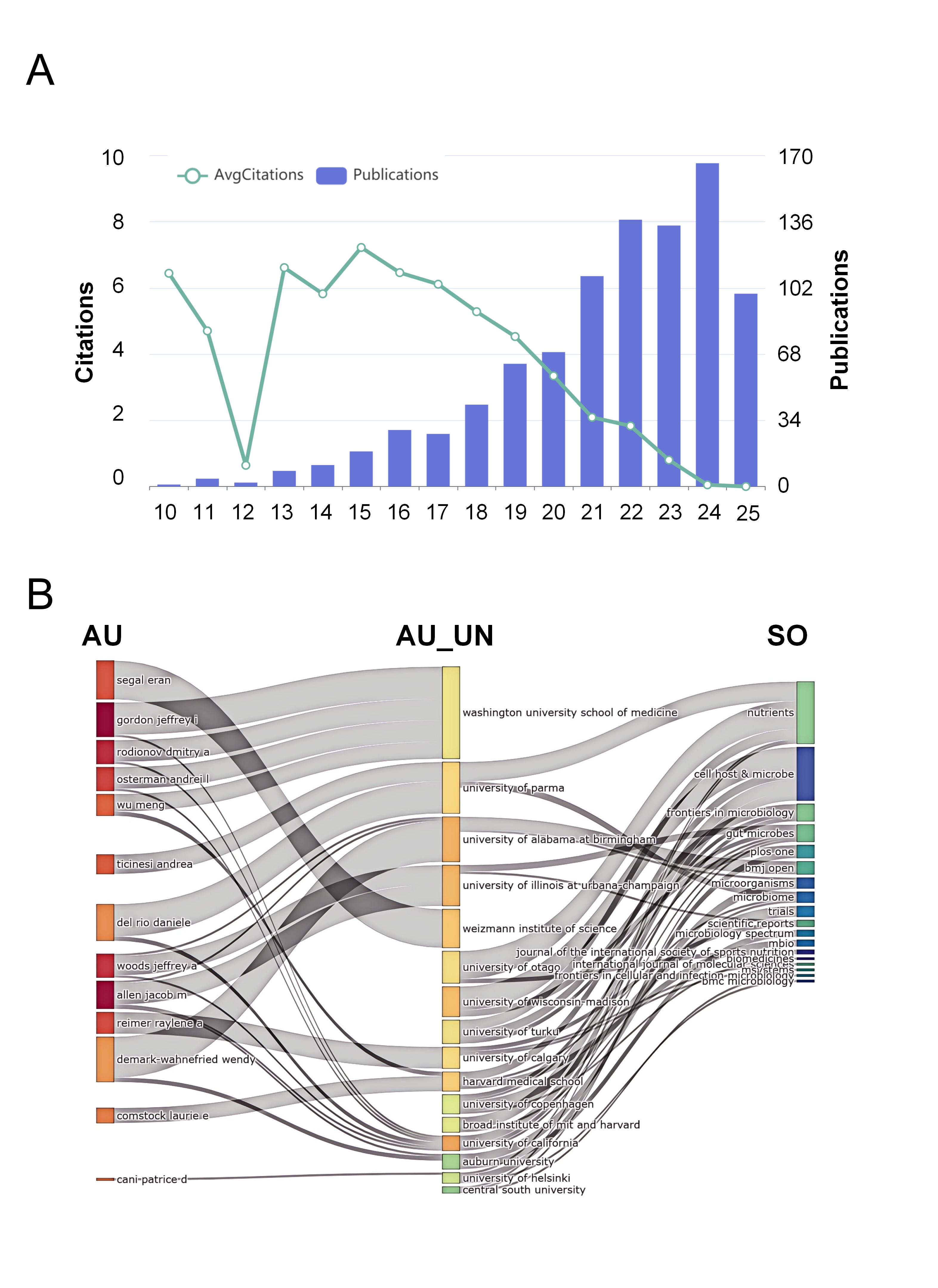
Figure 1. Annual publication and citation trends, and the collaboration network among authors, institutions, and journals in gut microbiota and physical activity research from 2010 to 2025. (A) The blue bars represent the annual number of publications, showing a steady increase in research output over the past 15 years. The green line indicates the average number of citations per paper, which peaked between 2015 and 2018 but declined markedly after 2020. This divergence may reflect a broadening of research topics and a subsequent dilution in citation density. (B) Sankey diagram illustrating the relationships among prolific authors (AU, left), their affiliated institutions (AU_UN, center), and the journals in which they published (SO, right). The width of each rectangle indicates the publication volume. The connecting lines represent many-to-many collaborations, highlighting concentrated networks around key institutions (e.g., Washington University School of Medicine, University of Parma) and prominent journals (e.g., Cell Host & Microbe, Gut Microbes, Nutrients).
3.2. Core Publication Sources and Evolving Trends in Knowledge Dissemination
To delineate the key platforms shaping discourse in the “physical activity - gut microbiota” field, we identified the top 10 most productive journals between 2010 and 2025 (Figure 2A). Nutrients ranked first with 59 publications - more than double that of any other outlet - underscoring its role as a central hub for interdisciplinary studies bridging nutrition, microbiota, and exercise science. Other high - output journals included Frontiers in Microbiology (25 articles), Gut Microbes (23), Scientific Reports (20), and International Journal of Molecular Sciences (16), all of which emphasize mechanistic, translational, or microbial - focused research. Journals such as BMJ Open, Frontiers in Nutrition, mSystems, and PLOS ONE (each contributing 13 articles), along with Frontiers in Cellular and Infection Microbiology, also emerged as important dissemination channels. Their inclusion reflects the field’s growing interdisciplinarity, spanning from fundamental microbial ecology to clinical and public health applications. Temporal dynamics (Figure 2B) reveal that Nutrients experienced a sharp and sustained increase in output beginning in 2020, culminating in a publication peak during 2024 - 2025. It now functions as a preferred venue for researchers at the nutrition - microbiota - exercise nexus. Meanwhile, Frontiers in Microbiology and Gut Microbes have maintained steady growth, reinforcing their status as foundational journals for microbiome - focused investigations. The rise of generalist journals like Scientific Reports and IJMS further suggests widening disciplinary appeal and the integration of microbiota research into broader biomedical and physiological contexts. Of note, the prominence of open - access journals - including BMJ Open and Frontiers in Nutrition - signals a paradigmatic shift from laboratory - centric studies to community - engaged, translational research. This transition supports greater accessibility, cross - sector knowledge exchange, and the contextualization of microbiota - exercise findings within diverse cultural and healthcare environments. It also highlights the field’s trajectory toward broader societal relevance, inclusivity, and potential public health impact.
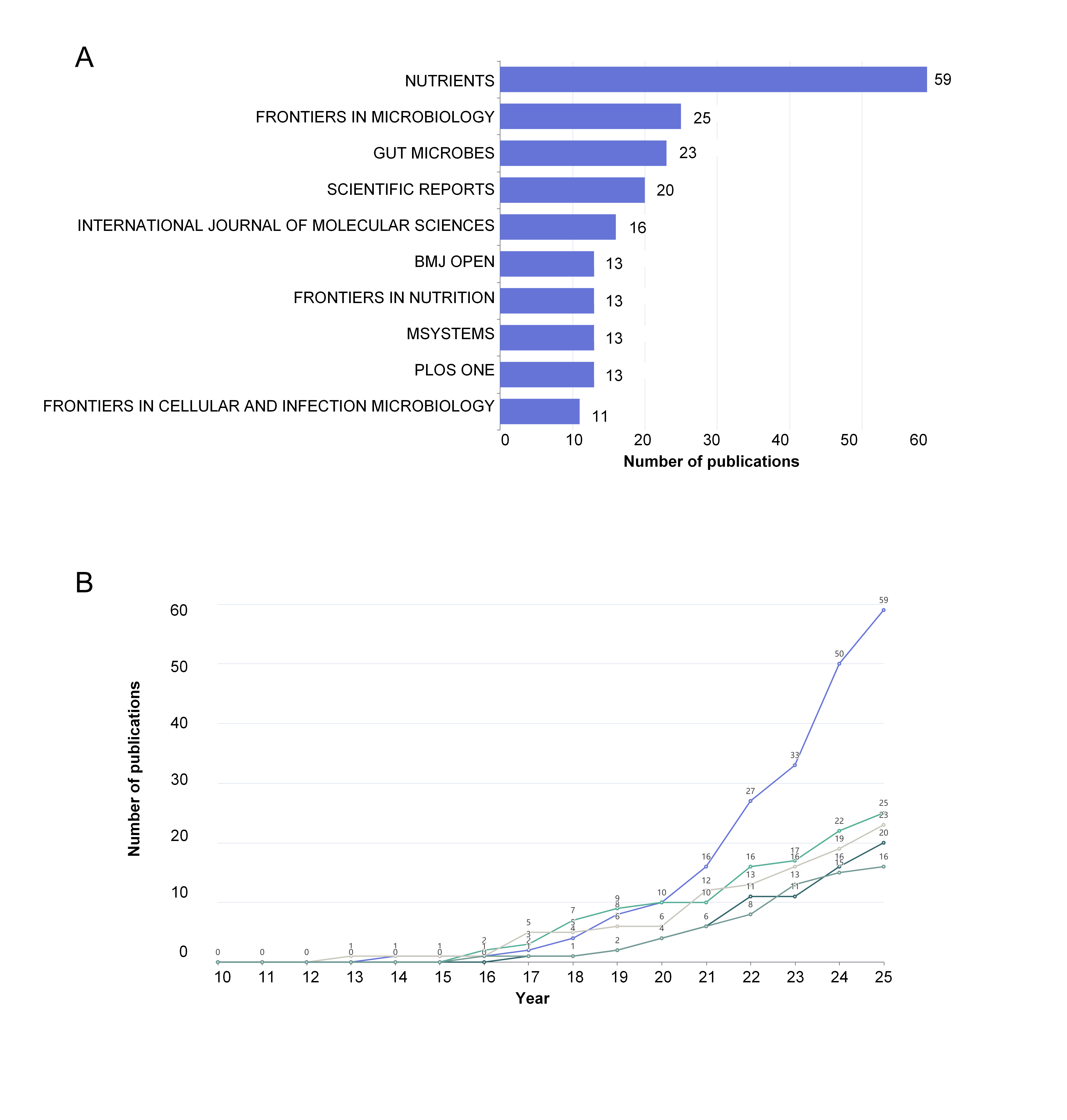
Figure 2. Core publication sources and temporal trends in research on physical activity and the gut microbiota. (A) The horizontal bar chart displays the top 10 journals in terms of publication volume between 2010 and 2025. Nutrients ranks first with 59 articles, followed by Frontiers in Microbiology (25), Gut Microbes (23), and Scientific Reports (20). Other productive sources include International Journal of Molecular Sciences (IJMS), BMJ Open, Frontiers in Nutrition, mSystems, and PLOS ONE, indicating that research in this field is primarily disseminated through leading journals in microbiology, nutrition science, and general medicine. (B) The line graph illustrates the annual publication trends of the top five journals from 2010 to 2025. Nutrients has exhibited a rapid surge in output since 2020 and maintained a dominant position through 2024–2025. Journals such as Frontiers in Microbiology, Gut Microbes, and Scientific Reports also demonstrated a steady upward trend.
3.3. Global Research Distribution and Authorial Contributions Reveal Structural Concentration and Emerging Gaps
To map the spatial landscape of research on physical activity and the gut microbiota, we analyzed publication outputs across 58 countries from 2010 to 2025 (Figure 3A - B). The field demonstrates wide international participation; however, contributions are markedly uneven. China (24.58%) and the United States (24.23%) dominate the global output, together accounting for nearly half of all publications - forming a “dual - core” structure at the center of global discourse. Italy (8.63%), Germany (5.29%), Australia (4.03%), Spain (3.60%), and Canada (3.57%) follow, though with substantially lower output. While countries from Asia and Europe are represented, contributions from developing nations and culturally diverse regions remain minimal, reflecting persistent geographical and epistemic imbalances. At the individual level (Figure 3C), the top 10 most prolific authors predominantly hail from North America, East Asia, and Europe. Cotter Paul D and Gordon Jeffrey I led with 8 publications each, followed by Allen Jacob M and Huang Chi - Chang (7 each). These scholars often possess cross - disciplinary backgrounds - spanning microbial ecology, sports science, and nutritional immunology - underscoring the field’s dependence on integrative expertise. Other high-output researchers, such as Rodionov Dmitry A, Franke Andre, and Lee Mon - Chien, represent key nodes of sustained scholarly productivity. Temporal trends of author contributions (Figure 3D) reveal several notable patterns: (1) A sharp increase in publication activity post - 2020, likely catalyzed by the COVID - 19 pandemic’s impact on health - related research priorities; (2) a “late - stage surge” in output from authors such as Woods Jeffrey A and Rodionov Dmitry A, possibly reflecting the adoption of advanced methods like metagenomics and systems biology; and (3) a stable, long - term contribution trajectory from Gordon Jeffrey I, indicative of leadership continuity and foundational influence. These trends suggest the field is evolving through both cumulative maturation and innovation - driven expansion.
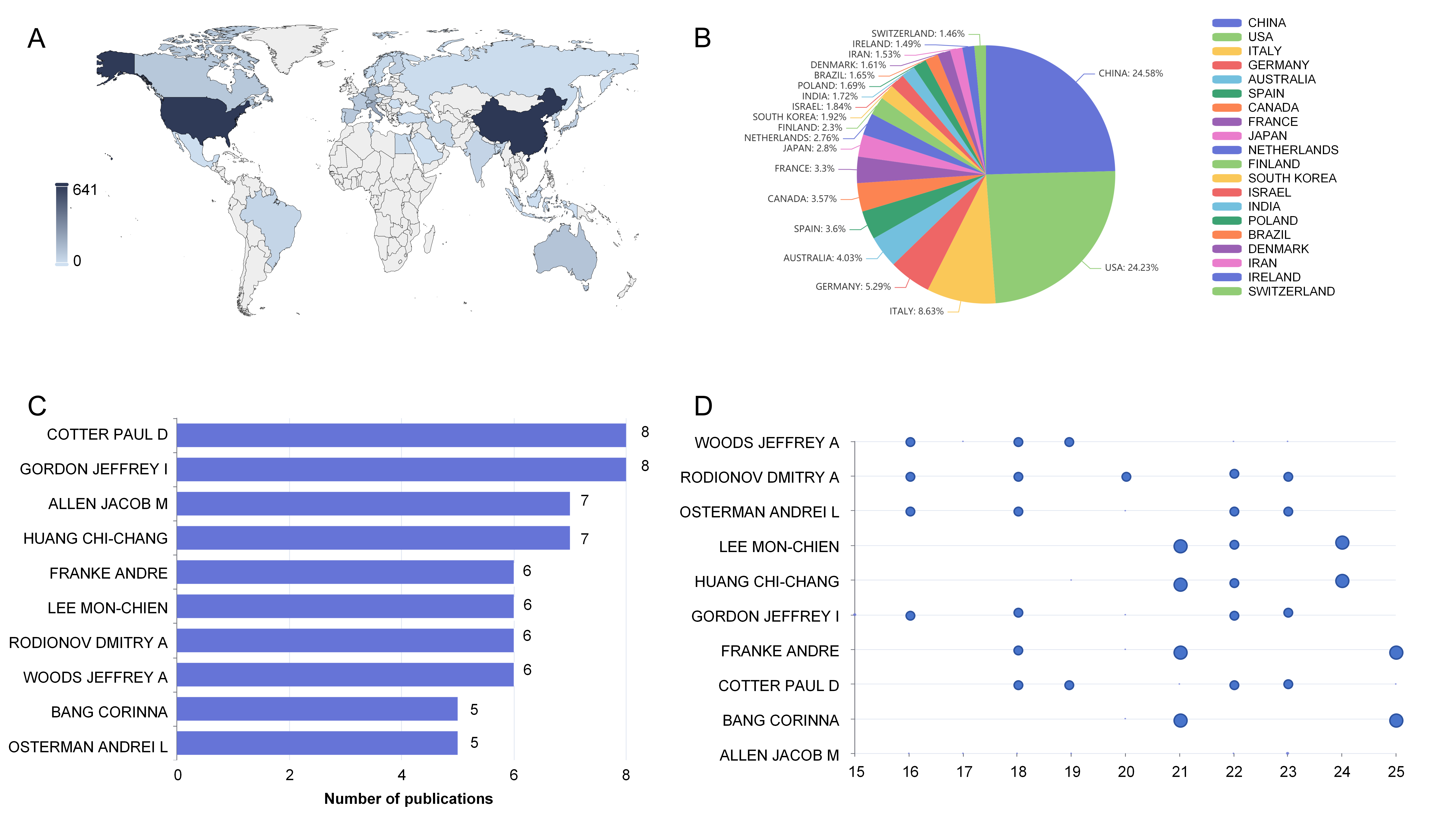
Figure 3. Geographic and author-level contributions to research on physical activity and the gut microbiota. (A) World map showing publication distribution across countries from 2010 to 2025. Darker shading indicates higher output, with China and the United States as the leading contributors. (B) Pie chart illustrating the top 20 most productive countries. China (24.58%) and the USA (24.23%) dominate the field, followed by Italy (8.63%), Germany (5.29%), and Australia (4.03%). (C) Bar chart displaying the top 10 most productive authors. Cotter Paul D and Gordon Jeffrey I ranked first with 8 publications each, followed by Allen Jacob M and Huang Chi-Chang with 7 articles. (D) Bubble plot showing annual publication trends for these authors from 2015 to 2025. Bubble size reflects the number of publications per year. Most authors exhibited a notable surge in output after 2020, marking individual productivity peaks.
Collectively, the current research landscape exhibits a highly centralized and oligarchic pattern, characterized by geographic clustering and authorial dominance. While institutions in China and the U.S. act as global epicenters, growing research clusters in East Asia and parts of Europe suggest increasing regional diversification. Nonetheless, the continued underrepresentation of non - Western populations, cultural perspectives, and under-resourced settings highlights a critical structural void. Addressing these disparities through inclusive, cross - regional collaboration is essential for ensuring that emerging knowledge on exercise - microbiota interactions achieve global relevance, cultural adaptability, and translational equity.
3.4. Global Collaboration Networks and Author - Level Cooperation Patterns
To elucidate the structure of international and author - level cooperation in the field of physical activity and the gut microbiota, we constructed a global co - authorship network based on publications from 2010 to 2025 (Figure 4A). The analysis reveals a structurally centralized and asymmetrical landscape. China and the United States emerge as the dual anchors of global collaboration, forming the most frequent and expansive bilateral research ties. The U.S. also maintains robust connections with Germany, France, and the United Kingdom, while China increasingly serves as a pivotal link bridging Asia - Pacific researchers with Western academic hubs. Dense intra - European collaborations - particularly among Germany, Italy, and the Netherlands - suggest a strong regional research bloc. In contrast, intra - Asian cooperation remains relatively sparse, with most institutions engaging outwardly rather than regionally, underscoring the need for stronger horizontal integration within Asia. At the micro level, Figure 4B visualizes author co - authorship clusters, revealing a landscape dominated by highly modular and institutionally anchored teams. Influential scholars such as Gordon Jeffrey I, Osterman Andrei L, and Allen Jacob M occupy central nodes, coordinating extensive, cohesive research groups with sustained productivity. Others, like Woods Jeffrey A and Franke Andre, lead tightly knit regional teams, reflecting stable, long - term collaborations. In contrast, authors such as Lee Mon - Chien and Segal Eran are embedded in smaller, relatively isolated clusters - possibly constrained by geographic, institutional, or linguistic boundaries. Three distinct features characterize the current collaborative ecology of this field: (1) A transcontinental backbone led by China and the U.S., shaping the global research agenda through frequent bilateral and multi - institutional partnerships; (2) A regionally compact yet intellectually dynamic European network, with Germany at the center of multilateral scientific exchange; (3) A highly clustered author network, marked by deep intra - group collaboration but limited inter - cluster connectivity - suggesting the presence of intellectual silos. While these patterns reflect the structural maturity and growing institutional capacity of the field, they also expose significant limitations. The underrepresentation of institutions from the Global South, low levels of South - South cooperation, and the scarcity of multilingual or culturally diverse collaborations remain key challenges. Moving forward, targeted initiatives to expand regional integration, diversify linguistic and cultural participation, and reduce structural barriers to inclusion will be essential to advance a more globally representative and culturally adaptive microbiome - exercise research agenda.
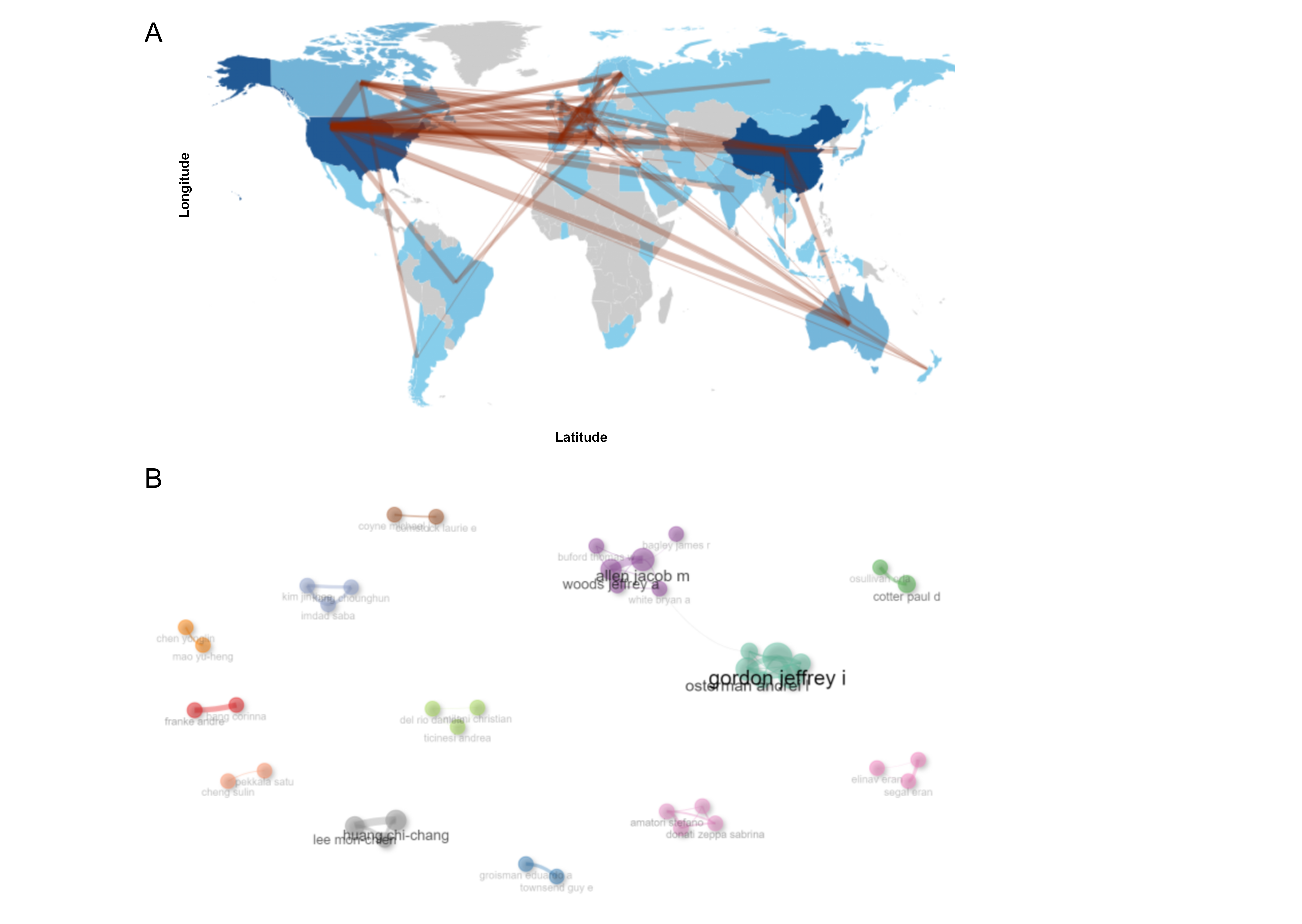
Figure 4. International and author-level collaboration patterns in gut microbiota and physical activity research. (A) World map showing global scientific collaboration based on co-authorship from 2010 to 2025. Line thickness indicates collaboration strength, and country shading reflects publication volume. The strongest ties were observed between China and the USA, with dense bilateral collaborations also seen across Europe. (B) Author co-authorship network. Node size represents publication volume; line thickness denotes co-authorship frequency; node color indicates distinct collaboration clusters. Several tightly connected author groups are visible, centered around key contributors such as Gordon Jeffrey I and Allen Jacob M.
3.5. Temporal Evolution of Institutional Productivity
To examine shifts in institutional leadership within the field of physical activity and gut microbiota research, we analyzed the annual publication trajectories of the five most productive institutions from 2010 to 2025 (Figure 5). All institutions demonstrated upward trends in output, though with distinct temporal patterns and underlying drivers. The University of California exhibited the most pronounced growth, entering a phase of rapid expansion after 2021 and nearly doubling its output within five years. This surge likely reflects strategic investments in interdisciplinary platforms, the rise of early - career research groups, and alignment with national health and physical activity initiatives. In contrast, the University of Alabama at Birmingham has maintained consistently high productivity since 2015, characterized by a stable output curve. Its long-standing engagement in metabolism, inflammation, and aging - related research suggests a foundational role in shaping early conceptual frameworks within the exercise - gut microbiome interface. Emerging institutions such as the University of Wisconsin - Madison and the University of Illinois at Urbana - Champaign showed marked acceleration beginning in 2020, reflecting their growing influence in computational microbiome analysis, nutritional interventions, and integrative health sciences. Their ascent signals a shift toward more data-driven, interdisciplinary methodologies and a diversification of institutional participation in the field. Harvard Medical School, while exhibiting a more gradual trajectory, sustained steady output over the 15 - year span. This pattern likely corresponds to its focus on mechanistic insights and translational relevance, positioning it as a steady contributor to long - term, high - impact research. Collectively, these trends reveal a hybrid landscape of institutional evolution: established academic centers continue to anchor foundational research, while a new wave of rapidly ascending institutions introduces methodological innovation and thematic expansion. This convergence of maturity and momentum suggests a fertile environment for future cross - institutional collaboration, advancing the field toward broader disciplinary integration, technological sophistication, and global relevance.
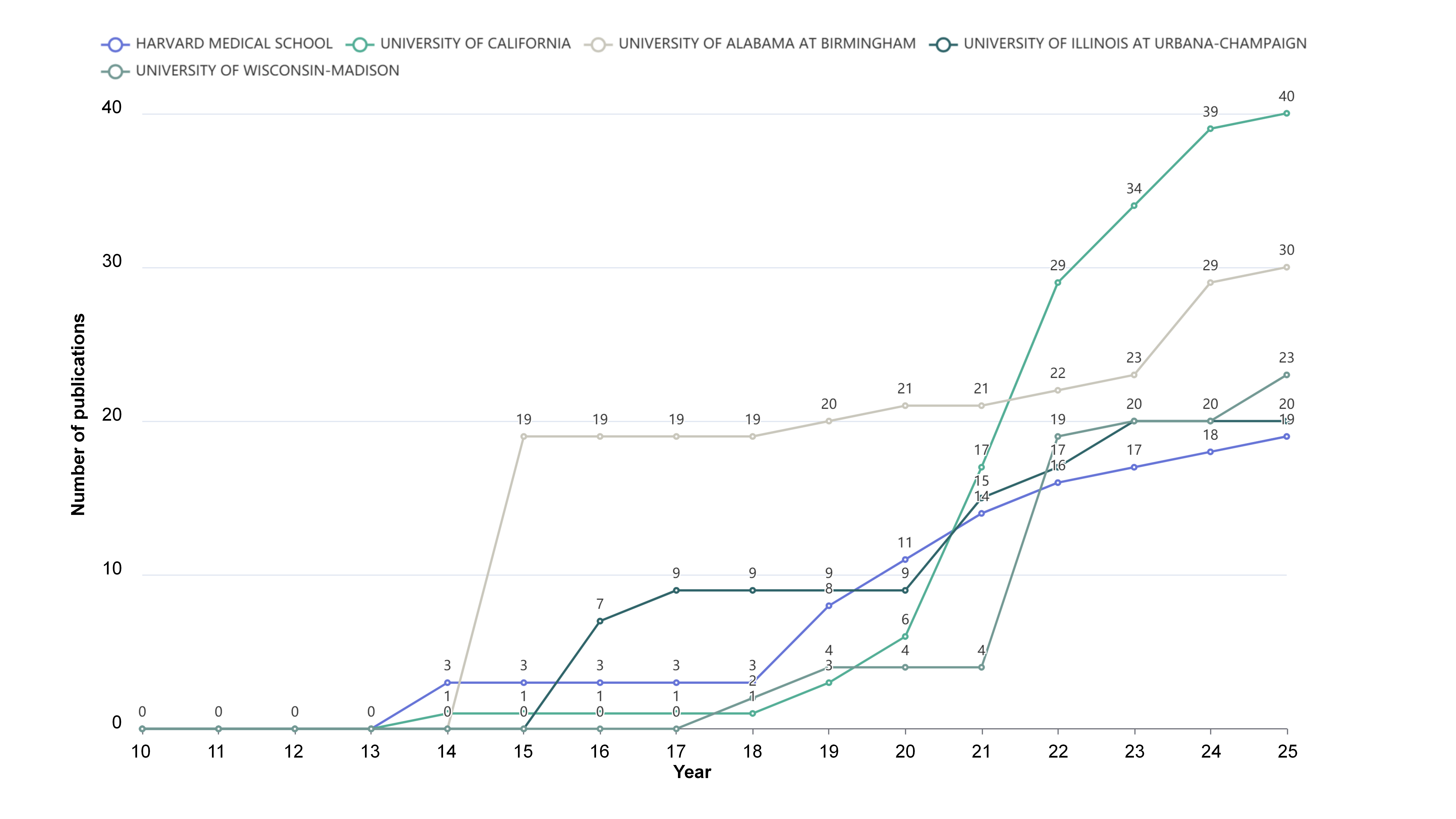
Figure 5. Annual publication trends of leading institutions in exercise–gut microbiota research. The line chart illustrates the cumulative number of publications from 2010 to 2025 by the top five most productive institutions. The University of California showed the most dramatic increase, reaching 40 publications by 2025. The University of Alabama at Birmingham maintained a steady lead since 2015. The University of Wisconsin–Madison and the University of Illinois at Urbana–Champaign both experienced sharp growth after 2020, while Harvard Medical School demonstrated a consistent and steady publication pace.
3.6. Keyword Evolution Reveals Research Focus and Potential Gaps
To systematically identify the core themes and developmental trajectory of research on physical activity and gut microbiota, we analyzed high - frequency keywords from 2010 to 2025, encompassing over 1,600 terms. As shown in Figure 6A, the word cloud highlights a concentrated thematic landscape. High - frequency terms such as “gut microbiota,” “gut microbiome,” “exercise,” and “physical activity” reflect the field’s longstanding focus on the structural changes in gut microbial communities in response to physical activity. Functionally relevant keywords like “probiotics,” “inflammation,” and “short - chain fatty acids” also appear prominently, indicating a gradual shift from compositional profiling toward functional associations. The time - frequency bubble plot (Figure 6B) reveals the temporal dynamics of keyword usage. In recent years, mechanism - related terms such as “short - chain fatty acids,” “metagenomics,” and “inflammation” have shown marked increases in frequency, suggesting a research pivot toward microbial metabolites, immune regulation, and multi - omics integration. Nevertheless, the dominant focus remains on aerobic exercise, obese populations, and probiotic interventions, while keywords related to elderly populations, cognitive function, and cultural context remain underrepresented.
Figure 6C presents a Sankey diagram illustrating the thematic continuity and transition between two time periods (2010 - 2022 vs. 2023 - 2025). Persistent high - frequency terms like “gut microbiota” and “obesity” indicate a stable research foundation, while the emergence of keywords such as “fitness,” “body composition,” “neuroinflammation,” and “cardiovascular disease” reflects a growing interest in multisystem health phenotypes. Taken together, the field is gradually transitioning from descriptive analyses to mechanistic exploration, with research topics steadily expanding. However, the current keyword network still lacks structured branches related to specific exercise modalities, population characteristics, and cultural diversity. These observations highlight structural gaps in areas such as exercise typology, participant diversity, and causal modeling - offering clear directions for future empirical research.
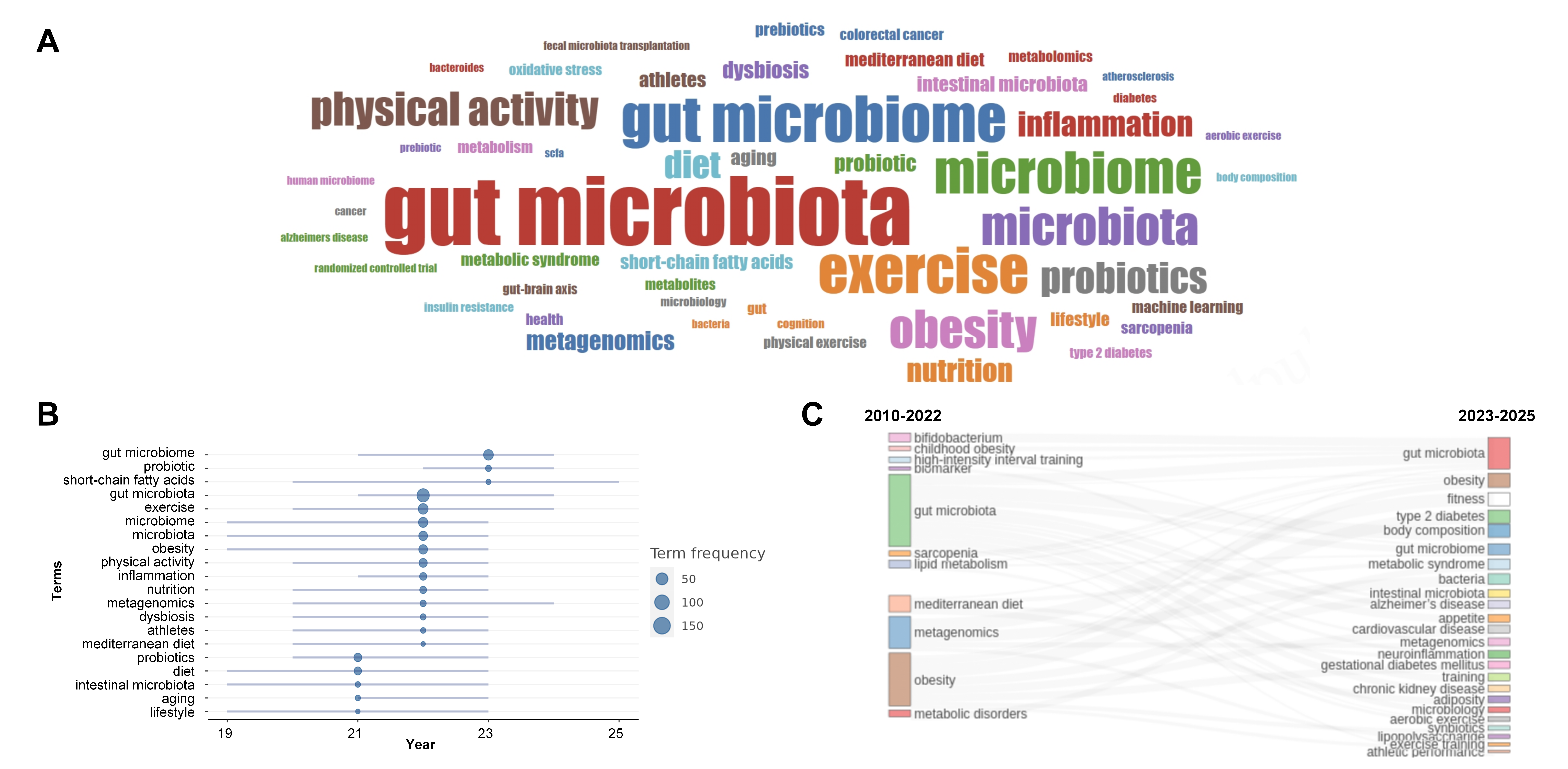
Figure 6. Keyword distribution and thematic evolution in research on physical activity and gut microbiota. (A) Word cloud showing the most frequently occurring keywords. Larger font size indicates higher frequency. Core terms such as “gut microbiota,” “gut microbiome,” “exercise,” and “physical activity” dominate, reflecting central research themes. (B) Bubble plot illustrating the frequency and temporal emergence of keywords. Terms like “gut microbiome,” “short-chain fatty acids,” and “inflammation” have become increasingly prominent in recent years, indicating current research hotspots. (C) Sankey diagram mapping the thematic transition of keywords between two periods (2010–2022 vs. 2023–2025). While “gut microbiota” and “obesity” remained consistently high-frequency terms, keywords such as “fitness,” “body composition,” “cardiovascular disease,” and “neuroinflammation” have gained prominence in the post-2023 period, suggesting a growing interest in exercise performance, metabolic disorders, and neuroimmune mechanisms.
4. Discussion
In recent years, the intersection of “physical activity and gut microbiota” has emerged as a focal point connecting exercise physiology and microbial ecology, attracting growing scholarly attention. This study synthesized 918 publications and 29,932 references from 2010 to 2025, identifying 6,738 contributing authors and 2,111 high-frequency keywords, and constructed a panoramic knowledge map encompassing countries, institutions, authors, journals, and thematic evolution. The annual volume of publications has shown a consistent upward trajectory, with particularly active output in the past five years among the 362 indexed articles, indicating a phase of rapid development. Although the average citation rate per publication remains modest at 2.129—suggesting the absence of a highly cited core body of literature—this also reflects the field’s early-stage expansion and highlights its potential for academic consolidation and mechanistic exploration. Furthermore, only 19.61% of publications resulted from multi-center collaborations, underscoring substantial room for strengthening international cooperation. Collectively, this study provides the first systematic depiction of the field’s developmental architecture and intellectual ecology, revealing its emerging value in health interventions, multi-omics integration, and cross-disciplinary translation.
Despite this overall growth, the distribution of research efforts remains markedly uneven, exhibiting pronounced geographic imbalance and resource centralization. China and the United States collectively account for nearly half of all publications, forming a dual-core dominance in global output. Meanwhile, core authors and institutions also demonstrate an “oligarchic” structure, with a small cohort of prolific scholars and leading institutions consistently shaping major topics and collaboration networks. At the global level, while initial international networks have taken shape - particularly among European and North American countries - collaboration patterns remain regionally skewed. Most Asian countries outside China, Japan, and South Korea remain on the periphery, while regions such as Africa and South America are virtually absent, resulting in a “silent zone” on the global map[8]. This lack of cross-regional cooperation not only limits sample diversity and representativeness but may also bias the understanding of exercise - microbiota interactions toward specific cultural contexts. Previous studies have shown that integrating traditional Latin American diets with physical activity research helps uncover culturally adaptive mechanisms, while exercise interventions conducted in multilingual and multiethnic contexts provide critical insights into population heterogeneity in microbiome responses[9]. Thus, it is imperative for future research to move beyond Euro - American - centered collaboration models and promote resource sharing and coordinated studies across the Global North and South, as well as between developed and developing regions, to build a more balanced, cross-cultural, and broadly representative global research framework[10].From the perspective of journal distribution and publication trends, the “physical activity - gut microbiota” field has established a diverse and functionally segmented publication ecosystem. Core journals such as Nutrients, Frontiers in Microbiology, and Gut Microbes consistently lead in publication output, each focusing on specific areas such as nutrition science, microbial ecology, and disease intervention, thereby playing key roles in promoting interdisciplinary integration. In parallel, generalist and open-access platforms like Scientific Reports and BMJ Open have become increasingly prominent channels for dissemination, reflecting a growing trend toward public health and clinical application[11]. However, two concerns merit attention despite this diversification: First, core dissemination platforms remain relatively concentrated, with a handful of journals dominating topic agenda-setting and citation influence, potentially leading to convergent perspectives and thematic homogenization; second, publication visibility remains uneven across regions, with research from non-English-speaking countries often receiving limited exposure and citation impact on high-profile platforms[12]. These patterns underscore the need to expand multilingual and cross-regional dissemination mechanisms, elevate the visibility of locally relevant research on international stages, and promote bidirectional knowledge flows and contextual translation across the global scientific community[13].
Although current research on “physical activity and the gut microbiota” has begun to outline mechanistic frameworks, our bibliometric findings highlight several critical structural gaps. First, existing studies are heavily concentrated on aerobic exercise and high-intensity interval training, with limited attention to traditional modalities such as Tai Chi, Baduanjin, and Pilates. This neglects their potential rhythmic, physiological, and culturally adaptive regulatory mechanisms[14]. Second, the study populations remain narrowly focused - primarily young males, athletes, or patients with metabolic disorders - while responses in women, older adults, and individuals in sub-health conditions are largely underexplored[15]. Third, most studies emphasize disease-related modulation, with few addressing the role of exercise in maintaining health or improving suboptimal physiological states, leading to a lack of systematic empirical support for preventive applications[16]. To address these blind spots, future studies should incorporate more diverse exercise types and population designs, particularly culturally embedded traditional practices. For example, Tai Chi and Baduanjin have been shown to enhance gut microbiota diversity and reduce inflammation without increasing cardiopulmonary burden, offering preventive and rehabilitative potential[17]. Similarly, Pilates has been found to enhance core muscle stability and autonomic regulation, indirectly modulating the gut–brain–microbiota axis and improving symptoms in individuals with anxiety or chronic pain[18]. Research design must also prioritize comparative frameworks across population groups, ages, and health statuses to avoid overgeneralization based on narrow samples. Simultaneously, advancing cross-disciplinary integration, regional mechanism validation, and standardized intervention protocols is essential for structured field development. Currently, studies on exercise–microbiota interactions often remain micro-level and fragmented, lacking cross-tier integration and thus limiting translational potential. There is an urgent need to build “multi-scale integrative models” that bridge microbial mechanisms with population-level health outcomes, supported by collaborations among microbiome science, exercise physiology, behavioral medicine, and nutritional intervention[19]. Notably, international programs such as HMP2 and EXAMINER have begun combining multi-omics profiling, exercise behavior tracking, and psycho-physiological monitoring, providing exemplary paradigms for investigating complex interaction mechanisms[20, 21]. However, current intervention designs still face challenges such as unclear dosing, uncharacterized individual response mechanisms, and limited cross-cultural adaptability, which restrict their broader application in global health promotion. Developing replicable, adjustable, and translatable intervention models is thus a pressing goal. Especially for implementation in non-Western or low- and middle-income contexts, it is crucial to embed physical activity into local lifestyles and validate its microbial effects through culturally relevant mechanisms[22]. Only by balancing mechanistic precision, population representativeness, and cultural adaptability can the field transition from basic understanding to actionable intervention.
In recent years, diverse research strategies—including molecular mechanism studies, bioinformatics, microecology, and bibliometric analysis—have jointly accelerated the translation of basic science into clinical applications. For example, mechanistic studies have revealed that PTTG1 promotes hepatocellular carcinoma (HCC) progression by upregulating ASNS expression and activating the mTOR pathway, an effect that can be effectively reversed by asparaginase treatment, highlighting the value of molecular mechanisms in identifying therapeutic targets[23]. In the data-driven domain, machine learning models based on large-scale clinical databases such as MIMIC-IV have enabled risk prediction and personalized stratification in critical care, including sepsis. For instance, the stress hyperglycemia ratio (SHR) has been identified as an independent prognostic factor and has improved the performance of random survival forest algorithms[24]. Furthermore, pan-cancer analyses based on databases like TCGA have shown significant clinical value in identifying oncogenes, prognostic biomarkers, and potential immunotherapy targets[25, 26]. Meanwhile, in the field of gut microbiota, advances have promoted the translational potential of microbial strains such as Akkermansia muciniphila and Saccharomyces cerevisiae as diagnostic or therapeutic targets in cardiovascular conditions including preeclampsia and abdominal aortic aneurysm[27, 21]. At the same time, bibliometric methods have matured, offering tools such as high-frequency keyword extraction, cluster analysis, and research trajectory mapping. These approaches help identify knowledge gaps, predict emerging trends, and guide resource allocation, thus serving as a bridge between basic research and clinical translation[28]. Against this backdrop, the present study focuses on the interdisciplinary topic of “exercise–gut microbiota” and employs bibliometric tools to systematically analyze its structural landscape and evolution trends, while further exploring its potential clinical applications and translational value. Previous studies have shown that aerobic exercise (e.g., running, cycling) increases the abundance of anti-inflammatory bacterial genera such as Akkermansia muciniphila and Faecalibacterium prausnitzi[29], whereas resistance training may enhance the proliferation of Bacteroidetes, which are associated with energy metabolism[30]. In addition, flexibility-based exercises such as yoga and tai chi may regulate microbial ecology indirectly via the gut–brain axis by modulating stress hormone levels and autonomic tone. In terms of exercise intensity, moderate physical activity is generally considered more favorable for microbial modulation, while excessive intensity may trigger stress responses that disrupt gut barrier function and microbial homeostasis[31]. Therefore, future research should investigate dose–response relationships in exercise interventions, to clarify the microbial dynamics under varying intensities and durations. Moreover, exercise may influence the gut microbiota through multiple physiological pathways, such as improving maximal oxygen uptake (VO2 max), modulating HPA axis activity to reduce chronic inflammation, and decreasing intestinal permeability to prevent immune overactivation. These cross-linked mechanisms remain incompletely understood and should be explored further using multi-omics approaches and human intervention trials. Existing exercise-related databases, such as Exercise-Is-Medicine (EIM) and large-scale cohorts like the UK Biobank, offer valuable resources for integrating bibliometric insights with real-world intervention strategies[32].
Despite recent progress, the “physical activity-gut microbiota” field remains in the early stages of theoretical construction and mechanistic exploration. Existing literature shows pronounced structural gaps in research themes, methodological design, and translational application. Current studies still focus primarily on microbial composition changes and disease outcomes, with limited exploration of how exercise regulates the microbiome to promote health or mitigate sub-health conditions under normal physiological states[33]. Moreover, aerobic and high-intensity interventions dominate, while traditional practices (e.g., Tai Chi, Baduanjin, Pilates) and everyday physical activities (e.g., walking, housework) remain under-investigated - limiting strategy diversity and real-world feasibility[34]. With respect to study populations, most samples consist of males, athletes, or individuals with obesity and metabolic disorders, leaving general healthy individuals, the elderly, women, and sub-healthy groups severely underrepresented. This undermines the development of tailored, inclusive intervention guidelines[35]. Additionally, reliance on cross-sectional analyses and 16S-based profiling without pre-post comparisons, multi-omics integration, or causal modeling limits the explanatory power of current findings[36]. To move the field forward, we propose three directions: (1) incorporate culturally resonant and context-relevant exercise types into research designs; (2) broaden population diversity through cross-age, cross-health status, and gender-inclusive studies to enhance representativeness and equity; and (3) promote longitudinal, multi-omics, and multi-region empirical frameworks that integrate mechanistic depth with real-world relevance. Only through such coordinated advancement can the field progress from descriptive exploration to mechanistic elucidation and translational application.
5. Conclusions:
While the “physical activity–gut microbiota” research field shows signs of maturation and interdisciplinary convergence, it also exhibits structural inequalities and thematic limitations. Future work should prioritize cross-cultural validation, diversified intervention designs, and integrative frameworks that bridge microbiology, exercise science, behavioral health, and cultural studies. These efforts are essential for establishing globally relevant, socially inclusive, and mechanistically grounded models of microbiota modulation through physical activity
Conflicts of Interest
The authors declare no conflict of interest.
Funding
No funding.
Author Contributions
All authors read and approved the final manuscript.
Acknowledgements
The authors thank Coach Ye Liu (Jinan Workout Fitness Club) for her professional guidance and support during the course of this study.
References
-
Ch. Michaudel, H. Sokol. "The Gut Microbiota at the Service of Immunometabolism." Cell Metab. 2020, 32, 4, 514-523.
-
T. P. M. Scheithauer, E. Rampanelli, M. Nieuwdorp, B. A. Vallance, C. B. Verchere, D. H. van Raalte, H. Herrema. "Gut Microbiota as a Trigger for Metabolic Inflammation in Obesity and Type 2 Diabetes." Front. Immunol. 2020, 11, 571731.
-
L. Della Guardia, R. Codella. "Exercise tolls the bell for key mediators of low-grade inflammation in dysmetabolic conditions." Cytokine Growth Factor Rev. 2021, 62, 83-93.
-
Z. De Miguel, N. Khoury, M. J. Betley, B. Lehallier, D. Willoughby, N. Olsson et al. "Exercise plasma boosts memory and dampens brain inflammation via clusterin." Nature 2021, 600, 7889, 494-499.
-
P. Li, T. Tong, X. Shao, Y. Han, M. Zhang, Y. Li et al. "The synergism of Lactobacillaceae, inulin, polyglucose, and aerobic exercise ameliorates hyperglycemia by modulating the gut microbiota community and the metabolic profiles in db/db mice." Food Funct. 2024, 15, 9, 4832-4851.
-
D. M. Keohane, T. Woods, P. O'Connor, S. Underwood, O. Cronin, R. Whiston et al. "Four men in a boat: Ultra-endurance exercise alters the gut microbiome." J. Sci. Med. Sport 2019, 22, 9, 1059-1064.
-
X. Zhang, J. Ye. "Gut Microbiota and Academic Traits: A Global Bibliometric Perspective." X-Disciplinarity 2025, 1, 3, 4.
-
M. Coccia, L. Wang. "Evolution and convergence of the patterns of international scientific collaboration." Proc. Natl. Acad. Sci. U. S. A. 2016, 113, 8, 2057-2061.
-
J. E. Bisanz, V. Upadhyay, J. A. Turnbaugh, K. Ly, P. J. Turnbaugh. "Meta-analysis reveals reproducible gut microbiome alterations in response to a high-fat diet." Cell Host Microbe 2019, 26, 2, 265-272.e4.
-
A. Gök, M. Karaulova. "How 'international' is international research collaboration?" J. Assoc. Inf. Sci. Technol. 2024, 75, 2.
-
A. Y. Gasparyan, M. Yessirkepov, A. A. Voronov, A. M. Koroleva, G. D. Kitas. "Comprehensive approach to open access publishing: Platforms and tools." J. Korean Med. Sci. 2019, 34, 27, e184.
-
F. M. Henriksen, J. B. Kristensen, E. Mayerhöffer. "Dissemination of RT and Sputnik content in European digital alternative news environments: Mapping the influence of Russian state-backed media across platforms, topics, and ideology." Int. J. Press/Polit. 2024, 29, 3.
-
E. Kulczycki, R. Guns, J. Pölönen, T. C. E. Engels. "Multilingual publishing in the social sciences and humanities: A seven-country European study." J. Assoc. Inf. Sci. Technol. 2020, 71, 11, 1371-1385.
-
S. L. Lightman, M. T. Birnie, B. L. Conway-Campbell. "Dynamics of ACTH and cortisol secretion and implications for disease." Endocr. Rev. 2020, 41, 3, bnaa002.
-
V.-P. Mäkinen, M. Karsikas, J. Kettunen, T. Lehtimäki, M. Kähönen, J. Viikari et al. "Longitudinal profiling of metabolic ageing trends in two population cohorts of young adults." Int. J. Epidemiol. 2022, 51, 6, 1970-1983.
-
Y. Qiu, B. Fernández-García, H. I. Lehmann, G. Li, G. Kroemer, C. López-Otín et al. "Exercise sustains the hallmarks of health." J. Sport Health Sci. 2023, 12, 1, 8-35.
-
X. Zhang, H. Yang, K. Zhang, J. Zhang, X. Lu, H. Guo et al. "Effects of exercise or tai chi on Internet addiction in college students and the potential role of gut microbiota: A randomized controlled trial." J. Affect. Disord. 2023, 327, 404-415.
-
L. Denham-Jones, L. Gaskell, N. Spence, T. Pigott. "A systematic review of the effectiveness of Pilates on pain, disability, physical function, and quality of life in older adults with chronic musculoskeletal conditions." Musculoskelet. Care 2022, 20, 1, 10-30.
-
H. Mallick, A. Rahnavard, L. J. McIver, S. Ma, Y. Zhang, L. H. Nguyen et al. "Multivariable association discovery in population-scale meta-omics studies." PLoS Comput. Biol. 2021, 17, 11, e1009442.
-
K. Contrepois, S. Wu, K. J. Moneghetti, D. Hornburg, S. Ahadi, M.-S. Tsai et al. "Molecular choreography of acute exercise." Cell 2020, 181, 5, 1112-1130.e16.
-
G. Yao, X. Zhang, T. Zhang, J. Jin, Z. Qin, X. Ren et al. "The role of dysbiotic gut mycobiota in modulating risk for abdominal aortic aneurysm." Microbiol. Spectr. 2024, 12, 11, e01776-24.
-
I. Pérez-Prieto, A. Plaza-Florido, E. Ubago-Guisado, F. B. Ortega, S. Altmäe. "Physical activity, sedentary behavior and microbiome: A systematic review and meta-analysis." J. Sci. Med. Sport 2024, 27, 11, 793-804.
-
Q. Zhou, L. Li, F. Sha, Y. Lei, X. Tian, L. Chen et al. "PTTG1 reprograms asparagine metabolism to promote hepatocellular carcinoma progression." Cancer Res. 2023, 83, 14, 2372-2386.
-
F. Yan, X. Chen, X. Quan, L. Wang, X. Wei, J. Zhu. "Association between the stress hyperglycemia ratio and 28-day all-cause mortality in critically ill patients with sepsis: A retrospective cohort study and predictive model establishment based on machine learning." Cardiovasc. Diabetol. 2024, 23, 163.
-
Y. Jia, Q. Feng. "Revealing the key redox regulatory mechanisms of ERO1A in cancer progression and its therapeutic prospects." X-Disciplinarity 2025, 1, 1, 2.
-
X. Zhou, G. Yao, J. Zhang, J. Bian, G. Li, J. Xu. "An integrated multi-omics analysis of topoisomerase family in pan-cancer: Friend or foe?" PLoS One 2022, 17, 10, e0274546.
-
J. Jin, L. Gao, X. Zou, Y. Zhang, Z. Zheng, X. Zhang et al. "Gut dysbiosis promotes preeclampsia by regulating macrophages and trophoblasts." Circ. Res. 2022, 131, 6, 492-506.
-
S. Yao, Y. Tang, C. Yi, Y. Xiao. "Research hotspots and trend exploration on the clinical translational outcome of simulation-based medical education: A 10-year scientific bibliometric analysis from 2011 to 2021." Front. Med. (Lausanne) 2022, 8, 801277.
-
C. Li, J. Li, Q. Zhou, C. Wang, J. Hu, C. Liu. "Effects of physical exercise on the microbiota in irritable bowel syndrome." Nutrients 2024, 16, 16, 2657.
-
K. K. Motiani, M. C. Collado, J.-J. Eskelinen, K. A. Virtanen, E. Löyttyniemi, S. Salminen et al. "Exercise training modulates gut microbiota profile and improves endotoxemia." Med. Sci. Sports Exerc. 2020, 52, 1, 94-104.
-
M. Clauss, P. Gérard, A. Mosca, M. Leclerc. "Interplay between exercise and gut microbiome in the context of human health and performance." Front. Nutr. 2021, 8, 637010.
-
Y. You, D. Wang, Y. Wang, Z. Li, X. Ma. "A bird's-eye view of exercise intervention in treating depression among teenagers in the last 20 years: A bibliometric study and visualization analysis." Front. Psychiatry 2021, 12, 661108.
-
L. J. Mailing, J. M. Allen, T. W. Buford, C. J. Fields, J. A. Woods. "Exercise and the gut microbiome: A review of the evidence, potential mechanisms, and implications for human health." Exerc. Sport Sci. Rev. 2019, 47, 2, 75-85.
-
B. Wu, G. Xiong, P. Zhang, X. Ma. "Effects of tai chi, ba duan jin, and walking on the mental health status of urban older people living alone: the mediating role of social participation and the moderating role of the exercise environment." Front. Public Health 2024, 12, 1294019.
-
P. R. Buckley, V. M. Murry, C. J. Gust, A. Ladika, F. C. Pampel. "Racial and ethnic representation in preventive intervention research: A methodological study." Prev. Sci. 2023, 24, 7, 1261-1274.
-
A. Dugourd, C. Kuppe, M. Sciacovelli, E. Gjerga, A. Gabor, K. B. Emdal et al. "Causal integration of multi-omics data with prior knowledge to generate mechanistic hypotheses." Mol. Syst. Biol. 2021, 17, 1, e9730.