Therapeutic Potential of Non-Coding RNAs in Cancer
published: 17 May 2025 | https://doi.org/10.63174/xdi.GJZE9364
Abstract
Non-coding RNAs (ncRNAs) have emerged as crucial players in the landscape of cancer biology, challenging the long-held paradigm that primarily focused on protein-coding genes. The human genome is predominantly transcribed into non-coding RNAs, which do not encode proteins but instead participate in a myriad of regulatory functions vital for cellular homeostasis and pathology. Recent advancements in genomics and molecular biology have unveiled the complexity and diversity of ncRNAs, including microRNAs (miRNAs), long non-coding RNAs (lncRNAs), circular RNAs (circRNAs), and PIWI-interacting RNAs (piRNAs). In this review, the mechanisms by which ncRNAs influence cancer biology and their potential therapeutic applications will be explored in depth.
1. Introduction
The significance of ncRNAs in cancer research cannot be overstated. They are involved in the regulation of key processes such as gene expression, cell proliferation, apoptosis, and metastasis, making them critical components in the initiation and progression of various malignancies[1]. For instance, miRNAs can function as oncogenes or tumor suppressors depending on their target mRNAs, thereby influencing tumor behavior. Similarly, lncRNAs have been implicated in regulating chromatin dynamics and gene transcription, further emphasizing their role in tumorigenesis[2].
Moreover, the sheer abundance of ncRNAs—outnumbering protein-coding genes—highlights their potential as biomarkers for cancer diagnosis and prognosis[3]. Their differential expression patterns in various cancer types present opportunities for developing novel therapeutic strategies aimed at targeting these molecules. As a result, hundreds of clinical trials are currently exploring the therapeutic potential of ncRNAs, marking a significant shift in cancer treatment paradigms[4].
The therapeutic implications of ncRNAs extend beyond their roles as biomarkers[5, 6]. Targeting ncRNAs may provide a novel avenue for cancer therapy, particularly in cases where traditional treatments fail[7]. By modulating the expression or function of specific ncRNAs, it is possible to influence cancer cell behavior and enhance the efficacy of existing therapies[2]. This approach is particularly promising given the intricate involvement of ncRNAs in various cellular processes and their ability to fine-tune gene expression profiles in response to environmental cues.
In conclusion, the exploration of non-coding RNAs in cancer research is not merely an academic pursuit; it is a burgeoning field that holds immense promise for improving cancer diagnosis, prognosis, and treatment. As we continue to unravel the complexities of ncRNA biology, it is imperative to integrate these insights into the broader context of cancer therapeutics, paving the way for innovative strategies that could transform patient outcomes. The subsequent sections will delve deeper into the mechanisms by which ncRNAs influence cancer biology and their potential therapeutic applications[8].
2. Mechanisms of Non-Coding RNAs in Cancer
2.1 Regulation of Gene Expression
Non-coding RNAs (ncRNAs) play a pivotal role in the regulation of gene expression, particularly in the context of cancer. Unlike protein-coding RNAs, ncRNAs do not translate into proteins but instead exert their regulatory effects through various mechanisms that influence gene expression at multiple levels[9]. This chapter explores the diverse roles of ncRNAs in gene regulation, focusing on their involvement in macrophage polarization, metabolic reprogramming, and their implications in cancer therapy.
2.1.1 ncRNAs and Macrophage Polarization
Macrophage polarization is a critical process in the tumor microenvironment, influencing tumor progression and immune response. Recent studies have highlighted the significant role of ncRNAs in directing macrophage polarization towards either pro-tumorigenic (M2) or anti-tumorigenic (M1) phenotypes. For instance, certain ncRNAs have been categorized as oncogenes or tumor suppressors based on their ability to promote M2 polarization, which supports tumor growth and immunosuppression[10]. Understanding the ncRNA-mediated mechanisms that underlie macrophage polarization could provide insights into novel therapeutic strategies aimed at reprogramming the immune landscape in tumors.
2.1.2 ncRNAs in Metabolic Regulation
Cancer cells often undergo metabolic reprogramming to sustain their rapid proliferation. This reprogramming includes alterations in glucose metabolism and glutaminolysis, processes that are crucial for generating the energy and metabolites required for tumor growth. ncRNAs, particularly microRNAs and long non-coding RNAs, have been implicated in regulating these metabolic pathways[11]. For example, ncRNAs can modulate the expression of glycolytic enzymes and other key regulators of glucose metabolism, thereby influencing the switch from oxidative phosphorylation to aerobic glycolysis, known as the Warburg effect[12]. Additionally, ncRNAs have been identified as important regulators of glutaminolysis, further underscoring their role in cancer metabolism and potential as therapeutic targets[13].
2.1.3 Epigenetic Modifications and ncRNAs
Another layer of regulation that ncRNAs participate in is through epigenetic modifications, such as N-Methyladenosine (mA) modification. This reversible modification affects the stability and translation of both coding and non-coding RNAs, thereby influencing gene expression patterns in cancer[6]. Multi-omics profiling of chromatin regulators such as topoisomerases has also suggested potential ncRNA-mediated transcriptional and topological regulation in multiple cancer types[7]. The interplay between ncRNAs and mA modifications suggests a complex regulatory network that could be targeted for therapeutic interventions. By elucidating the roles of ncRNAs in these epigenetic processes, researchers can identify novel strategies to enhance treatment efficacy and overcome drug resistance[14].
2.1.4 Implications for Cancer Therapy
The regulatory functions of ncRNAs extend beyond basic gene expression to impact therapeutic outcomes in cancer. As ncRNAs are involved in the modulation of key drug targets, such as the epidermal growth factor receptor (EGFR), their expression profiles can influence the effectiveness of targeted therapies[15]. By understanding how ncRNAs regulate these targets, it may be possible to develop ncRNA-based therapeutics that enhance treatment response and mitigate resistance mechanisms.
In conclusion, the multifaceted roles of non-coding RNAs in regulating gene expression highlight their potential as both biomarkers and therapeutic targets in cancer[16]. Their involvement in macrophage polarization, metabolic reprogramming, and epigenetic regulation underscores the importance of further research to harness their therapeutic potential in oncology. As we transition to the next section, we will explore the therapeutic applications of non-coding RNAs, focusing on strategies to target these molecules for cancer treatment.
2.2 Impact on Cancer Metabolism
The metabolic reprogramming of cancer cells is a hallmark of tumorigenesis, enabling them to thrive in hostile environments characterized by nutrient scarcity and hypoxia. Non-coding RNAs (ncRNAs) have emerged as pivotal regulators of these metabolic alterations, influencing various pathways that are crucial for cancer cell survival and proliferation. This section discusses the influence of ncRNAs on key metabolic pathways, including glycolysis, glutaminolysis, and fatty acid biosynthesis, and their implications for cancer therapy.
2.2.1 Glycolysis and the Warburg Effect
Cancer cells exhibit a distinct preference for glycolysis over oxidative phosphorylation, even in the presence of oxygen—a phenomenon known as the Warburg effect. This metabolic shift allows cancer cells to meet their increased energy and biosynthetic demands. Recent studies have highlighted the regulatory roles of ncRNAs, particularly microRNAs (miRNAs) and long non-coding RNAs (lncRNAs), in this metabolic switch. For instance, ncRNAs have been shown to modulate the expression of glycolytic enzymes and associated regulatory pathways, thereby influencing the glycolytic flux in cancer cells[12]. By targeting these ncRNAs, it may be possible to develop therapeutic strategies aimed at inhibiting the glycolytic dependence of tumors.
2.2.2 Glutaminolysis in Cancer Metabolism
In addition to glycolysis, glutaminolysis plays a crucial role in supporting the metabolic demands of cancer cells. Glutamine serves as a key nutrient, providing intermediates for the Krebs cycle and contributing to the synthesis of nucleotides, amino acids, and lipids necessary for cell proliferation. Dysregulation of glutaminolysis has been observed in various cancers, and ncRNAs have emerged as important regulators of this pathway. Research indicates that ncRNAs can influence the expression of enzymes involved in glutaminolysis, thereby affecting tumor growth and survival[13]. Understanding the precise mechanisms by which ncRNAs regulate glutamine metabolism may offer new avenues for therapeutic intervention. For instance, PTTG1 has been shown to reprogram asparagine metabolism and activate mTOR signaling, which may intersect with ncRNA-regulated nutrient sensing mechanisms[14].
2.2.3 Fatty Acid Biosynthesis and Energy Metabolism
Fatty acid biosynthesis is another critical aspect of cancer metabolism, as tumor cells require lipids for membrane synthesis and signaling. ncRNAs have been implicated in the regulation of fatty acid metabolism, affecting both the synthesis and breakdown of lipids. For example, certain ncRNAs can modulate the expression of key enzymes involved in fatty acid synthesis, thereby influencing the overall lipid profile of cancer cells[15-17]. Targeting these ncRNAs may provide a novel approach to disrupt lipid metabolism in tumors.
2.2.4 Therapeutic Implications of Targeting ncRNAs in Metabolism
The regulatory roles of ncRNAs in cancer metabolism present significant therapeutic opportunities. By targeting specific ncRNAs that modulate glycolysis, glutaminolysis, and fatty acid biosynthesis, researchers can potentially inhibit tumor growth and overcome metabolic adaptations that confer survival advantages to cancer cells. Moreover, ncRNAs may serve as biomarkers for metabolic reprogramming in cancer, offering insights into tumor behavior and treatment responses.
In summary, the impact of non-coding RNAs on cancer metabolism is profound, influencing critical pathways that support tumor growth and survival. Continued research into the mechanisms by which ncRNAs regulate these metabolic processes will be essential for the development of innovative therapeutic strategies aimed at targeting cancer metabolism.
2.3 Role in Cancer Microenvironment
The tumor microenvironment (TME) plays a critical role in cancer progression and metastasis, encompassing a complex network of tumor cells, stromal cells, immune cells, and extracellular matrix components. Non-coding RNAs (ncRNAs), particularly long non-coding RNAs (lncRNAs) and microRNAs (miRNAs), have emerged as pivotal regulators of the TME, influencing both tumor biology and the surrounding cellular ecosystems[11, 18].
2.3.1 Macrophage Polarization and Tumor Progression
One of the significant ways ncRNAs impact the TME is through the regulation of macrophage polarization. Tumor-associated macrophages (TAMs) can be polarized into M1 or M2 phenotypes, with M1 macrophages typically exhibiting anti-tumor properties and M2 macrophages promoting tumor growth, immunosuppression, and angiogenesis[10]. Recent studies have highlighted the role of ncRNAs in this polarization process. For instance, specific ncRNAs have been shown to drive the differentiation of macrophages towards the M2 phenotype, thereby facilitating tumor progression and metastasis[10]. Understanding these regulatory mechanisms is crucial, as targeting ncRNAs that influence macrophage polarization may offer therapeutic avenues to shift the balance toward a more anti-tumor immune response.
2.3.2 Angiogenesis Regulation
Angiogenesis, the formation of new blood vessels, is another hallmark of cancer that is significantly influenced by ncRNAs[19]. In lung cancer, for example, ncRNAs have been identified as key regulators of angiogenesis, affecting various downstream signaling pathways that govern endothelial cell behavior and vascular formation[20]. The dysregulation of these ncRNAs can lead to enhanced angiogenic activity, contributing to tumor growth and metastasis. Furthermore, the potential of ncRNAs as biomarkers and therapeutic agents in targeting angiogenesis presents a promising area of research, as they could help in developing novel anti-angiogenic strategies[20].
2.3.3 Interactions with Tumor Cells and Other Components
The interplay between ncRNAs and various cell types within the TME is multifaceted. For instance, lncRNAs derived from both tumor and non-tumor cells can modulate the behavior of tumor cells, influencing proliferation, migration, and invasion[21]. Additionally, the TME itself can regulate the expression of ncRNAs, creating a feedback loop that further influences cancer progression. This reciprocal relationship highlights the potential of ncRNAs as diagnostic markers and therapeutic targets in breast cancer and other malignancies[22].
2.3.4 Network of Non-Coding RNAs
The complexity of ncRNA interactions within the TME is underscored by the establishment of intricate networks involving both ncRNAs and coding genes. These networks play crucial roles in the regulation of cellular processes pertinent to cancer, such as apoptosis, cell cycle progression, and metabolic reprogramming[22]. By elucidating these networks, researchers can gain insights into the mechanisms by which ncRNAs influence tumor biology and identify potential therapeutic targets for intervention.
In conclusion, non-coding RNAs are integral to the dynamics of the tumor microenvironment, influencing macrophage polarization, angiogenesis, and the interactions among various cellular components. As research continues to unravel the complex roles of ncRNAs in cancer, they hold promise as both biomarkers for disease progression and targets for innovative therapeutic strategies. Understanding these relationships may ultimately enhance our ability to combat cancer and improve patient outcomes.
3. Therapeutic Applications of Non-Coding RNAs
3.1 Targeting Non-Coding RNAs
The therapeutic potential of non-coding RNAs (ncRNAs) in cancer treatment has garnered significant attention in recent years. As we delve into the strategies and challenges associated with targeting ncRNAs for cancer therapy, it is crucial to recognize the unique characteristics of these molecules that both enhance and complicate their use as therapeutic targets.
3.1.1 Strategies for Targeting Non-Coding RNAs
1. MicroRNA-based Therapeutics: MicroRNAs (miRNAs) are among the most studied ncRNAs, known for their ability to regulate multiple genes involved in cancer progression[24]. Synthetic miRNA mimics and inhibitors have been developed to modulate their activity in cancer cells. Early-phase clinical trials have shown promising results, indicating that miRNA-based therapeutics can effectively inhibit tumor growth[25].
2. Long Non-Coding RNA (lncRNA) Targeting: lncRNAs are recognized for their cell type-specific expression and their role in regulating oncogenic pathways[24]. Strategies such as antisense oligonucleotides and RNA interference are being explored to inhibit lncRNA function. Advances in genome editing techniques, particularly CRISPR/Cas9, have also opened new avenues for targeting lncRNAs in cancer therapy[24].
3. Nucleic Acid Drug Development: Recent advancements in nucleic acid therapeutics, particularly oligonucleotide-based therapies, have shown increased success rates in targeting lncRNAs[25]. This approach allows for the specific inhibition of lncRNAs that drive tumor progression, presenting a viable strategy to combat various cancer types.
4. Combination Therapies: Integrating ncRNA-targeting strategies with existing cancer therapies may enhance treatment efficacy. For instance, targeting specific lncRNAs involved in drug resistance could potentially overcome therapeutic challenges associated with conventional cancer treatments[26].
3.1.2 Challenges in Targeting Non-Coding RNAs
Despite the promising strategies for targeting ncRNAs, several challenges remain:
1. Delivery Mechanisms: One of the primary hurdles is the efficient delivery of ncRNA therapeutics to the target cells. The development of protective coating approaches and delivery vehicles is critical to ensure that therapeutic molecules reach their intended sites of action without degradation[24].
2. Off-Target Effects: The potential for off-target effects poses a significant risk in the therapeutic use of ncRNAs. The ability of a single ncRNA to regulate multiple pathways necessitates a thorough understanding of their molecular mechanisms to minimize unintended consequences[24].
3. Heterogeneity of Cancer: The heterogeneity of cancer types and the variable expression of ncRNAs across different tumors complicate the development of universal therapeutic strategies. Personalized approaches that consider the specific ncRNA profiles of individual tumors may be required for effective treatment[25].
4. Regulatory and Ethical Considerations: As with any novel therapeutic approach, regulatory hurdles and ethical considerations surrounding the use of ncRNA-based therapies must be addressed. Ensuring patient safety and efficacy in clinical applications remains paramount[26].
In conclusion, targeting non-coding RNAs for cancer therapy presents a promising avenue for innovative treatment strategies. While significant progress has been made in understanding the roles of ncRNAs in cancer, continued research is essential to overcome the challenges associated with their therapeutic application. As we advance our knowledge and refine our techniques, ncRNAs may offer new hope in the fight against cancer.
3.2 RNA-Based Therapeutics
The development of RNA-based therapeutics, particularly those leveraging RNA interference (RNAi), has become a pivotal area of research in the fight against cancer. RNAi mechanisms, primarily involving small interfering RNAs (siRNAs) and microRNAs (miRNAs), have shown significant promise in targeting and modulating the expression of genes implicated in cancer progression and resistance[26].
3.2.1 RNA Interference Mechanisms
RNA interference is a biological process where small RNA molecules inhibit gene expression, effectively silencing specific mRNA targets. This mechanism has been harnessed to create therapeutics that can selectively inhibit oncogenes or restore the expression of tumor suppressor genes. The versatility of RNAi allows for the development of both miRNA mimics and anti-miRNA agents, which can be tailored to address the unique genetic landscape of individual tumors[27, 28].
The dysregulation of miRNAs is a hallmark of many cancers, contributing to processes such as cell proliferation, apoptosis, and metastasis. By delivering synthetic miRNAs or antagonists of dysregulated miRNAs, researchers aim to restore normal cellular function and inhibit tumor growth[29].
3.2.2 Advances in Delivery Systems
A significant challenge in the clinical application of RNA-based therapies is the effective delivery of RNA molecules to target cells within the tumor microenvironment. Recent advancements in nanoparticle-based delivery systems have shown promise in enhancing the specificity and efficacy of RNAi therapeutics. These systems can encapsulate RNA molecules, protecting them from degradation and facilitating their uptake by target cells[29].
Nanoparticles can be engineered for both passive and active targeting of tumors. Passive targeting relies on the enhanced permeability and retention (EPR) effect, while active targeting employs ligands that bind specifically to receptors overexpressed on cancer cells. This dual approach not only improves the delivery of RNAi therapeutics but also reduces potential off-target effects, thereby increasing the safety profile of these treatments[29].
3.2.3 Extracellular Vesicles as Delivery Vehicles
Another innovative strategy involves the use of extracellular vesicles (EVs), particularly exosomes, as natural carriers for RNA-based therapeutics. Exosomes can encapsulate various RNA species, including mRNAs, miRNAs, and long non-coding RNAs, providing a protective environment that enhances their stability and bioavailability[29, 30].
Exosomes are naturally produced by cells and can facilitate intercellular communication by transferring their RNA cargo to recipient cells, thereby modulating gene expression and cellular responses. Their ability to traverse biological barriers, such as the blood-brain barrier, positions them as a promising delivery system for RNA-based therapies targeting not only cancers but also neurodegenerative diseases[31].
3.2.4 Clinical Implications and Future Directions
The transition of RNA-based therapeutics from bench to bedside has been marked by the approval of several siRNA-based therapies by regulatory agencies, showcasing the potential of RNAi technologies in clinical settings[32]. Ongoing clinical trials are exploring the efficacy of these therapies in various cancer types, highlighting the need for continued innovation in delivery mechanisms and therapeutic designs.
As the field progresses, a deeper understanding of the biology of RNA molecules and their interactions within the tumor microenvironment will be crucial. Future research should focus on optimizing delivery systems, enhancing the specificity of RNAi agents, and exploring combination therapies that integrate RNA-based approaches with existing treatments to overcome resistance and improve patient outcomes.
In conclusion, RNA-based therapeutics represent a promising frontier in cancer treatment, with the potential to revolutionize precision medicine through targeted gene modulation. The ongoing development of advanced delivery systems and the exploration of natural carriers such as exosomes will play a critical role in the successful implementation of these innovative therapies in clinical practice.
3.3 Exosomal and Circulating Non-Coding RNAs
The therapeutic landscape of cancer is rapidly evolving, with non-coding RNAs (ncRNAs) emerging as pivotal players in both treatment strategies and biomarker development. Among these, exosomal and circulating ncRNAs have garnered significant attention due to their unique properties and potential applications in cancer therapy[33].
3.3.1 Role of Exosomal Non-Coding RNAs in Cancer Therapy
Exosomes, small extracellular vesicles ranging from 50 to 150 nm, are secreted by various cell types and play a crucial role in intercellular communication. They are particularly relevant in cancer, where they can mediate both tumor progression and suppression by transferring bioactive molecules, including ncRNAs, to recipient cells[31]. Exosomal ncRNAs, including microRNAs (miRNAs), long non-coding RNAs (lncRNAs), and circular RNAs (circRNAs), have been implicated in modulating immune responses, influencing tumor microenvironments, and affecting therapeutic outcomes[34].
The encapsulation of RNA within exosomes protects these molecules from degradation, enhancing their stability and bioavailability. This characteristic positions exosomal ncRNAs as promising candidates for RNA-based therapies. For instance, exosomal delivery systems have been shown to effectively transport therapeutic RNAs across biological barriers, such as the blood-brain barrier, and target tumor cells directly, thereby improving therapeutic efficacy and safety profiles [31].
3.3.2 Circulating Non-Coding RNAs as Biomarkers
The identification of circulating ncRNAs as biomarkers holds immense promise for cancer diagnostics and treatment monitoring. A recent study highlighted the utility of a liquid biopsy approach that analyzes exosome-derived RNAs to predict the therapeutic efficacy of neoadjuvant chemotherapy in patients with advanced gastric cancer[35]. By employing a multi-omics strategy, researchers characterized the profiles of circulating exosomal mRNAs, miRNAs, and lncRNAs, successfully identifying a specific RNA panel that distinguished responders from non-responders to chemotherapy. This non-invasive method not only provides a prognostic tool but also facilitates personalized treatment strategies, allowing for better patient management.
The role of exosomal ncRNAs extends beyond mere biomarkers; they also participate in immune modulation. Exosomes derived from immune cells can enhance anti-tumor immunity, while those from cancer cells may promote immunosuppression, thereby influencing tumor growth and metastasis[34]. Understanding these dynamics is crucial for developing therapeutic strategies that harness the power of exosomal ncRNAs to bolster immune responses against tumors[36].
In conclusion, exosomal and circulating non-coding RNAs represent a frontier in cancer therapy and biomarker discovery. Their ability to facilitate communication between cells and their potential as therapeutic agents and diagnostic tools underscore the need for further research in this domain. As we continue to unravel the complexities of exosomal biology and its implications in cancer, these molecules may pave the way for innovative therapeutic strategies and improved patient outcomes.
4. Non-Coding RNAs in Drug Resistance and Treatment Failure
4.1 Mechanisms of Resistance
Understanding the role of non-coding RNAs (ncRNAs) in mediating drug resistance is crucial for developing effective cancer therapies. Drug resistance remains a significant barrier to successful cancer treatment, contributing to tumor recurrence and metastasis. Recent studies have highlighted the intricate involvement of ncRNAs, such as long non-coding RNAs (lncRNAs) and microRNAs (miRNAs), in the mechanisms underlying resistance to various therapeutic agents, including chemotherapy and radiation therapy.
4.1.1 Long Non-Coding RNAs in Drug Resistance
Long non-coding RNAs have emerged as critical regulators of gene expression and cellular processes associated with drug resistance[37]. For instance, in breast cancer, lncRNAs have been shown to influence multiple pathways that contribute to chemoresistance. These pathways include the modulation of drug efflux mechanisms, suppression of apoptosis, and alterations in DNA damage response, all of which culminate in the development of resistance to conventional anti-cancer drugs[38]. Additionally, lncRNAs can act as competitive endogenous RNAs, sequestering miRNAs and thereby influencing the expression of target genes involved in drug sensitivity.
In oral cancer, ncRNAs have been implicated in the regulation of processes such as epithelial-to-mesenchymal transition (EMT), apoptosis, and DNA repair, which are closely linked to the acquisition of drug resistance[39, 40]. The delivery of ncRNAs through extracellular vesicles (EVs) facilitates intercellular communication, further contributing to the complexity of drug resistance mechanisms.
4.1.2 MicroRNAs and Their Role in Resistance
MicroRNAs also play a pivotal role in modulating drug resistance through the regulation of gene expression at both transcriptional and translational levels. They can influence various biological processes, including cell survival and proliferation, which are critical in the context of cancer therapy. For example, specific miRNAs have been associated with the regulation of genes involved in drug metabolism and apoptotic pathways, thereby impacting the sensitivity of cancer cells to treatment[42].
4.1.3 Radiation Resistance and Non-Coding RNAs
In addition to chemotherapy, resistance to radiation therapy presents another significant challenge in cancer treatment. NcRNAs have been shown to modulate the response of cancer cells to radiation through various mechanisms, including the regulation of DNA damage repair pathways and the modulation of inflammatory responses[42, 43]. The dysregulation of these ncRNAs can lead to enhanced radioresistance, thereby reducing the efficacy of radiation therapy and leading to poor patient outcomes.
4.1.4 Therapeutic Implications
The understanding of how ncRNAs mediate drug resistance opens new avenues for therapeutic interventions. Targeting specific ncRNAs that contribute to resistance mechanisms could enhance the efficacy of existing therapies and reduce the likelihood of treatment failure. Moreover, ncRNAs have the potential to serve as biomarkers for predicting treatment responses, enabling personalized therapeutic strategies that could circumvent the challenges posed by drug resistance[38, 41].
In conclusion, the role of non-coding RNAs in mediating drug resistance is multifaceted and involves complex interactions with various cellular pathways. A deeper understanding of these mechanisms is essential for the development of novel therapeutic strategies aimed at overcoming resistance in cancer treatment. As research continues to unravel the intricate roles of ncRNAs, it is likely that they will play a crucial role in shaping the future of cancer therapy.
4.2 Overcoming Resistance
The challenge of therapeutic resistance in cancer treatment is a significant barrier to successful outcomes, often leading to treatment failure and poor prognoses. Recent studies have highlighted the pivotal role of non-coding RNAs (ncRNAs) in mediating these resistance mechanisms, suggesting that targeting these molecules may offer novel strategies to overcome resistance and enhance therapeutic efficacy.
4.2.1 Targeting Long Non-Coding RNAs (lncRNAs)
Long non-coding RNAs have emerged as crucial players in the development of drug resistance across various cancer types, including breast cancer[44]. Research indicates that lncRNAs can modulate multiple pathways that contribute to resistance, such as multidrug efflux, suppression of apoptosis, and epigenetic modifications[38]. By employing a targeted approach to inhibit specific lncRNAs implicated in these processes, it may be possible to reverse or mitigate resistance. For instance, lncRNAs that are upregulated in response to chemotherapy could be silenced using RNA interference techniques or antisense oligonucleotides, potentially restoring sensitivity to conventional therapies.
4.2.2 Modulation of ncRNAs in Radiation Therapy
In addition to chemotherapy, resistance to radiation therapy poses a significant challenge in breast cancer treatment[42]. NcRNAs have been shown to influence the response of cancer cells to radiation by regulating key pathways involved in DNA damage response and cell cycle regulation. Strategies aimed at modulating the expression of these ncRNAs may enhance radiosensitivity. For example, inhibitors that target specific ncRNAs associated with radioresistance could be combined with radiation therapy to improve treatment outcomes. This approach emphasizes the potential of ncRNAs as both biomarkers for radiosensitivity and therapeutic targets in overcoming resistance[36].
4.2.3 Combination Therapies
The complexity of resistance mechanisms necessitates a multifaceted approach to treatment. Combining traditional therapies with ncRNA-targeted strategies could provide a synergistic effect in overcoming resistance. For instance, the integration of lncRNA inhibitors with standard chemotherapy or radiation could disrupt the pathways that cancer cells exploit to evade treatment[41].This combination therapy could lead to enhanced apoptosis and reduced tumor recurrence, ultimately improving patient outcomes.
4.2.4 Clinical Implications and Future Directions
The potential of targeting ncRNAs to overcome therapeutic resistance highlights the need for further clinical exploration. Identifying specific ncRNAs that correlate with resistance patterns could serve as valuable biomarkers for predicting treatment responses and tailoring personalized therapies. Moreover, ongoing clinical trials investigating the efficacy of ncRNA-targeted therapies will be crucial in determining their practicality and effectiveness in real-world settings.
In summary, targeting non-coding RNAs represents a promising strategy to overcome therapeutic resistance in cancer treatment. By understanding the mechanisms through which ncRNAs contribute to resistance and developing innovative approaches to modulate their activity, we may pave the way for more effective and personalized cancer therapies.
5. Emerging Research and Future Directions
5.1 Innovative Diagnostic Tools
The exploration of non-coding RNAs (ncRNAs) in cancer has unveiled their potential as innovative diagnostic tools, offering new avenues for early detection and personalized treatment strategies. This section discusses the development of diagnostic tools based on various types of ncRNAs, including microRNAs (miRNAs), long non-coding RNAs (lncRNAs), and exosome-derived RNAs.
5.1.1 MicroRNAs as Diagnostic Biomarkers
MicroRNAs, small ncRNAs that regulate gene expression, have emerged as promising biomarkers in cancer diagnostics. Their stability in bodily fluids, such as blood and urine, allows for non-invasive testing methods. Recent studies have shown that specific miRNA profiles can differentiate between cancerous and non-cancerous tissues, providing crucial insights into tumor biology and patient stratification. For instance, a liquid biopsy signature comprising circulating exosome-derived miRNAs has been developed to predict therapeutic efficacy in patients with advanced gastric cancer undergoing neoadjuvant chemotherapy. This study highlighted a 6-exosome-RNA panel that robustly identified responders from non-responders, demonstrating the potential of miRNAs in guiding treatment decisions[35, 45].
5.1.2 Long Non-Coding RNAs in Cancer Diagnosis
Long non-coding RNAs, defined as transcripts longer than 200 nucleotides, have also been implicated in cancer diagnostics. Their diverse functions, including the regulation of cell differentiation and responses to stress, make them suitable candidates for biomarker development. Recent reviews have summarized the diagnostic potential of lncRNAs, emphasizing their ability to serve as indicators of disease progression and therapeutic response[2]. The dysregulation of specific lncRNAs has been linked to various cancer types, suggesting that profiling lncRNA expression could enhance diagnostic accuracy and provide insights into tumor behavior.
5.1.3 Exosome-Derived RNAs as Non-Invasive Biomarkers
Exosomes, small extracellular vesicles that carry a cargo of RNAs, have gained attention for their role in intercellular communication and potential as diagnostic tools. The analysis of exosome-derived RNAs allows for a non-invasive approach to cancer diagnosis. The multi-omics strategy employed in recent studies has demonstrated that profiling the RNA content of exosomes can reveal significant differences between responders and non-responders to chemotherapy [35]. This approach not only enhances the understanding of tumor dynamics but also aids in the identification of patients who are likely to benefit from specific therapeutic regimens.
5.1.4 Bioinformatics and Technological Advances
The integration of bioinformatics tools and advanced molecular technologies is crucial for the effective utilization of ncRNAs as diagnostic markers. The development of new platforms for profiling and sequencing ncRNAs has unveiled a wealth of information regarding their dysregulation in cancer[46]. These technological innovations facilitate the identification of novel biomarkers and the elucidation of the underlying mechanisms of ncRNA involvement in cancer. Furthermore, the application of machine learning algorithms to analyze complex datasets can enhance the predictive power of ncRNA-based diagnostics, paving the way for personalized medicine.
In summary, the development of innovative diagnostic tools based on non-coding RNAs holds significant promise for improving cancer detection and management. The ability of miRNAs, lncRNAs, and exosome-derived RNAs to serve as biomarkers underscores their potential to revolutionize cancer diagnostics. As research continues to unveil the complexities of ncRNA biology, the integration of advanced technologies and bioinformatics will further enhance their application in clinical practice, ultimately leading to improved patient outcomes.
5.2 Potential New Therapeutic Targets
The exploration of non-coding RNAs (ncRNAs) as therapeutic targets in cancer has gained significant momentum in recent years. As highlighted in previous sections, ncRNAs, particularly long non-coding RNAs (lncRNAs), play critical roles in regulating gene expression, influencing cancer metabolism, and modulating the tumor microenvironment. This section delves into the identification and validation of new therapeutic targets among ncRNAs, focusing on their potential in cancer treatment.
5.2.1 Identification of Long Non-Coding RNAs as Therapeutic Targets
Long non-coding RNAs represent a substantial portion of the human transcriptome and are characterized by their cell- and tissue-specific expression patterns. This specificity makes them prime candidates for targeted cancer therapies. Recent studies have identified various lncRNAs that contribute to oncogenesis through diverse mechanisms, such as regulating signaling pathways involved in cell proliferation and apoptosis[26]. For instance, the lncRNA HOTAIR has been shown to promote metastasis in breast cancer by modulating chromatin dynamics, thereby presenting a viable target for therapeutic intervention[47].
5.2.2 Advances in Therapeutic Strategies Targeting Non-Coding RNAs
The therapeutic landscape for targeting lncRNAs has evolved with advancements in oligonucleotide chemistry and genome editing technologies. The ability to design specific oligonucleotides that can inhibit or restore the function of lncRNAs opens new avenues for cancer treatment[24]. For example, the development of small interfering RNAs (siRNAs) and antisense oligonucleotides (ASOs) targeting specific lncRNAs has shown promise in preclinical models, demonstrating reduced tumor growth and enhanced sensitivity to conventional therapies[48].
5.2.3 The Role of Melatonin in Targeting Non-Coding RNAs
Recent research has also explored the role of melatonin in modulating ncRNA expression, suggesting its potential as an adjuvant therapy in cancer treatment. Melatonin has been found to influence the expression of various ncRNAs, thereby impacting crucial biological processes such as cell cycle regulation and apoptosis[47].This highlights the potential of combining traditional therapeutic approaches with ncRNA-targeting strategies to enhance treatment efficacy.
5.2.4 Challenges and Future Directions
Despite the promising potential of targeting ncRNAs, several challenges remain. The unique properties of lncRNAs, including their stability and the complexity of their interactions within cellular networks, pose hurdles for effective therapeutic development[26]. Furthermore, the need for precise delivery mechanisms to ensure that therapeutic agents reach their intended targets without off-target effects is critical. Future research should focus on refining delivery systems and further elucidating the functional roles of ncRNAs in various cancer types to optimize therapeutic strategies.
In conclusion, the identification and validation of ncRNAs as therapeutic targets represent a burgeoning field with the potential to revolutionize cancer treatment. As our understanding of the intricate roles of ncRNAs in cancer biology deepens, the development of targeted therapies may offer new hope for improved patient outcomes in oncology.
5.3 Clinical Trials and Applications
The exploration of non-coding RNAs (ncRNAs), particularly microRNAs (miRNAs) and long non-coding RNAs (lncRNAs), has ushered in a new era in cancer therapeutics. Clinical trials are increasingly focusing on the therapeutic potential of these molecules, aiming to harness their gene-regulatory functions to improve cancer treatment outcomes. This section discusses the current status and future directions of clinical trials involving ncRNA therapies.
5.3.1 Current Status of Clinical Trials
Recent advancements in the understanding of ncRNAs have led to the initiation of numerous clinical trials aimed at evaluating their efficacy as therapeutic agents. For instance, miRNA-based therapies have demonstrated significant promise in clinical settings, with several trials investigating their use in various cancer types. The dysregulation of miRNAs is implicated in the pathogenesis of numerous cancers, making them attractive targets for therapeutic intervention [5]. Current trials are exploring the use of miRNA mimics and antagonists, which aim to restore normal miRNA function or inhibit oncogenic miRNAs, respectively[29].
Notably, the U.S. Food and Drug Administration (FDA) has approved several RNA interference (RNAi)-based therapeutics, including those targeting miRNAs and small interfering RNAs (siRNAs), which marks a significant milestone in the clinical application of ncRNA therapies [29]. These developments indicate a growing recognition of the therapeutic potential of ncRNAs in cancer treatment.
5.3.2 Future Directions and Innovative Approaches
Looking ahead, the future of ncRNA therapies in clinical settings appears promising. One of the key challenges that must be addressed is the effective delivery of these therapeutic agents to target tissues. Recent studies have highlighted the potential of exosomes—small extracellular vesicles that can encapsulate various RNA species—as vehicles for delivering ncRNAs to tumor cells[31]. Exosomes not only protect their RNA cargo from degradation but also facilitate targeted delivery to specific cells, enhancing the therapeutic efficacy of ncRNA-based treatments[34].
Moreover, ongoing research is focused on optimizing nanoparticle-based delivery systems that can enhance the specificity and reduce the off-target effects of ncRNA therapies[50]. These advancements in delivery technologies are expected to significantly improve the outcomes of clinical trials involving ncRNA therapies.
5.3.3 Clinical Applications and Implications
The integration of ncRNA-based therapies into clinical practice holds the potential to revolutionize cancer treatment paradigms. By leveraging the unique regulatory roles of miRNAs and lncRNAs, clinicians can develop more personalized and effective treatment strategies. For instance, miRNAs can serve as both diagnostic and prognostic biomarkers, enabling better patient stratification and treatment planning[51]. Furthermore, understanding the role of ncRNAs in drug resistance mechanisms may provide insights into overcoming therapeutic challenges, thereby improving patient outcomes[5].
5.4 Emerging Classes of ncRNAs and Their Functional Peptides
In recent years, advances in RNA biology and high-throughput technologies have uncovered several previously overlooked subclasses of non-coding RNAs (ncRNAs) with distinct biological and therapeutic relevance in cancer. Among these, tRNA-derived small RNAs (tsRNAs), PIWI-interacting RNAs (piRNAs), and micropeptides encoded by lncRNAs or circRNAs have gained increasing attention as emerging regulators of tumor progression and potential therapeutic targets. tsRNAs, generated from precise cleavage of mature or precursor tRNAs, were once considered degradation byproducts but are now recognized as active molecules involved in post-transcriptional gene regulation, metabolic reprogramming, and immune modulation in cancer. Specific tsRNA species have been shown to act as either oncogenes or tumor suppressors, depending on cancer context, by influencing mRNA stability, ribosome binding, or small RNA cross-talk pathways[12]. Moreover, chemical modifications such as N¹-methyladenosine (m¹A) on tsRNAs have been shown to fine-tune their function and cellular stress responses, offering new epitranscriptomic intervention strategies[6].
piRNAs, in complex with PIWI proteins, were originally characterized for their roles in transposon silencing in germline cells. However, aberrant reactivation of piRNA/PIWI expression in somatic cancers has been implicated in tumor growth, metastasis, and epigenetic remodeling[20]. Recent studies also highlight individual piRNAs, such as piR-1742 in renal cell carcinoma, as direct oncogenic regulators that can be therapeutically targeted via antisense oligonucleotide delivery[52]. Meanwhile, growing evidence has revealed that many lncRNAs and circRNAs harbor small open reading frames (sORFs) that can be translated into functional peptides—often termed micropeptides or ncRNA-encoded peptides. These peptides exert biological functions ranging from metabolic control to immunomodulation. Several recent studies have cataloged micropeptides encoded by cancer-associated lncRNAs and circRNAs, demonstrating their contribution to tumor growth, immune evasion, and therapy resistance[51-53]. For example, the lncRNA-derived microprotein HDSP was shown to promote gastric cancer progression via the MECOM–SPINK1–EGFR axis, and notably, to act as a neoantigen capable of eliciting anti-tumor immune responses[32].
These findings suggest that emerging ncRNA subclasses and their encoded peptides represent a previously underappreciated layer of regulatory complexity and hold considerable promise as next-generation diagnostic biomarkers and therapeutic targets. Continued functional characterization and translational exploration of these molecules are expected to broaden the landscape of RNA-based cancer therapeutics.
5.5 Challenges and Future Directions
While ncRNA-based therapeutics hold great promise, several challenges remain. Effective and tissue-specific delivery remains a major barrier, with current systems often limited by poor stability or off-target effects. Safety concerns, including immune activation and long-term toxicity, also require careful evaluation. In addition, the functional complexity and context-specific roles of ncRNAs complicate target selection.
Future progress will likely depend on advances in delivery technologies, RNA chemistry, and computational tools. Integrating multi-omics data and applying AI-driven target discovery may enhance precision and scalability. Moreover, combining ncRNA-based therapies with immunotherapy or conventional treatments offers a promising avenue for overcoming therapeutic resistance and improving outcomes.
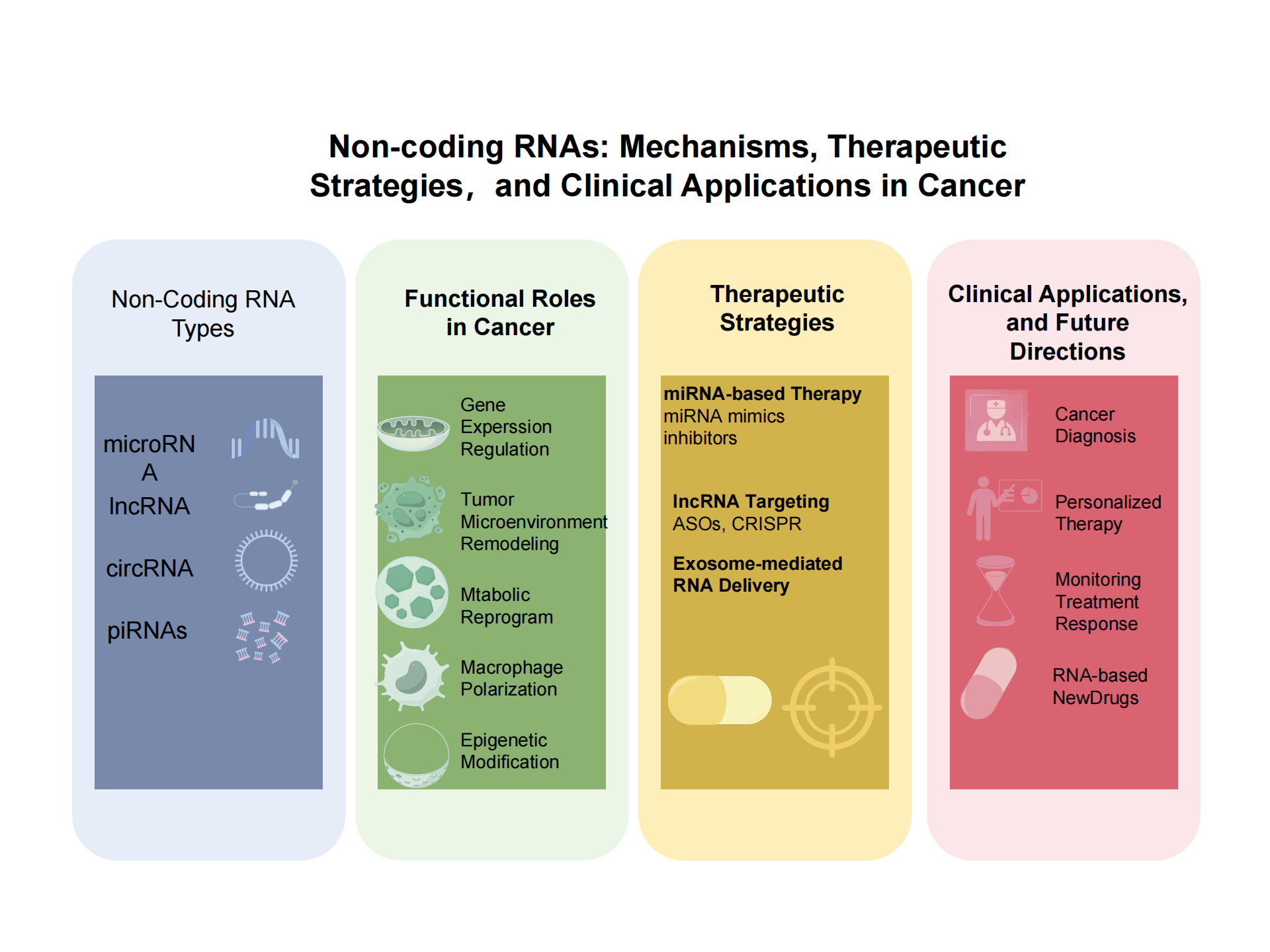
Figure 1 Schematic overview of non-coding RNAs (ncRNAs) in cancer: from molecular mechanisms to therapeutic strategies and clinical applications. Non-coding RNAs, including microRNAs (miRNAs), long non-coding RNAs (lncRNAs), circular RNAs (circRNAs), and PIWI-interacting RNAs (piRNAs), participate in the regulation of gene expression, tumor microenvironment remodeling, metabolic reprogramming, macrophage polarization, and epigenetic modification in cancer. These functional roles lay the foundation for diverse therapeutic strategies, such as miRNA-based therapy, lncRNA targeting (ASOs, CRISPR), and exosome- mediated RNA delivery. Clinically, ncRNAs offer new perspectives for cancer diagnosis, personalized therapy, monitoring treatment response, and the development of RNA-based drugs.
Conclusion
In conclusion,the current landscape of clinical trials involving ncRNA therapies reflects a burgeoning field with significant therapeutic potential. Continued research and innovation in delivery methods, coupled with a deeper understanding of the biological roles of ncRNAs, are essential for translating these promising findings into effective clinical applications. The future of ncRNA-based therapies in cancer treatment is not only bright but also pivotal in shaping the next generation of targeted cancer therapeutics.
Conflicts of Interest
The authors declare no conflict of interest.
Funding
No funding
Acknowledgements
This study is grateful to all the authors for their full contributions.
References
-
C. C. Hon, H. Yan, P. Bu. "Non-coding RNA in cancer." Essays in Biochemistry 2021, 65, 4, 625–39.
-
R. Beňačka, D. Szabóová, Z. Guľašová, Z. Hertelyová, J. Radoňak. "Non-Coding RNAs in Human Cancer and Other Diseases: Overview of the Diagnostic Potential." IJMS 2023, 24, 22, 16213.
-
D. J. Good. "Non-Coding RNAs in Human Health and Diseases." Genes 2023, 14, 7, 1429.
-
T. Kim, C. M. Croce. "MicroRNA: trends in clinical trials of cancer diagnosis and therapy strategies." Exp Mol Med 2023, 55, 7, 1314–21.
-
B. He, Z. Zhao, Q. Cai, Y. Zhang, P. Zhang, S. Shi, H. Xie, X. Peng, W. Yin, Y. Tao, X. Wang. "miRNA-based biomarkers, therapies, and resistance in Cancer." Int. J. Biol. Sci. 2020, 16, 14, 2628–47.
-
Z. Su, I. Monshaugen, B. Wilson, F. Wang, A. Klungland, R. Ougland, A. Dutta. "TRMT6/61A-dependent base methylation of tRNA-derived fragments regulates gene-silencing activity and the unfolded protein response in bladder cancer." Nat Commun 2022, 13, 1, 2165.
-
X. Zhou, G. Yao, J. Zhang, J. Bian, G. Li, J. Xu. "An integrated multi-omics analysis of topoisomerase family in pan-cancer: Friend or foe?" PLoS ONE 2022, 17, 10, e0274546.
-
S. K. Barnwal, H. Bendale, S. Banerjee. "Non-coding RNAs associated with autophagy and their regulatory role in cancer therapeutics." Mol Biol Rep 2022, 49, 7, 7025–37.
-
M. Zhou, X. He, J. Zhang, C. Mei, B. Zhong, C. Ou. "tRNA-derived small RNAs in human cancers: roles, mechanisms, and clinical application." Mol Cancer 2024, 23, 1, 76.
-
Q. Xiong, Y. Zhang, J. Li, Q. Zhu. "Small Non-Coding RNAs in Human Cancer." Genes 2022, 13, 11, 2072.
-
A. M. Pinzaru, S. F. Tavazoie. "Transfer RNAs as dynamic and critical regulators of cancer progression." Nat Rev Cancer 2023, 23, 11, 746–61.
-
C. Xing, S. Sun, Z.-Q. Yue, F. Bai. "Role of lncRNA LUCAT1 in cancer." Biomedicine & Pharmacotherapy 2021, 134, 111158.
-
S. Lee, J. Kim, P. N. Valdmanis, H. K. Kim. "Emerging roles of tRNA-derived small RNAs in cancer biology." Exp Mol Med 2023, 55, 7, 1293–304.
-
Q. Zhou, L. Li, F. Sha, Y. Lei, X. Tian, L. Chen, Y. Chen, H. Liu, Y. Guo. "PTTG1 Reprograms Asparagine Metabolism to Promote Hepatocellular Carcinoma Progression." 2023, 83, 14, 2372–86.
-
Y. Ortiz-Pedraza, J. O. Muñoz-Bello, L. Olmedo-Nieva, A. Contreras-Paredes, I. Martínez-Ramírez, E. Langley, M. Lizano. "Non-Coding RNAs as Key Regulators of Glutaminolysis in Cancer." IJMS 2020, 21, 8, 2872.
-
I. Barbieri, T. Kouzarides. "Role of RNA modifications in cancer." Nat Rev Cancer 2020, 20, 6, 303–22.
-
B. Chai, Z. Ma, X. Wang, L. Xu, Y. Li. "Functions of non-coding RNAs in regulating cancer drug targets." ABBS 2022.
-
M. Alahdal, E. Elkord. "Non‐coding RNAs in cancer immunotherapy: Predictive biomarkers and targets." Clinical & Translational Med 2023, 13, 9, e1425.
-
S. Xu, L. Wang, Y. Zhao, T. Mo, B. Wang, J. Lin, H. Yang. "Metabolism-regulating non-coding RNAs in breast cancer: roles, mechanisms and clinical applications." J Biomed Sci 2024, 31, 1, 25.
-
S. Hombach, M. Kretz. "Non-coding RNAs: Classification, Biology and Functioning." 2016, 937, 3–17.
-
A. Solati, S. Thvimi, S. H. Khatami, Z. Shabaninejad, Y. Malekzadegan, M. Alizadeh, P. Mousavi, M. Taheri-Anganeh, D. Razmjoue, S. Bahmyari, H. Ghasemnejad-Berenji, A. Vafadar, E. Soltani Fard, H. Ghasemi, A. Movahedpour. "Non-coding RNAs in gynecologic cancer." Clinica Chimica Acta 2023, 551, 117618.
-
Q. Zhang, Y. Zhu, X. Cao, W. Tan, J. Yu, Y. Lu, R. Kang, X. Wang, E. Li. "The epigenetic regulatory mechanism of PIWI/piRNAs in human cancers." Mol Cancer 2023, 22, 1, 45.
-
W. Yao, L. Wang, F. Liu, L. Xia. "The role of long non-coding RNAs in breast cancer microenvironment." Pathology - Research and Practice 2023, 248, 154707.
-
F. Crudele, N. Bianchi, E. Reali, M. Galasso, C. Agnoletto, S. Volinia. "The network of non-coding RNAs and their molecular targets in breast cancer." Mol Cancer 2020, 19, 1, 61.
-
K. Grillone, G. Caridà, F. Luciano, A. Cordua, M. T. Di Martino, P. Tagliaferri, P. Tassone. "A systematic review of non-coding RNA therapeutics in early clinical trials: a new perspective against cancer." J Transl Med 2024, 22, 1, 731.
-
M. Coan, S. Haefliger, S. Ounzain, R. Johnson. "Targeting and engineering long non-coding RNAs for cancer therapy." Nat Rev Genet 2024, 25, 8, 578–95.
-
D. Tomar, A. S. Yadav, D. Kumar, G. Bhadauriya, G. C. Kundu. "Non-coding RNAs as potential therapeutic targets in breast cancer." Biochimica et Biophysica Acta (BBA) - Gene Regulatory Mechanisms 2020, 1863, 4, 194378.
-
K. Soureas, M.-A. Papadimitriou, K. Panoutsopoulou, K.-M. Pilala, A. Scorilas, M. Avgeris. "Cancer quiescence: non-coding RNAs in the spotlight." Trends in Molecular Medicine 2023, 29, 10, 843–58.
-
C. Wei, Y. Xu, Q. Shen, R. Li, X. Xiao, P. E. Saw, X. Xu. "Role of long non-coding RNAs in cancer: From subcellular localization to nanoparticle-mediated targeted regulation." Molecular Therapy - Nucleic Acids 2023, 33, 774–93.
-
A. A. Kyriazi, E. Papiris, K. Kitsos Kalyvianakis, G. Sakellaris, S. Baritaki. "Dual Effects of Non-Coding RNAs (ncRNAs) in Cancer Stem Cell Biology." IJMS 2020, 21, 18, 6658.
-
M. Muskan, P. Abeysinghe, R. Cecchin, H. Branscome, K. V. Morris, F. Kashanchi. "Therapeutic potential of RNA-enriched extracellular vesicles: The next generation in RNA delivery via biogenic nanoparticles." Molecular Therapy 2024, 32, 9, 2939–49.
-
Y. Chen, Q. Li, X. Yu, L. Lu, Z. Zhou, M. Li, R. Xia, X. Gan, Y. Hu, G. Guo, J. Guo, H. Li, Q. Li, Y. Liu, X. Liu, M. Sun. "The microprotein HDSP promotes gastric cancer progression through activating the MECOM-SPINK1-EGFR signaling axis." Nat Commun 2024, 15, 1, 8381.
-
G. Pisignano, D. C. Michael, T. H. Visal, R. Pirlog, M. Ladomery, G. A. Calin. "Going circular: history, present, and future of circRNAs in cancer." Oncogene 2023, 42, 38, 2783–800.
-
M. J. Saadh, B. Abedi Kiasari, S. A. Shahrtash, J. L. Arias-Gonzáles, M. Chaitanya, J. C. Cotrina-Aliaga, M. J. Kadham, I. Sârbu, R. Akhavan-Sigari. "Exosomal non-coding RNAs' role in immune regulation and potential therapeutic applications." Pathology - Research and Practice 2023, 247, 154522.
-
T. Guo, X.-H. Tang, X.-Y. Gao, Y. Zhou, B. Jin, Z.-Q. Deng, Y. Hu, X.-F. Xing, Z.-Y. Li, J.-F. Ji. "A liquid biopsy signature of circulating exosome-derived mRNAs, miRNAs and lncRNAs predict therapeutic efficacy to neoadjuvant chemotherapy in patients with advanced gastric cancer." Mol Cancer 2022, 21, 1, 216.
-
K. Nemeth, R. Bayraktar, M. Ferracin, G. A. Calin. "Non-coding RNAs in disease: from mechanisms to therapeutics." Nat Rev Genet 2024, 25, 3, 211–32.
-
M.-R. Mahmoudian-Sani, A. Jalali, M. Jamshidi, H. Moridi, A. Alghasi, A. Shojaeian, G.-R. Mobini. "Long Non-Coding RNAs in Thyroid Cancer: Implications for Pathogenesis, Diagnosis, and Therapy." Oncol Res Treat 2019, 42, 3, 136–42.
-
D. Singh, Y. G. Assaraf, R. N. Gacche. "Long non-coding RNA mediated drug resistance in breast cancer." Drug Resistance Updates 2022, 63, 100851.
-
K. Yamaguchi, T. Yamamoto, J. Chikuda, T. Shirota, Y. Yamamoto. "Impact of Non-Coding RNAs on Chemotherapeutic Resistance in Oral Cancer." Biomolecules 2022, 12, 2, 284.
-
H. Khanbabaei, S. Ebrahimi, J. L. García-Rodríguez, Z. Ghasemi, H. Pourghadamyari, M. Mohammadi, L. S. Kristensen. "Non-coding RNAs and epithelial mesenchymal transition in cancer: molecular mechanisms and clinical implications." J Exp Clin Cancer Res 2022, 41, 1, 278.
-
X. Zhang, K. Xie, H. Zhou, Y. Wu, C. Li, Y. Liu, Z. Liu, Q. Xu, S. Liu, D. Xiao, Y. Tao. "Role of non-coding RNAs and RNA modifiers in cancer therapy resistance." Mol Cancer 2020, 19, 1, 47.
-
B. Chen, M. P. Dragomir, C. Yang, Q. Li, D. Horst, G. A. Calin. "Targeting non-coding RNAs to overcome cancer therapy resistance." Sig Transduct Target Ther 2022, 7, 1, 121.
-
K. Xu, H. Guo, A. Xia, Z. Wang, S. Wang, Q. Wang. "Non-coding RNAs in radiotherapy resistance: Roles and therapeutic implications." Oncogene 2023, 42, 12, 865-879.
-
D. Dvorská, D. Braný, M. Ňachajová, E. Halašová, Z. Danková. "Breast Cancer and the Other Non-Coding RNAs." IJMS 2021, 22, 6, 3280.
-
T. Tagawa, A. Serquiña, I. Kook, J. Ziegelbauer. "Viral non-coding RNAs: Stealth strategies in the tug-of-war between humans and herpesviruses." Seminars in Cell & Developmental Biology 2021, 111, 135–47.
-
K. Grillone, C. Riillo, F. Scionti, R. Rocca, G. Tradigo, P. H. Guzzi, S. Alcaro, M. T. Di Martino, P. Tagliaferri, P. Tassone. "Non-coding RNAs in cancer: platforms and strategies for investigating the genomic 'dark matter.'" J Exp Clin Cancer Res 2020, 39, 1, 117.
-
M. Chatterjee, S. Sengupta. "Emerging roles of long non-coding RNAs in cancer." J Biosci 2019, 44, 1, 22.
-
A. McCabe, O. Zaheed, M. Derlipanska, G. Merrin, K. Dean. "The copious capabilities of non-coding RNAs in cancer regulation, diagnosis and treatment." Cancer Treatment and Research Communications 2023, 37, 100768.
-
A. Mafi, A. Keshavarzmotamed, N. Hedayati, Z. Yeganeh Boroujeni, R. J. Reiter, R. Mousavi Dehmordi, M. H. Aarabi, M. Rezaee, Z. Asemi. "Melatonin targeting non-coding RNAs in cancer: Focus on mechanisms and potential therapeutic targets." European Journal of Pharmacology 2023, 950, 175755.
-
P. Wu, Y. Mo, M. Peng, T. Tang, Y. Zhong, X. Deng, F. Xiong, C. Guo, X. Wu, Y. Li, X. Li, G. Li, Z. Zeng, W. Xiong. "Emerging role of tumor-related functional peptides encoded by lncRNA and circRNA." Mol Cancer 2020, 19, 1, 22.
-
M. Budakoti, A. S. Panwar, D. Molpa, R. K. Singh, D. Büsselberg, A. P. Mishra, H. D. M. Coutinho, M. Nigam. "Micro-RNA: The darkhorse of cancer." Cellular Signalling 2021, 83, 109995.
-
W. Zhang, Z. Zheng, K. Wang, W. Mao, X. Li, G. Wang, Y. Zhang, J. Huang, N. Zhang, P. Wu, J. Liu, H. Zhang, J. Che, B. Peng, J. Zheng, W. Li, X. Yao. "piRNA-1742 promotes renal cell carcinoma malignancy by regulating USP8 stability through binding to hnRNPU and thereby inhibiting MUC12 ubiquitination." Exp Mol Med 2023, 55, 6, 1258–71.
-
Q. Yi, J. Feng, W. Lan, H. Shi, W. Sun, W. Sun. "CircRNA and lncRNA-encoded peptide in diseases, an update review." Mol Cancer 2024, 23, 1, 214.